Skyroot Aerospace: India Launches First Privately Developed Orbital Rocket
Vikram-1 reaches orbit successfully, marking a milestone for India’s private space industry and ambitions in the global commercial launch market.
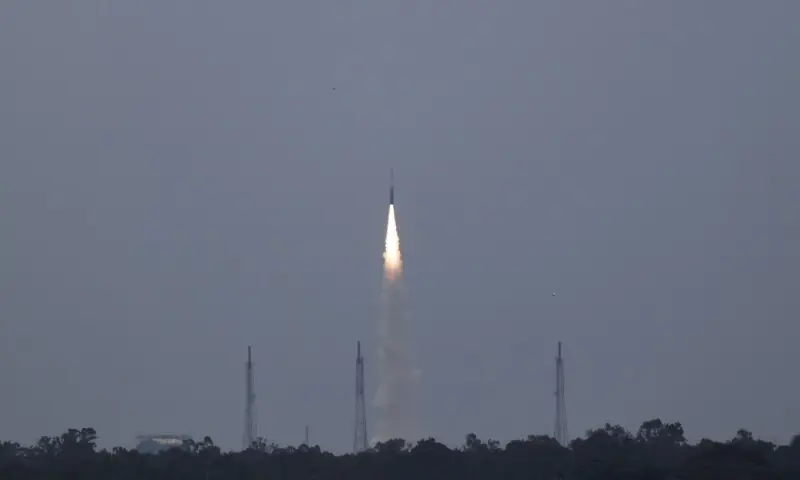
Skyroot Aerospace's Vikram-1 rocket lifts off during its first orbital mission.
Skyroot Aerospace successfully launched India’s first privately developed orbital rocket on Saturday, marking a major milestone for the country’s growing private space industry and strengthening its ambitions in the global commercial launch market.
The company’s Vikram-1 rocket lifted off from the Satish Dhawan Space Centre in Sriharikota at 0635 GMT, carrying multiple customer payloads and in-orbit experiments on its maiden orbital mission, Mission Aagaman.
The launch experienced a brief delay after officials paused the initial countdown, but mission controllers quickly resumed operations. About 15 minutes after liftoff, Vikram-1 placed its payload into a 450-kilometre low-Earth orbit, making India the third country whose private sector has achieved orbital launch capability.
Skyroot Aerospace hailed the mission as a complete success.
Argentina: Latin America Divided as Fans Rally Behind Spain in World Cup Final
“Mission Aagaman is a grand success,” the company said, adding that it will conduct several more test flights before beginning routine commercial launch services.
Engineers used the mission to evaluate the rocket’s propulsion, avionics, telemetry, guidance, navigation and control systems while collecting valuable flight data for future commercial operations.
Founded in 2018, Skyroot Aerospace has emerged as one of India’s leading private space companies since the government opened the space sector to private investment in 2020. Earlier this year, the Hyderabad-based startup became India’s first space technology company to achieve a valuation of more than $1 billion.
The 22-metre-tall Vikram-1 rocket can carry payloads of up to 350 kilograms into low-Earth orbit. It uses three solid-fuel stages and a liquid-fuel orbital adjustment module powered by a 3D-printed engine. Skyroot says the mission marks the first flight of this technology in an Indian launch vehicle.
The rocket carried several experimental and commercial payloads from Indian and international organisations, including technology demonstration satellites and scientific in-orbit experiments.
The successful orbital mission builds on Skyroot’s Vikram-S suborbital launch in 2022, which became the first privately developed rocket to reach space from Indian soil.
India achieved the latest milestone as competition intensified in the global small satellite launch market, where emerging companies continue to challenge established operators led by SpaceX. Governments across Europe and Asia have also increased support for domestic launch providers to secure independent access to space for commercial and strategic missions.
The Indian government aims to expand the country’s share of the global space economy from about $8 billion to $44 billion by 2033, with private companies expected to play a central role in reaching that goal.