Typhoon Bavi: More Than 1.7 Million Evacuated as Storm Hits Eastern China
Web Desk July 12, 2026Typhoon Bavi made landfall in China’s eastern Zhejiang province late on Saturday, forcing the evacuation of more than 1.7 million people as authorities warned of heavy rain, strong winds and flooding.
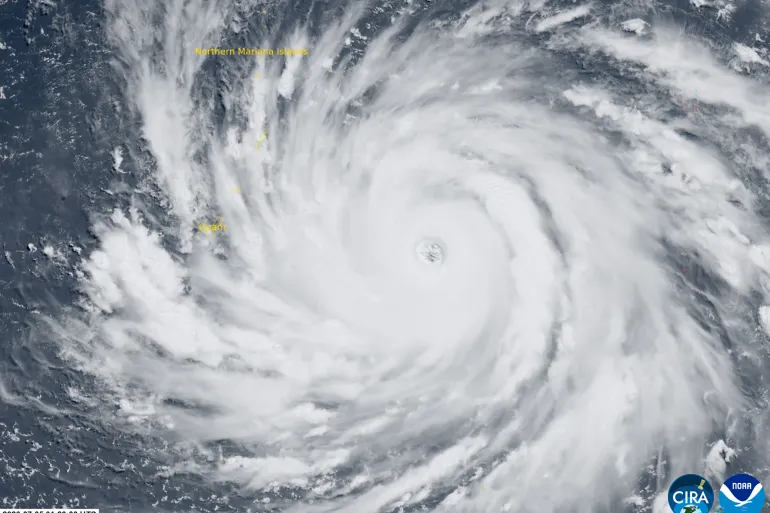
Typhoon Bavi makes landfall in Zhejiang as emergency crews respond to severe weather across eastern China.
Typhoon Bavi made landfall in China’s eastern Zhejiang province late on Saturday, forcing the evacuation of more than 1.7 million people as authorities warned of heavy rain, strong winds and flooding.
China’s state-run Xinhua News Agency, citing the Zhejiang Provincial Meteorological Observatory, said the storm reached the coast at 11:20pm local time (15:20 GMT). Forecasters expect the typhoon to move northwest inland while gradually weakening over the coming days.
Before reaching mainland China, Bavi battered Taiwan and Japan’s southern islands with strong winds and heavy rain. It became the second typhoon to strike China in just over a week after Tropical Storm Maysak made landfall in the country’s south last weekend.
Polio Eradication Mike McGovern Meets Pakistan National PolioPlus Committee in Karachi
Chinese authorities issued an orange typhoon alert, the second-highest warning in the country’s four-level emergency system, as the storm approached. At landfall, Bavi packed maximum sustained winds of 144km/h (89mph) near its centre.
Officials cancelled hundreds of flights, reduced rail services and suspended schools and ferry operations across parts of eastern China to minimise the storm’s impact.
Although Typhoon Bavi has weakened since crossing the Pacific, meteorologists warned that it still poses a serious threat because of the large amount of moisture carried in its rain bands, increasing the risk of flooding and landslides.
Residents in Zhejiang rushed to prepare before the storm arrived. Huang Xinghuan, a 50-year-old resident of Wenzhou, said his family had stocked enough drinking water and food for several days.
“We’ve been through typhoons before. We’ll get through it,” Huang told Reuters.
Emergency preparations also intensified in neighbouring Fujian province. Authorities evacuated more than 3,700 people from high-risk coastal areas in Ningde and placed more than 17,000 emergency rescue workers on standby.
The latest storm arrived as southern China continued recovering from Tropical Storm Maysak. Earlier this week, floodwaters caused by a breached dam killed at least 39 people in the city of Nanning.
Elsewhere in Asia, severe weather linked to Typhoon Bavi caused further disruption.
In the Philippines, heavy rainfall strengthened by the storm triggered landslides that killed at least 17 people overnight on Friday.
Taiwan reported at least 36 injuries, most involving motorcycle riders on rain-slicked roads. Authorities evacuated 14,210 residents, particularly from Taichung and Hualien, while schools, government offices and many restaurants remained closed.
Japan also faced widespread disruption. Authorities cancelled more than 200 flights in Okinawa as officials warned of dangerous waves, powerful winds and storm surges. Heavy rain and strong winds continued to affect the Sakishima island chain throughout the weekend.
Forecasters continue to monitor Typhoon Bavi as it moves further inland across eastern China, where it is expected to weaken while still bringing heavy rainfall to affected regions.