Indonesia Landfill Fire: Toxic Blaze Exposes Deepening Waste Management Crisis
A massive landfill fire near Jakarta has displaced hundreds, triggered a rise in respiratory illnesses, and renewed calls for urgent reforms to Indonesia’s waste management system.
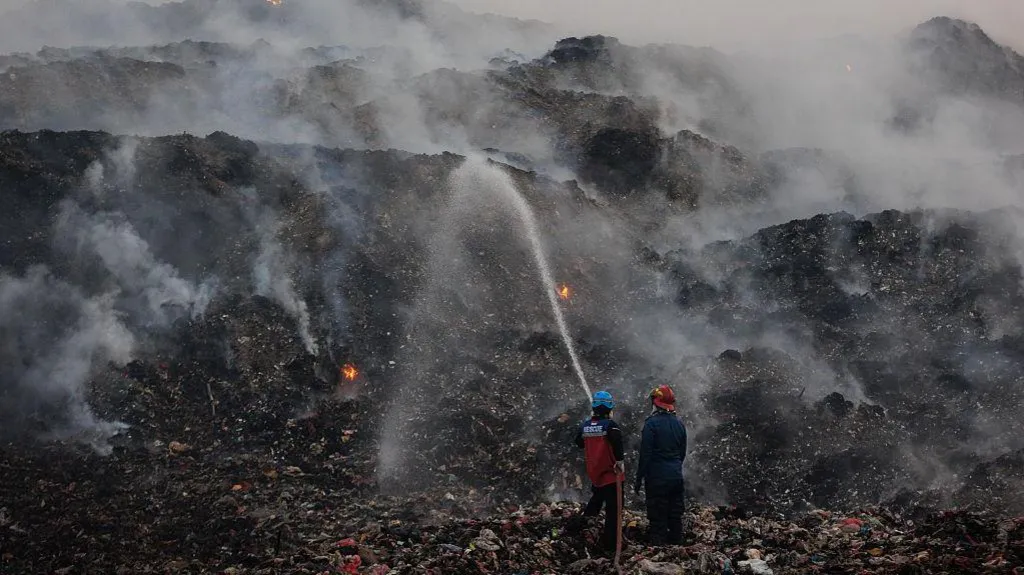
Firefighters battle a massive landfill blaze as toxic smoke rises over communities near Jakarta.
Indonesia Landfill officials continue to battle a massive fire at the Jatiwaringin landfill near Jakarta. The blaze has burned for more than a week, creating serious health risks and exposing major weaknesses in Indonesia’s waste management system.
The fire started on 30 June and has spread across more than 15 hectares. Thick toxic smoke continues to cover nearby communities. Hundreds of residents have left their homes as emergency crews work to contain the blaze.
Firefighters have deployed helicopters, bulldozers, water tankers and drones. They continue to tackle hotspots buried deep inside the waste. Officials hope to extinguish the fire by the end of the week.
Macron Syria: Macron Pledges Security Support as Damascus Blasts Injure 18 During Visit
Health authorities have recorded a sharp rise in respiratory illnesses. Medical teams have examined at least 234 residents, including 72 people diagnosed with acute respiratory tract infections. Air quality around the landfill reached hazardous levels, although conditions have improved slightly in recent days.
Residents say the smoke has made daily life unbearable. Many reported breathing difficulties, coughing and eye irritation. Several families have moved to temporary shelters provided by local authorities.
Indonesia’s National Disaster Management Agency said the fire continues to burn beneath large piles of rubbish. This underground fire makes extinguishing operations much more difficult than fighting surface flames.
Environmental group Walhi believes methane gas from decomposing organic waste likely fuelled the blaze. Authorities have not confirmed the exact cause. However, experts say open dumping creates dangerous conditions at many landfills across the country.
Walhi described the incident as an ecological disaster caused by years of poor waste management. The organisation said the Jatiwaringin landfill receives far more waste than it was designed to handle. As a result, large amounts of rubbish continue to accumulate at nearby dumping sites.
People living near the landfill have faced problems for years. They regularly complain about foul smells, insects and the risk of rubbish landslides. Experts also warn that rising temperatures increase methane production, making landfill fires more likely.
Indonesia has experienced several major landfill fires in recent years. Similar incidents occurred at the Sarimukti landfill in Bandung and another landfill in Tangerang. Investigators believe methane gas played a key role in both fires.
The Ministry of Environment and Forestry will investigate the latest fire after crews extinguish the blaze. Officials also plan to inspect 390 landfills across Indonesia in August 2026.
The ministry said it had already sanctioned the Jatiwaringin landfill in 2025 for poor management. Officials now want local governments to replace open dumping with controlled landfill systems. These systems compact waste and cover it with soil to reduce methane emissions and lower fire risks.
Environmental groups say stronger enforcement is essential. They also want higher investment in waste management, better recycling programmes and nationwide public education on separating organic waste.
Campaigners warn that Indonesia must reduce waste at its source and modernise its disposal system. Without those changes, landfill fires will continue to threaten public health and the environment.