Iran Launches Retaliatory Strikes on US Bases Across Gulf After Hormuz Attacks Escalate Regional Conflict
Web Desk June 10, 2026
Missile exchanges intensify tensions across the Gulf region.
Iran Strikes intensified across the Gulf on Wednesday after Tehran’s Revolutionary Guards reportedly launched attacks against a US base in Jordan and multiple other targets in the region. The move came in response to recent American military operations near the Strait of Hormuz.
The latest Iran Strikes mark one of the most significant escalations since Washington and Tehran agreed to a ceasefire in April. As a result, concerns have grown over regional stability, energy supplies, and the future of diplomatic negotiations.
Hira Tareen Warns Actors About AI Contracts That Could Transfer Digital Likeness Rights Permanently
Iran Strikes Target Gulf Bases
According to Iranian state media, the Revolutionary Guards launched attacks against 22 targets, including locations in Jordan, Bahrain, and Kuwait. Iranian officials stated the operation was retaliation for US military actions targeting Iranian facilities near the Strait of Hormuz.
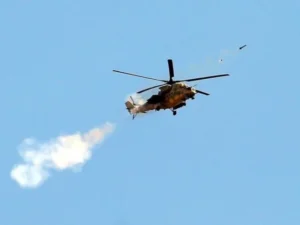
Meanwhile, the US military said it had conducted strikes against Iranian air defence systems, surveillance radar sites, and ground control stations. These operations reportedly followed the downing of a US Apache helicopter.
US President Donald Trump said the American response would be “very strong” and “very powerful” during an interview with ABC News.
Donald Trump Orders Military Response
The latest military action followed reports that Iran had shot down a US Apache helicopter near the Gulf region. According to US officials, nearly 20 Iranian targets were struck during a military campaign that lasted several hours.
Furthermore, US Central Command announced that the operation had concluded shortly before Wednesday. However, the exchange quickly triggered additional retaliation from Tehran.
As tensions increased, analysts warned that further military actions could undermine ongoing efforts to revive negotiations between both countries.
Jordan Reports Missile Interceptions
Iran’s Revolutionary Guards claimed they launched long-range missiles against four major targets in Jordan. These reportedly included military facilities linked to US operations.
However, Jordan’s military stated that its air defence systems intercepted five incoming missiles. Officials added that no casualties or significant damage were reported.
Consequently, the incident highlighted how the conflict is increasingly affecting countries beyond Iran and the United States.
Bahrain And Kuwait Face New Threats
Air raid sirens sounded across Bahrain after Iranian forces claimed responsibility for attacks against a US base in the kingdom. Bahraini authorities urged residents to move to safe locations while defence systems responded to the threat.
In Kuwait, military officials said air defence units engaged hostile aerial targets. The announcement came after Iranian forces reportedly targeted the Ali Al-Salem Air Base using drones.
Moreover, Iranian military officials warned that stronger responses could follow if hostilities continue.
Abbas Araghchi Warns Of Retaliation
Iranian Foreign Minister Abbas Araghchi signaled further resistance before the latest escalation. In a statement posted on social media, he said Iran would not leave attacks or threats unanswered.
Additionally, Araghchi urged foreign military forces to leave the Strait of Hormuz area. He argued that continued deployments near Iranian territory increased the risk of confrontation.
According to his statement, foreign forces operating close to Iranian waters could become caught in future exchanges.
Strait Of Hormuz Remains Critical Focus
The Strait of Hormuz continues to be a central issue in the conflict. The waterway serves as one of the world’s most important routes for oil and gas shipments.
As fighting intensified, oil prices rose about one percent during early Asian trading. Investors reacted to growing uncertainty over whether shipping traffic could return to normal operations.
Although hopes for a diplomatic breakthrough had recently improved, renewed military exchanges have raised fresh doubts about reopening the vital maritime corridor.
Lebanon Conflict Adds Pressure
The broader regional conflict has also affected Lebanon. Iran has repeatedly argued that any lasting agreement must include a ceasefire involving Hezbollah and Israel.
Meanwhile, Lebanese officials reported casualties following Israeli airstrikes in the southern city of Tyre. Authorities also described large-scale civilian displacement after evacuation warnings were issued.
Therefore, developments in Lebanon continue to complicate wider efforts to reduce tensions across the Middle East.
Iran Strikes Raise Questions Over Peace Talks
Despite recent claims that negotiations were nearing a breakthrough, the latest Iran Strikes have increased uncertainty surrounding future diplomacy. Both Washington and Tehran continue to exchange military pressure while publicly discussing possible agreements.
For now, regional governments remain on high alert. Meanwhile, energy markets, military planners, and diplomatic observers are closely watching whether the current escalation leads to broader conflict or renewed negotiations.