Trump-Xi Summit Signals New Chapter in US-China Relations Amid Global Tensions
Web Desk May 15, 2026Beijing staged a grand diplomatic spectacle for US President Donald Trump as he began a high-stakes visit to China, signaling a possible reset in relations between the world’s two largest economies.
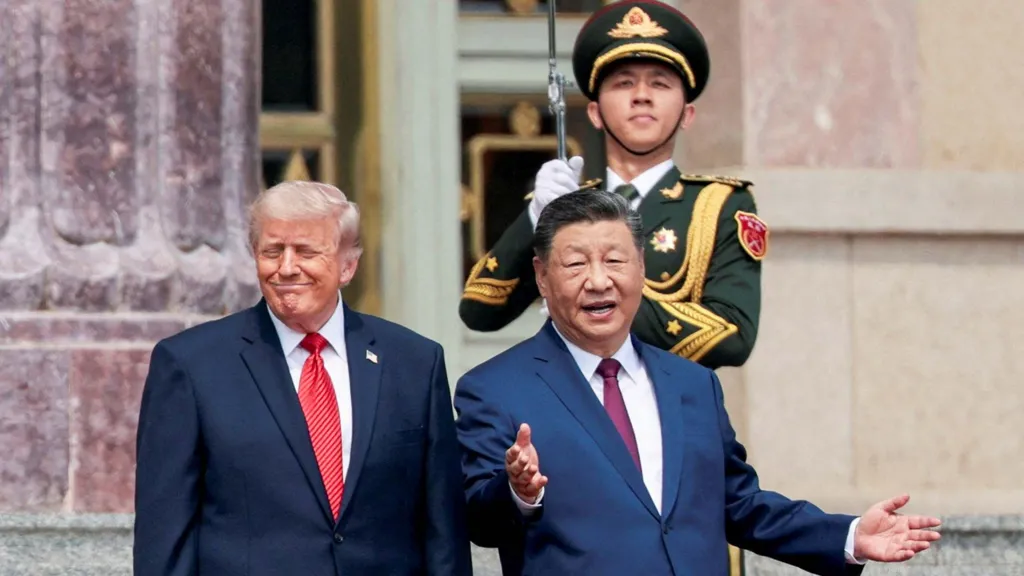
Beijing staged a grand diplomatic spectacle for US President Donald Trump as he began a high-stakes visit to China, signaling a possible reset in relations between the world’s two largest economies.
Sudan on the Brink: Nearly 20 Million People Face Extreme Hunger Amid Civil War
Chinese President Xi Jinping personally welcomed Trump at the Great Hall of the People, where a military honour guard, gun salute, and performances of the American national anthem marked the beginning of the summit.
Trump appeared visibly pleased with the reception, stopping to greet cheering schoolchildren waving Chinese and American flags. During his meeting with Xi, Trump praised the Chinese leader, calling him “a great leader” and describing the visit as a “cherished opportunity.”

The warm atmosphere marked a dramatic contrast to Trump’s earlier rhetoric on China during his political campaigns and trade disputes. Over the years, Trump had repeatedly accused Beijing of unfair trade practices and imposed aggressive tariffs during the US-China trade war.
Trade, Taiwan and Iran Dominate Talks
Despite the friendly optics, major geopolitical tensions remain unresolved. Discussions between the two leaders focused heavily on trade relations, the future of tariffs, Taiwan, and the growing crisis involving Iran.
Chinese state media reported that Xi warned Trump that tensions over Taiwan could potentially push the two powers toward conflict. Beijing continues to view Taiwan as part of its territory, while Washington remains legally committed to supporting the island’s defense capabilities.

The summit also highlighted concerns surrounding Iran and the Strait of Hormuz, where regional instability has disrupted global energy markets. China, Iran’s largest trading partner, is expected to play a key diplomatic role in encouraging negotiations.
US Secretary of State Marco Rubio expressed hope that Beijing would take a more active role in easing tensions in the Middle East.
Business Leaders Join Diplomatic Push
The visit also underscored the growing economic interdependence between Washington and Beijing. A delegation of leading American business figures accompanied Trump, including Elon Musk, Tim Cook and Jensen Huang.
Trump is expected to push for broader access for American companies in the Chinese market, while China seeks stable economic ties amid domestic financial pressures, including rising unemployment, slowing growth, and a deepening property crisis.
According to preliminary statements, both countries agreed to pursue a “constructive, strategic and stable” relationship framework over the next three years. The White House said discussions included expanding trade cooperation and encouraging Chinese investment in American industries.
China Showcases Global Influence
Analysts say the elaborate ceremony reflected Beijing’s intention to project itself as a rising global power capable of rivaling Washington on the world stage.
China has significantly expanded its global trade influence in recent years, dominating sectors such as electric vehicles, solar panels, wind turbines, and rare earth mineral processing. The summit served as a message not only to the United States but also to the wider international community that Beijing remains central to global manufacturing and economic stability.

Xi also emphasized cooperation over confrontation, suggesting that China’s vision of “national rejuvenation” and Trump’s “Make America Great Again” agenda could coexist.
At the conclusion of the state banquet, Trump invited Xi to visit the White House in September, while both leaders toasted to future cooperation between the two nations.
What Happens Next?
The second day of talks is expected to reveal more details on potential trade agreements and geopolitical cooperation.
For Trump, the summit represents an opportunity to secure a diplomatic and economic victory amid falling domestic approval ratings. For Xi, maintaining stable ties with Washington remains essential as China navigates mounting economic challenges at home.
While many differences remain unresolved, the Beijing summit demonstrated that both sides are seeking a path toward pragmatic engagement rather than direct confrontation.