Petition Filed in Peshawar High Court Challenging Transfer of IHC Judges
Petition Filed in Peshawar High Court Challenging Transfer of IHC Judges
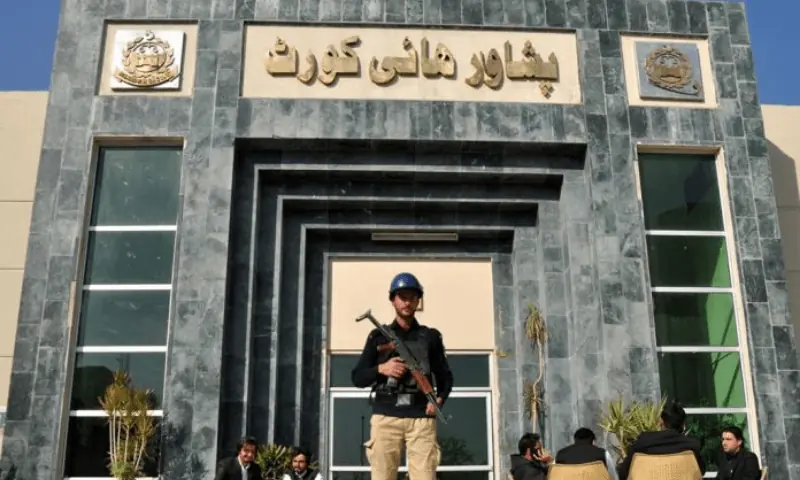
PESHAWAR: A petition has been filed in the Peshawar High Court challenging the recent transfer of judges from the Islamabad High Court, raising constitutional and legal questions over the move.
PM Shehbaz Orders Strategy to Stabilise Electricity Tariffs, Boost Energy Reforms
Advocate Hastham Khan Khalil submitted the petition, requesting the court to declare the April 28 decision of the Judicial Commission of Pakistan as un-Islamic, unconstitutional, and illegal. He also sought interim relief, urging the court to suspend the decision until the final verdict.
The petitioner named the federal government—through secretaries of law, human rights, and parliamentary affairs—as respondents, along with the JCP secretary. The case challenges the transfer of judges under Article 200 of the Constitution, arguing that it violates constitutional provisions, including Articles 2-A and 175(3), as well as established judicial precedents.
The transfers were formally notified by the law ministry on April 29, following approval by President Asif Ali Zardari on the recommendation of the JCP. Under the decision, Justice Mohsin Akhtar Kayani was transferred to the Lahore High Court, Justice Babar Sattar to the Peshawar High Court, and Justice Saman Rafat Imtiaz to the Sindh High Court.
The petitioner contends that such transfers undermine judicial independence and fundamental rights, asserting that executive involvement in judicial postings is inconsistent with constitutional principles.
Meanwhile, uncertainty continues within the Islamabad High Court as a formal seniority list of judges has yet to be issued. The JCP had indicated that vacancies created by the transfers would be filled through appointments from other high courts, adding to ongoing administrative ambiguity.
According to the current duty roster, seven judges, including Chief Justice Sardar Mohammad Sarfraz Dogar, are hearing cases both individually and in division benches. Other judges include Sardar Ejaz Ishaq Khan, Arbab Muhammad Tahir, Khadim Hussain Soomro, Muhammad Azam Khan, Mohammad Asif, and Inaam Ameen Minhas.
The case is expected to test key constitutional provisions governing judicial appointments and transfers, with potential implications for the independence of the judiciary in Pakistan.