Burhan Mirza’s Rumored Net Worth: Emerging Entrepreneur in Pakistan’s Evolving Tech Economy
Web Desk April 28, 2026KARACHI: As Pakistan continues to expand its digital economy, a new generation of entrepreneurs is gaining attention—among them Muhammad Burhan Mirza, whose growing footprint in the startup and skills development space has sparked interest regarding his estimated net worth.
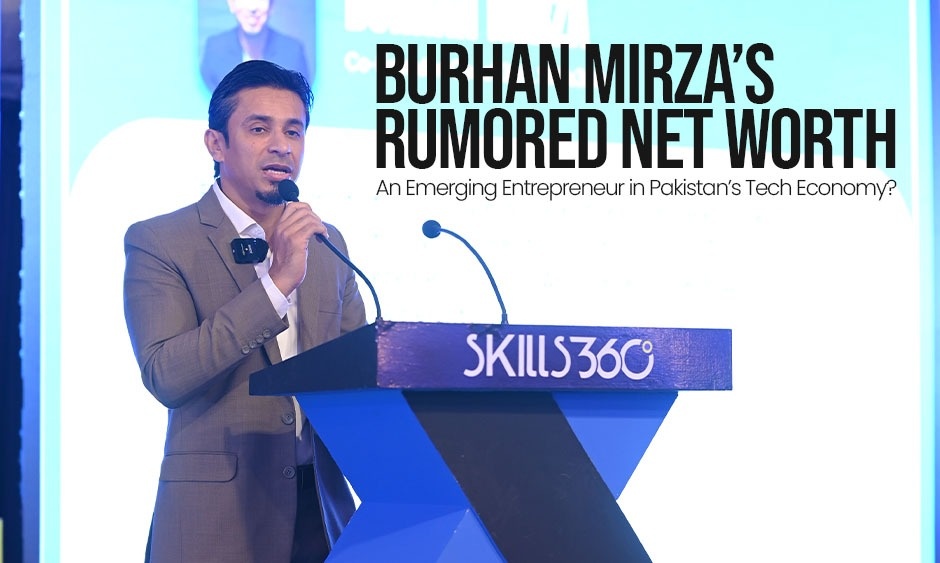
KARACHI: As Pakistan continues to expand its digital economy, a new generation of entrepreneurs is gaining attention—among them Muhammad Burhan Mirza, whose growing footprint in the startup and skills development space has sparked interest regarding his estimated net worth.
Spotify Reports Strong Q1 2026 Earnings with Record User Growth and Improved Margins
Pakistan’s IT and startup ecosystem has witnessed steady growth in recent years, fueled by a young workforce, increasing global demand for outsourcing, and a rising number of digital service providers. Within this evolving landscape, Mirza represents a category of entrepreneurs whose ventures are spread across multiple sectors rather than tied to traditional industries.
Publicly available information suggests that Mirza is associated with investments in more than 15 ventures, primarily focused on IT services, digital education, and early-stage startups. However, due to limited financial disclosures in Pakistan’s private startup ecosystem, his net worth remains speculative.
Most informal estimates place his wealth in the range of $2.3 million to $3 million, though these figures are not independently verified and depend heavily on the performance and valuation of his portfolio companies.
Among the ventures linked to Mirza are platforms such as Skills360, The Coach360, and Gifts360. These initiatives reflect a broader shift toward a “skills economy,” where employability is increasingly driven by practical training and digital competencies rather than traditional academic pathways.
Skills360, for instance, focuses on short-term, applied training programs in areas like digital marketing and freelancing, addressing perceived gaps in conventional education systems. Meanwhile, The Coach360 operates in the mentorship and career development space, offering guidance on decision-making and professional growth.
Despite their growing influence, such platforms often prioritize user engagement and long-term impact over immediate financial returns. This makes it difficult to assign clear market valuations and, by extension, accurately calculate the wealth of individuals involved in these ventures.
Mirza has also expanded his presence into public speaking and thought leadership, addressing topics such as skill development, adaptability, and the future of work. His participation in platforms like TEDx has contributed to his visibility, though these engagements are not directly tied to measurable financial gains.
Industry observers note that Pakistan’s startup ecosystem still lacks standardized frameworks for reporting valuations, particularly for early-stage companies. As a result, wealth linked to private investments is often inferred rather than formally documented.
While Mirza’s influence in the tech and skills development sectors is increasingly evident, experts caution that any net worth figures should be viewed as indicative rather than definitive. In the absence of audited disclosures, his financial standing remains part of broader market speculation.
As Pakistan’s digital economy matures, clearer valuation mechanisms and transparency may provide a more accurate picture of emerging entrepreneurs like Mirza. Until then, his profile reflects a transitional phase where visibility and perceived impact often outpace verifiable financial data.