$1.61 Billion Lost at Checkout: Payment Inefficiencies Hamper Pakistan’s eCommerce Growth
Web Desk April 28, 2026KARACHI: Pakistan’s fast-growing e-commerce sector is facing a major structural challenge, with an estimated $1.61 billion in annual revenue lost at the checkout stage, highlighting inefficiencies that are limiting the country’s digital trade potential.
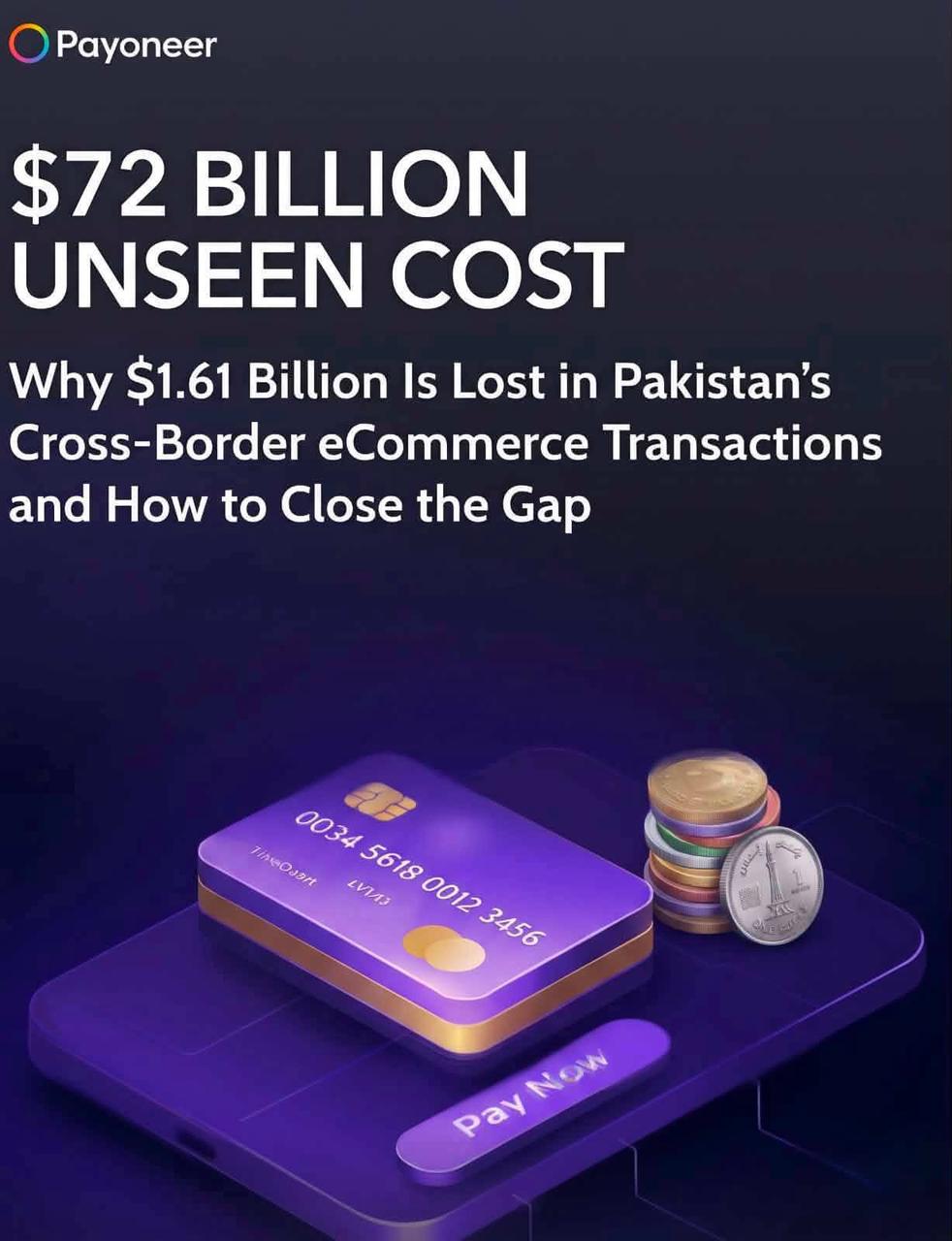
KARACHI: Pakistan’s fast-growing e-commerce sector is facing a major structural challenge, with an estimated $1.61 billion in annual revenue lost at the checkout stage, highlighting inefficiencies that are limiting the country’s digital trade potential.
PTA Delegation Meets Commerce Minister Jam Kamal to Discuss Trade and Export Challenges
According to a new white paper by Payoneer, merchants across Asia lose nearly $72 billion each year due to checkout-related issues. Within this broader trend, Pakistan accounts for a significant share, driven by gaps in payment systems and transaction processes.
The report identifies cart abandonment as the leading cause of losses in Pakistan, contributing approximately $0.97 billion—more than 60% of the total leakage. Payment failures, unexpected charges, and lack of pricing transparency are among the primary reasons customers abandon purchases at the final stage.
Additional losses include around $0.46 billion due to settlement delays and $0.18 billion linked to foreign exchange (FX) and payment-related inefficiencies. These factors collectively reduce the ability of businesses to fully capture revenue despite strong consumer demand.
Experts note that the problem is particularly acute for cross-border e-commerce sellers, as international buyers increasingly expect localized payment options and pricing in their own currency. The absence of such features often results in failed transactions or drop-offs at checkout.
Furthermore, complex and layered payment systems involving multiple intermediaries are eroding merchant margins. Each step in the transaction chain adds cost, reducing overall profitability for online businesses.
Settlement delays present another critical challenge, with funds often remaining tied up in processing cycles. This restricts liquidity for businesses, making it harder to fulfil orders and scale operations efficiently.
The findings point to a broader structural gap in Pakistan’s e-commerce ecosystem, where digital trade is expanding rapidly but supporting financial infrastructure is yet to fully evolve.
Industry analysts suggest that addressing these challenges will require streamlining payment systems, reducing fragmentation in banking relationships, and improving checkout experiences. Introducing localized payment methods, transparent pricing in local currencies, and faster settlement cycles could significantly enhance conversion rates and unlock growth.
As Pakistan continues to position itself within Asia’s expanding digital economy, improving payment efficiency and checkout processes could help transform lost opportunities into tangible economic gains for exporters and online retailers.