
Pakistan Emerges as Key Mediator in US-Iran Ceasefire, Set to Host Negotiations in Islamabad
Web Desk April 8, 2026Islamabad, April 8, 2026: Pakistan has played a pivotal role in securing a temporary ceasefire between the United States and Iran, positioning itself as a crucial mediator in the ongoing Middle East conflict. Prime Minister Shehbaz Sharif confirmed on Wednesday that both countries had agreed to an immediate two-week ceasefire following Pakistan’s intervention.

Islamabad, April 8, 2026: Pakistan has played a pivotal role in securing a temporary ceasefire between the United States and Iran, positioning itself as a crucial mediator in the ongoing Middle East conflict. Prime Minister Shehbaz Sharif confirmed on Wednesday that both countries had agreed to an immediate two-week ceasefire following Pakistan’s intervention.
US-Iran Two-Week Ceasefire Announced, Pakistan to Host Negotiations in Islamabad
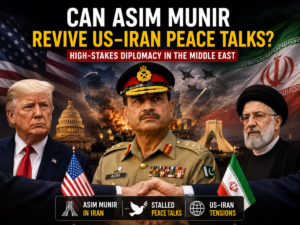
The ceasefire, announced earlier by US President Donald Trump and Tehran, will now be followed by talks in Islamabad starting April 10, where delegations from both sides will seek a more permanent resolution to the conflict.
“Pakistan achieved one of its biggest diplomatic wins in years,” said South Asia expert Michael Kugelman. “It defied skeptics who doubted its capacity to pull off such a complex, high-stakes feat.”
Pakistan’s Ties to Iran
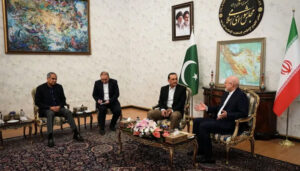
Pakistan has historically maintained strong relations with Iran, sharing a 900-kilometre border and deep cultural, religious, and historical links. It hosts the world’s second-largest Shia Muslim population and has represented Iranian diplomatic interests in Washington, where Tehran has no embassy. Iran was the first country to recognize Pakistan in 1947, and Pakistan reciprocated after the 1979 Iranian revolution.
Pakistan and the US
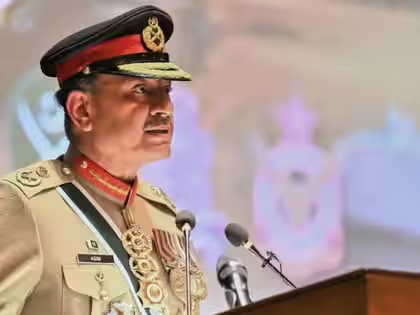
Chief of Defence Forces Field Marshal Asim Munir and PM Shehbaz Sharif have cultivated personal rapport with President Trump, which facilitated swift communication and trust during the ceasefire negotiations. Pakistan’s balanced stance, shaped by previous strategic challenges and non-NATO alliance status, allowed it to act as an honest broker between Washington and Tehran.
Regional and Global Diplomacy
Pakistan’s mediation included coordination with key regional players, including Saudi Arabia, Turkiye, Egypt, and China. Islamabad has carefully managed its strategic ties, balancing support for Tehran while maintaining strong relations with Riyadh and Beijing. China’s endorsement of Pakistan’s role was crucial in bringing Iran to the negotiating table.
Benefits for Pakistan
Neutrality offers Pakistan economic advantages, ensuring continued oil and gas supplies through the Strait of Hormuz while avoiding entanglement in regional hostilities. Stabilizing the region also enhances Pakistan’s international standing at a time of heightened tensions along its eastern and western borders.
Next Steps
PM Shehbaz has invited US and Iranian delegations to Islamabad on April 10. Pakistan’s officials are expected to facilitate direct dialogue, help fine-tune agreements in case of a stalemate, and act as a trusted intermediary if face-to-face negotiations are delayed.
Experts note that Pakistan’s successful mediation demonstrates its unique position in global diplomacy, able to navigate complex conflicts while protecting national and regional interests.