Trump Ballroom Project Halted by Court in Fresh White House Setback
Appeals court says Congress must approve the $400m plan before above-ground construction can continue
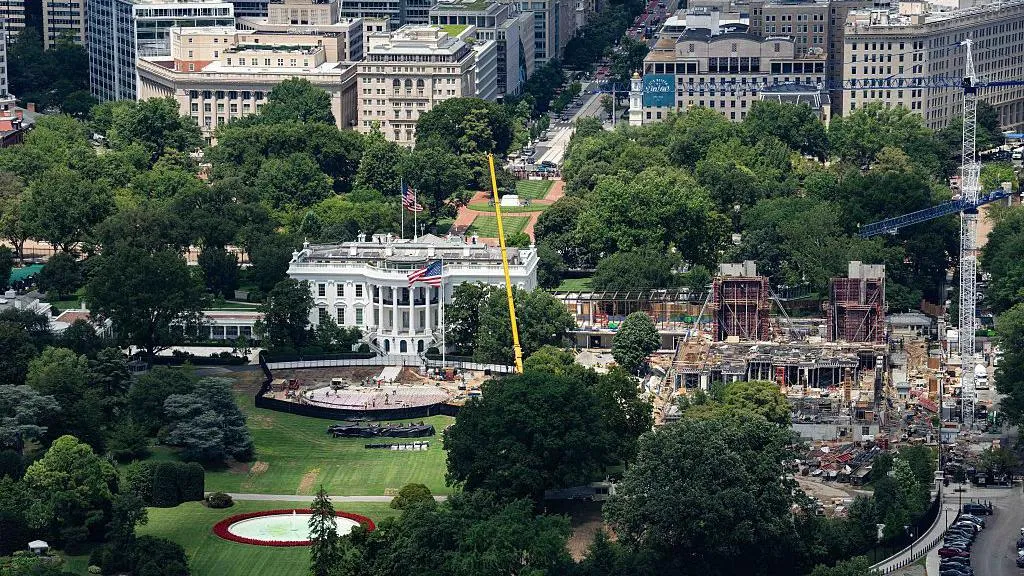
A US appeals court has halted above-ground construction of Trump’s proposed White House ballroom.
A federal appeals court has ordered the Trump administration to halt above-ground construction of the proposed White House Ballroom, dealing a fresh legal blow to President Donald Trump’s $400m project.
The three-judge panel ruled 2-1 on Friday that the administration cannot dramatically alter the White House complex without congressional approval. The decision upholds an earlier injunction secured by the National Trust for Historic Preservation.
Spain-Italy border row deepens as Madrid imposes checks on air and sea travel
The preservation group sued after the administration demolished the East Wing in October to make way for the ballroom. The project has faced growing criticism because the administration began work without first obtaining approval from Congress.
Court challenges presidential authority
The appeals court said Congress, rather than the executive branch, must decide whether the massive ballroom should be built.
The majority stressed that presidents serve as temporary occupants of the White House. They do not own the presidential residence or have unlimited authority to reshape it.
The judges said the Constitution does not give the president independent authority over the property. They also noted that the White House serves future presidents and the American public.
The court’s ruling does not decide whether Trump can eventually build the ballroom. Instead, it requires the administration to obtain congressional approval before continuing above-ground construction.
Trump plans Supreme Court appeal
The administration has already indicated that it will challenge the decision before the Supreme Court.
The appeals court has delayed enforcement for 14 days. That gives Trump’s lawyers time to seek further review.
A federal judge had previously blocked above-ground work on two occasions. The earlier orders allowed the administration to continue underground construction while the legal dispute moved forward.
Trump attacked Friday’s ruling on social media. He called it “horrendous” and politically motivated.
The president also highlighted the dissenting judge’s criticism of the lower court order. He argued that the decision threatens national security and said the Supreme Court should overturn it.
Trump has continued to defend the project. He says construction remains ahead of schedule and under budget.
Why Trump wants the ballroom
Trump has described the ballroom as necessary for large official events, state visits and major White House gatherings.
He has also linked the project to national security.
The planned structure would include a large above-ground reception area and an underground security complex. Administration lawyers say the new facilities would protect the White House against drones, missiles, biological threats and other potential attacks.
Trump has also said the complex will contain bomb shelters, medical facilities and highly secure military areas.
The president intensified his argument for the project after an assassination attempt at the White House Correspondents’ Association dinner in April.
Preservation group challenges construction
The National Trust for Historic Preservation has strongly opposed the project.
The group argues that the administration lacks legal authority to make such a major change to the White House without congressional approval. It also disputes the claim that a ballroom represents an urgent national security requirement.
The organisation welcomed Friday’s ruling and said no above-ground construction should take place unless Congress authorises it.
Brent Leggs, president and chief executive of the National Trust for Historic Preservation, said the White House belongs to the American people and represents important national ideals.
Project has faced controversy since demolition
Trump first unveiled plans for the ballroom in July 2025. The proposed project would represent the biggest structural change to the presidential residence in more than seven decades.
The legal battle intensified in October when the administration demolished the East Wing, which dates to 1902.
Trump had initially said the ballroom would be built near the East Wing. The subsequent demolition drew criticism from preservationists and opponents of the project.
The administration says private donors will fund the ballroom. However, Republicans have also considered using part of about $1bn in taxpayer funding allocated for Secret Service security upgrades.
A budget watchdog rejected that approach in May.
What happens next
Friday’s decision does not permanently kill Trump’s ballroom plans. It instead prevents the administration from continuing above-ground construction while the legal case proceeds without congressional authorisation.
Trump now faces a choice between seeking Supreme Court intervention and pursuing approval from Congress.
The case could ultimately determine how much authority a president has to alter one of the most recognisable buildings in the United States.
For now, construction above ground must stop.