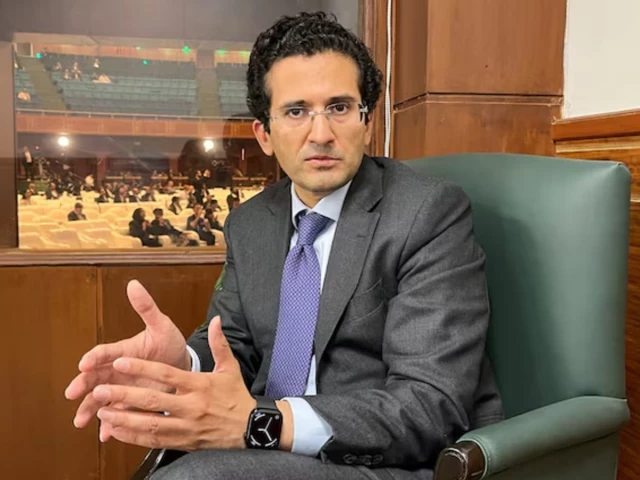
Islamabad, April 15, 2026 — Minister for Petroleum Ali Pervaiz Malik said the government is considering purchasing liquefied natural gas (LNG) from the spot market to manage potential supply disruptions caused by the ongoing Iran conflict, while prioritizing government-to-government deals to avoid high costs.
US Signals Possible Second Round of Iran Peace Talks in Pakistan Amid Escalating Regional Tensions
Speaking to Reuters, Malik noted that Qatar’s force majeure has forced Pakistan to explore costly spot LNG cargoes, with prices surging between $20 and $30 per mmBtu amid rising Middle East tensions. He added that any purchases would depend on affordability for the power sector and existing agreements, including arrangements with Azerbaijan’s SOCAR.
To mitigate risks linked to the Strait of Hormuz, Pakistan has also begun routing some crude oil shipments through Saudi Arabia’s Red Sea port of Yanbu, where insurance costs are comparatively lower.
Despite reducing reliance on LNG in recent years, Pakistan continues to depend heavily on imports to meet peak summer energy demand. Malik assured that arrangements are in place to meet domestic and industrial needs, with minimal disruption so far, as eight out of ten fertilizer plants remain operational.
Officials are also evaluating the use of alternative fuels, including furnace oil, to prevent load shedding, although such measures may result in higher electricity tariffs. Malik cautioned that prolonged supply shortages could pose risks to food security.
Meanwhile, Pakistan has started production from its highest-yielding oil and gas well, Baragzai X-01 in Khyber Pakhtunkhwa, producing around 15,000 barrels of oil per day and 45 million cubic feet of gas. State-run Oil and Gas Development Company Limited (OGDC) said output is expected to increase further, potentially contributing up to 10% of national crude production and reducing the import bill by an estimated $329 million annually.