Pakistan, AIIB Discuss Expanding Infrastructure Investment
Muhammad Aurangzeb, Federal Minister for Finance and Revenue, held a high-level meeting with Zou Jiayi, President of the Asian Infrastructure Investment Bank, on the sidelines of the World Bank–IMF Spring Meetings 2026.
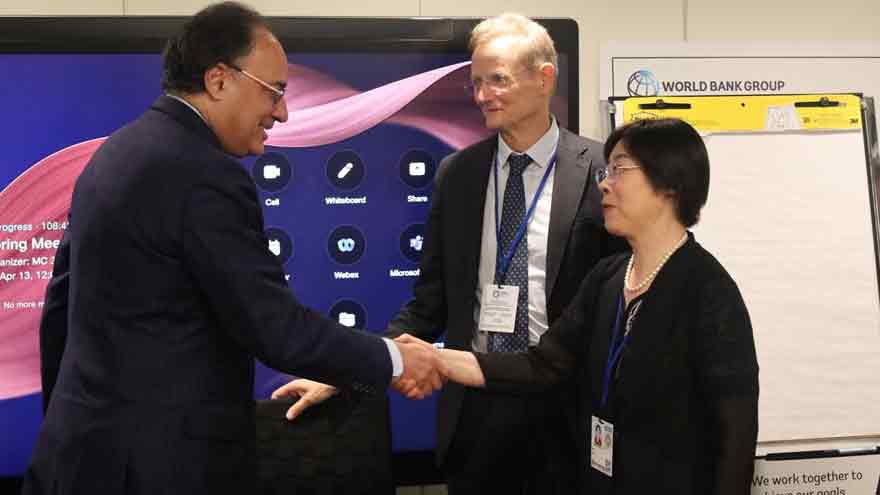
Muhammad Aurangzeb, Federal Minister for Finance and Revenue, held a high-level meeting with Zou Jiayi, President of the Asian Infrastructure Investment Bank, on the sidelines of the World Bank–IMF Spring Meetings 2026.
Pakistan Cuts Diesel, Jet Fuel Prices as Global Oil Declines
During the meeting, the finance minister congratulated Zou Jiayi on assuming office and appreciated AIIB’s continued engagement in Pakistan, highlighting an active investment portfolio of approximately $1.7 billion, with an additional $1 billion in the pipeline.
Aurangzeb underscored Pakistan’s renewed access to international capital markets, citing the successful issuance of a Eurobond through private placement after a four-year gap. He described the move as a strong signal of macroeconomic stabilization. He also pointed to the country’s inaugural Panda bond issuance as a milestone in diversifying external financing sources.
The minister briefed the AIIB leadership on the economic impact of ongoing regional tensions, particularly disruptions affecting Pakistan’s energy supply chain. He further outlined key development frameworks, including the 10-year Country Partnership Framework with the World Bank and the 5-year Country Partnership Strategy with the Asian Development Bank, focusing on climate resilience, population challenges, and fiscal sustainability.
Inviting AIIB to align more closely with Pakistan’s infrastructure priorities, Aurangzeb welcomed the bank’s multi-year rolling lending pipeline, noting it would support more structured and programmatic project implementation over the medium term.
Both sides acknowledged that Pakistan’s disbursement performance with AIIB has lagged compared to other multilateral partners. In response, the minister said the government, under Prime Minister Shehbaz Sharif, has established four dedicated committees to address key bottlenecks, including compliance, land acquisition, procurement, and disbursement.
Reaffirming the government’s commitment to reform, Aurangzeb emphasized ongoing efforts to strengthen institutional capacity, improve efficiency, and accelerate project execution timelines.