

The historical Silk Road was a network of land trade routes connecting Asia and Europe; from the 2nd century BC to 18th century AD. It was central to the economic, cultural, political, and religious interactions between these regions. Other than the crusades, this is an early example of peaceful globalization. Thereafter it fell into disuse due to changed political conditions
The name “Silk route’ given to these land trade connectively much later is said to have been found in Marco Polo’s travelogue for the first time. Marco Polo was a Venetian merchant, explorer, and writer who travelled through Asia along the Silk Road between 1271 and 1295 to reach China. Extending approximately 6,437 kilometers (4,000 miles) across some of the world’s most formidable landscapes. The Silk Road included the Gobi and Taklamakan Deserts as well as the Pamir Mountains. The name highlighted Chinese silk that became an important luxury item traded on these routes throughout Asia and Europe. Providing silken suits and dresses to Mongol nomads, Indian rajas, Persian and Ottoman emperors and European kings and nobles, its light weight, high price and profit margin it was an ideal good for long-distance trade. The initial stage of the Silk Road development saw the Chinese receiving expensive horses and the seeds of lucerne and grapes from the West. The ancient world had cultivated grapevine and made wines from time immemorial. For the Chinese, separated from other civilizations, grapes were a novelty. Moreover, Chinese envoys were very surprised when they found that it was possible to make wine not only from rice but also from berries unknown to them. Chinese later discovered for themselves other agricultural crops – string beans, onions, cucumbers, carrots, pomegranates, figs etc. Various woollen goods, carpets, curtains, blankets and rugs, also came to China from Central Asia and East Mediterranean. They made huge impression upon Chinese who were unfamiliar with methods for wool and flax processing, carpet manufacture and weaving. Highly appreciated in Ancient China were Parthian tapestries and carpets.
Central Asia’s export of camels were very appreciated in China as were military equipment, gold and silver, semi-precious stones and glass items. Samarkand made glass was especially valued due to its high quality and considered as luxury goods. Other goods were skins, wool, cotton fabrics, gold embroidery, exotic fruits – water-melons, melons and peaches; fat-tailed sheep and hunting dogs, leopards and lions.
Apart from silk, caravans from China carried the well-known China porcelain – snow-white vases, bowls, glasses, and dishes with graceful patterns. Only Chinese owned the secret of making the thinnest and resonant porcelain, therefore, it was very expensive in European markets. Bronze ornaments and other products from this metal, ornate bronze mirrors, umbrellas, products from the well-known Chinese varnish, medicines, and perfumery were also popular. One of the most remarkable inventions of Chinese technical genius, Chinese paper was highly appreciated too. Gold, skins and many other goods were exported as well. Merchants also carried tea and rice, woollen and flax fabrics, corals, amber and asbestos. The sacks of merchants were filled with ivory, rhino horns, turtle shells, spices, ceramic and iron items, glaze and cinnamon, ginger, bronze weapons and mirrors.
While India was famous for its fabrics, spices and semi-precious stones, dyes, and ivory and Iran for its silver products, Rome received spices, fragrances, jewels, ivory, and sugar and sent European pictures and luxury goods. Eastern Europe imported rice, cotton, woollen and silk fabrics from Central Asia and exported considerable volumes of skins, furs, fur animals, bark for skin processing, cattle and slaves to Khoresm (today part of Uzbekistan and Turkmenistan). Northern Europe was the source of furs, skins, honey and slaves.
Goods and trade aside, the Silk roads connected different people, cultures and religions with each other. People learnt about far away areas, met traders and adventurers coming from there and listened to their stories, experiences, saw their different cloths and different looks. These trade connections promoted an early phase of globalization and the exchange of knowledge, culture and ideas. It favoured the development of science. Together with trade caravans, preachers of different religions travelled and spread Christianity, Islam and Buddhism across Asia. Travelogues gave an idea about distances, geography of different regions and countries; first maps were drawn to make travelling easier and connections more reliable. Another feature is the exchange of vocabulary between languages. Until today the West is using Arabic numbers and words that are closely related to Arabic, among them every-day vocabulary like “sugar” (sukkar), “cotton” (qu?n) or “magazine” (ma??zin). More recognizable are words like “algebra” (al-jabr), “alcohol” (al-kuh?l), “alchemy” (“al-kimiya”). Works of Arab philosophy and science inspired the revival of western science after the “Dark Ages”.
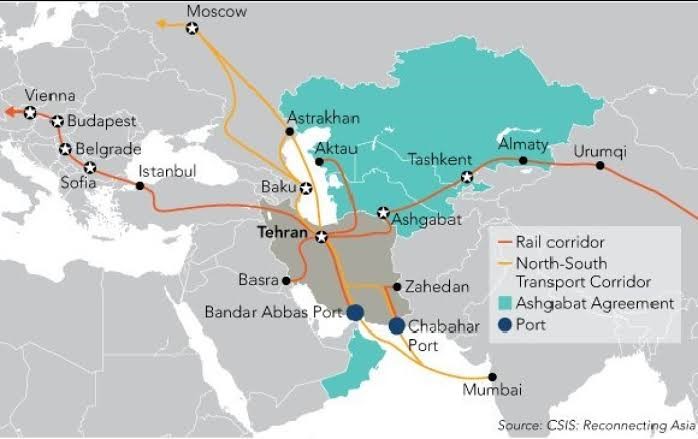
The trade routes developed and shifted over time according to shifting geopolitical contexts throughout history. For example, merchants from the Roman Empire would try to avoid crossing the territory of the Parthians, Rome’s enemies, and therefore took routes to the north instead, across the Caucasus region and over the Caspian Sea. Similarly, whilst extensive trade took place over the network of rivers that crossed the Central Asian steppes in the early Middle Ages, their water levels rose and fell, and sometimes rivers dried up altogether, and trade routes shifted accordingly.
The history of maritime routes can be traced back thousands of years, to links between the Arabian Peninsula, Mesopotamia and the Indus Valley Civilization. The early Middle Ages saw an expansion of this network, as sailors from the Arabian Peninsula forged new trading routes across the Arabian Sea and into the Indian Ocean. Indeed, maritime trading links were established between Arabia and China from as early as the 8th century AD. Technological advances in the science of navigation, in astronomy, and also in the techniques of ship building, combined to make long-distance sea travel increasingly practical. Lively coastal cities grew up around the most frequently visited ports along these routes, such as Zanzibar, Alexandria, Muscat, and Goa, and these cities became wealthy centres for the exchange of goods, ideas, languages and beliefs, with large markets and continually changing populations of merchants and sailors.
Today, many historic buildings and monuments still stand along sites of the old Silk Road routes, marking the passage of the Silk Roads through caravanserais, ports and cities. However, the long-standing and ongoing legacy of this remarkable network is reflected in the many distinct but interconnected cultures, languages, customs and religions that have developed over millennia along these routes. The passage of merchants and travellers of many different nationalities resulted not only in commercial exchange but in a continuous and widespread process of cultural interaction. From their early, exploratory origins, the Silk Roads developed to become a driving force in the formation of diverse societies across Eurasia and far beyond.
Silk Road trade and travelling became more difficult when in 1453 the Ottoman Empire closed off trade with the West. With modern colonialism coming up from the 16th century, maritime trade routes fell into the hands of colonial powers that possessed large fleets of ocean-faring ships that dominated goods and people travel. Land routes fell into disuse with the erecting of “national” borders between states that until today hamper movement of goods, ideas and men alike (A defence and security analyst, the writer is Chairman Karachi Council of Foreign Affairs (KCFR) and the Vice Chairman Board of Management Quaid-e-Azam House Museum [a Nation Building Institution] and Dr Bettina Robotka, former Professor of South Asian Studies, Humboldt University, Berlin, Editor of the Defence Journal and a Consultant to the Pathfinder Group).