
Naqvi Iran Visit Focuses on Security, Regional Peace and Pakistan’s Mediation Efforts
Interior Minister Mohsin Naqvi holds high-level talks in Tehran with President Pezeshkian and Foreign Minister Araghchi to ease regional tensions and strengthen bilateral ties.
Mohsin Naqvi meets Iranian officials during the naqvi iran visit in Tehran
High-Level Talks Begin in Tehran
ISLAMABAD / TEHRAN — The official naqvi iran visit is centered on strengthening bilateral relations, addressing joint security concerns, and bolstering diplomatic efforts for regional stability, the Foreign Office confirmed on Wednesday.
Interior Minister Mohsin Naqvi arrived in Tehran on Tuesday and was received by Iranian Interior Minister Eskandar Momeni before holding detailed discussions with Foreign Minister Abbas Araghchi and President Masoud Pezeshkian.
Foreign Office Spokesperson Tahir Andrabi stated that the visit provides both neighboring nations with a crucial platform to address mutual security challenges and facilitate communication among regional stakeholders.
Key Pillars of the Naqvi Iran Visit
Islamabad continues to leverage direct and indirect channels to revive peace negotiations and facilitate dialogue between Tehran and Washington. The primary objectives of the visit include:
Islamabad MoU Follow-Up: Reviewing progress on the Islamabad Memorandum of Understanding signed to improve cross-border security and economic cooperation.
US-Iran Dialogue Facilitation: Acting as a diplomatic channel to remove obstacles to peace talks and encourage both parties to return to the negotiating table.
Trilateral Defence Pact: Discussing broader security alignment following the landmark Makkah Defence Agreement signed last week between Pakistan, Saudi Arabia, and Türkiye.
Trump News: President Confirms Secret Plane Swap in Turkey Following Iranian Threat
Regional Security and Foreign Office Stand
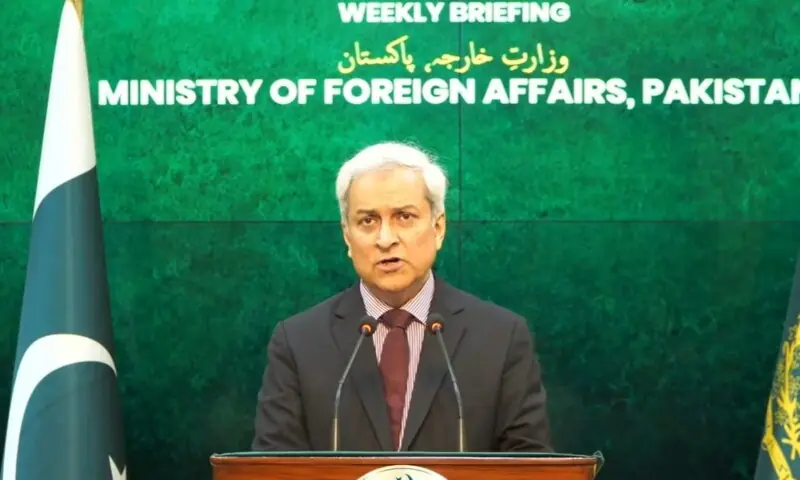
During the weekly briefing, FO Spokesperson Andrabi highlighted the defensive nature of the Makkah pact, emphasizing that it aims to foster collective deterrence without targeting any specific nation.
Additionally, the Foreign Office strongly rejected recent statements from India’s Ministry of External Affairs regarding Azad Jammu and Kashmir (AJK). Andrabi dismissed the claims as baseless attempts to divert attention from human rights issues in Indian-administered Kashmir, reaffirming Pakistan’s commitment to UN Security Council resolutions.