Iran Says Strikes on US Military Assets Were an Act of Self-Defence
Tehran says it targeted Patriot air defence systems and missile launch platforms in Kuwait as regional tensions escalate and diplomatic efforts remain stalled.
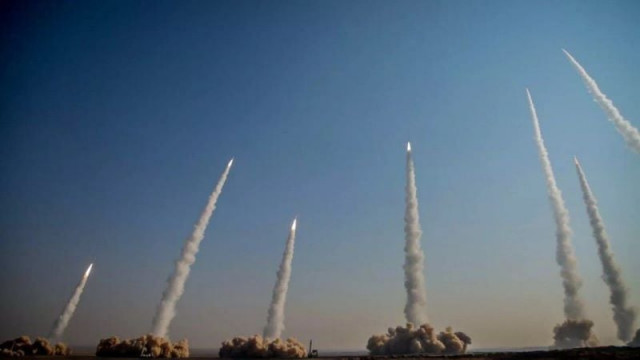
Tehran says its forces targeted US military assets as tensions escalate across the region.
Iran’s Foreign Ministry has said Iranian forces struck US Patriot air defence systems and drone and missile launch platforms in self-defence, describing the attacks as an effort to target the sources of strikes against Iran.
In a statement released late Wednesday, the ministry said the operations targeted infrastructure supporting attacks on the country. It also reaffirmed Tehran’s respect for the sovereignty and territorial integrity of regional states.
The ministry urged neighbouring governments to prevent their territories from being used to launch attacks against Iran.
Earlier on Wednesday, Iran’s army said its drones had targeted US Patriot systems and drone and missile launch platforms at Ali Al Salem Air Base in Kuwait.
Kuwait condemned the Iranian attacks as a violation of its sovereignty. Its military had earlier reported responding to what it described as hostile drones. Bahrain also said its air defences had intercepted Iranian aerial attacks.
Tehran Calls on Regional States to Restrict US Military Operations
Iran’s Foreign Ministry criticised regional countries for objecting to Iranian defensive operations while, according to Tehran, allowing the United States to use their territories and military facilities against Iran.
The ministry called on regional governments to prevent Washington from using their soil and military bases to prepare for or carry out attacks.
It argued that failing to prevent such activities violated the principle of good-neighbourliness. The statement also cited Article 3(f) of the annex to UN General Assembly Resolution 3314 (XXIX), adopted in 1974, concerning acts of aggression.
Tehran said it had exercised restraint in consideration of regional relations and the interests of the Islamic Ummah. It maintained that its defensive strikes had been limited to American military bases and assets in those countries.
Trump and Putin Hold Talks in China Ahead of Historic Trilateral Meeting with Xi
The ministry also condemned recent US military attacks on locations along Iran’s southern coast.
Iran and US Remain at Odds Over War Settlement
Tensions between Iran and the United States have continued since the US and Israeli offensive against Iran began on February 28.
The two sides remain divided over implementing a memorandum of understanding reached in Islamabad in June. Disagreements over sanctions, a US naval blockade and security arrangements in the Strait of Hormuz have complicated efforts to end the conflict.
Meanwhile, maritime incidents have added to concerns over regional security.
Russia, China and Iran Set Conditions for Resuming Nuclear Inspections
Russia, China and Iran have said the International Atomic Energy Agency (IAEA) can resume inspections at Iranian nuclear facilities only after hostilities end and threats of renewed military action are removed.
A Russian delegation delivered a joint statement on behalf of the three countries during a session of the IAEA Board of Governors in Vienna on Wednesday.
The statement said demands for routine nuclear safeguards must take account of the security risks created by military attacks and the continuing threat of further force.
It added that inspections could resume only after hostilities fully ended, threats of renewed aggression were removed and convincing guarantees prevented similar attacks in the future.
IAEA inspections were disrupted after Israeli and US strikes on Iranian nuclear facilities in June 2025. The agency suspended verification activities and withdrew inspectors over security concerns. Iran subsequently passed a law suspending cooperation with the agency.
Tanker Struck by Unknown Projectile Near Strait of Hormuz
A tanker was struck by an unidentified projectile while sailing out through the Strait of Hormuz on Wednesday, according to the UK Maritime Trade Operations (UKMTO).
Citing local authorities, UKMTO said the projectile hit the vessel’s engine room at around 9:45pm Pakistan time. The incident occurred approximately six nautical miles north of Khasab, Oman.
The crew were safe and accounted for, the agency said. However, the extent of the damage and any environmental impact remained unknown.
UKMTO advised vessels to navigate the area cautiously and report suspicious activity while authorities investigated.
The incident followed reports from Iran’s army that three oil tankers had struck naval mines and caught fire in the eastern Strait of Hormuz. The army said the vessels had switched off their navigation systems before entering an area it described as off-limits to shipping.
The resulting fires had disabled all three tankers, according to the Iranian statement.
Separately, the United Arab Emirates’ national oil company, ADNOC, said one of its vessels came under attack while transiting the strait on Tuesday evening. The incident injured 11 crew members and left another missing. The company said the injured were receiving treatment and a search was underway for the missing crew member.
Iran Rejects UN Resolution on Human Rights Record
Iran has rejected a Canada-led resolution criticising its human rights record after the UN General Assembly’s Third Committee adopted the text for the 24th consecutive year.
Iran’s mission to the United Nations described the resolution as politically motivated and accused its sponsors of applying human rights standards selectively.
The mission criticised what it called the resolution’s silence on civilian deaths and the humanitarian consequences of sanctions, military action and the US naval blockade.
Iranian Ambassador and Chargé d’Affaires to the United Nations Gholamhossein Darzi said Iran had faced military attacks, attempts to incite domestic unrest and intensified economic pressure over the past year.
The Third Committee approved the draft resolution, titled “Situation of human rights in the Islamic Republic of Iran,” with 76 votes in favour, 27 against and 64 abstentions.
Iran voted against the resolution alongside China, Russia, Pakistan, India, Cuba, North Korea, Indonesia, Iraq and Vietnam.
The United States, Israel, Egypt, Lebanon and Jordan abstained. Canada, France, Germany, Italy, Japan, Spain, Sweden and Ukraine were among the countries that supported the text.
Canada’s UN mission said the resolution had 46 co-sponsors and responded to what it described as a year of serious human rights violations, repression and armed conflict in Iran.
Trump Reportedly Frustrated with Vance Over Iran War Criticism
US President Donald Trump has reportedly become increasingly frustrated with Vice President JD Vance over his comments linking the Iran war to Republican losses in the midterm elections, according to The New York Times.
The newspaper reported that Trump initially appeared unconcerned with Vance’s post-election assessment and publicly agreed with much of his analysis.
However, Trump has reportedly complained privately to aides and political allies that Vance failed to explicitly defend the decision to launch the war against Iran.
Vance had identified the conflict as a “real reason” behind the Republican Party’s midterm setbacks in an extensive social media assessment.
When reporters initially asked Trump about Vance’s comments, he said: “I think it’s largely true.”
People familiar with the president’s private conversations later told the newspaper that Trump had become dissatisfied with how Vance framed his criticism.
According to the report, Trump believes Vance should have defended the decision to attack Iran as necessary and correct, even while acknowledging its political consequences.
Despite the reported tension, Trump has continued to praise Secretary of State Marco Rubio. The newspaper said the president had suggested to aides and political allies that Rubio could become a strong presidential candidate.
Rubio has repeatedly defended the decision to attack Iran, describing the military action as essential to US national security.
Vance, meanwhile, has played down suggestions of divisions within the administration.
Asked about his post-election assessment during an appearance on Fox News, he said: “I think there’s no daylight between the president or any other senior member of the administration.”
Araghchi Calls for Regional Security Without Foreign Interference
Iranian Foreign Minister Abbas Araghchi has called for a regional security framework based on cooperation among neighbouring countries, without foreign interference.
Speaking to local media after a visit to Oman, Araghchi said discussions focused on US military action and efforts to prevent renewed conflict.
According to Iran’s state news agency IRNA, he described the visit as successful and said both sides held constructive discussions on regional security.
Araghchi said there was growing recognition across the region that countries should ensure their own security without relying on outside powers.
He also highlighted the need for an independent regional security framework to prevent further escalation.
The Iranian foreign minister said the discussions reflected a shared interest in avoiding renewed hostilities and strengthening regional cooperation.