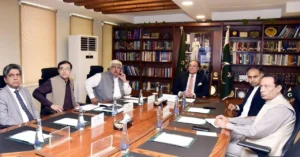

FPCCI Seeks Industrial Electricity Tariff Below 9 Cents to Boost Exports
Atif Ikram Sheikh welcomes the reduction to 12 cents but calls for uniform relief across all industrial consumers, including B3 and B4 categories.
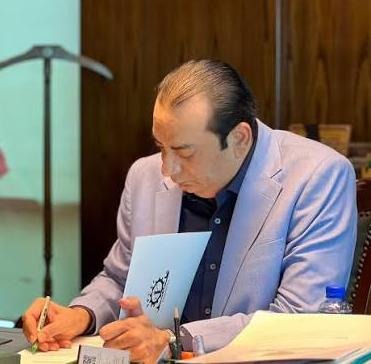
FPCCI President Atif Ikram Sheikh calls for lower industrial electricity tariffs to strengthen Pakistan’s exports
KARACHI: The Federation of Pakistan Chambers of Commerce and Industry (FPCCI) has welcomed the government’s reduction in industrial electricity tariffs from 16 cents to 12 cents per unit over the past two years. However, it has urged authorities to lower the rate to below 9 cents for all industrial consumers to strengthen exports and reduce reliance on imports.
FPCCI President Atif Ikram Sheikh said selective relief packages could provide temporary support. However, he stressed that a uniform tariff reduction across the industrial sector would offer a more sustainable solution.
He thanked Prime Minister Muhammad Shehbaz Sharif and Federal Minister for Power Sardar Awais Ahmad Khan Leghari for the relief measures. He also acknowledged the government’s efforts to introduce two schemes aimed at increasing industrial electricity consumption.
FPCCI Reviews Industrial Power Relief Schemes
The government has introduced an Incremental Consumption Package and an Optional Two-Part Time-of-Use (ToU) Tariff.
Under the Incremental Consumption Package, industries receive a concessional rate on electricity consumed above their previous consumption baseline. Existing consumption remains subject to the usual billing arrangements, while the incentive applies only to additional units.
The proposed Two-Part ToU Tariff separates electricity bills into fixed capacity charges per kilowatt per month and variable charges based on consumption. Rates vary according to the time of use, including peak and solar hours.
The scheme aims to encourage industries to use more electricity during daylight hours, when solar generation is more readily available. The government also hopes this approach will help manage the electricity demand curve.
Industry Raises Concerns Over Fixed Charges
Sheikh said industry representatives had shared reservations about the Two-Part ToU Tariff with the Power Division over the past six months.
According to the FPCCI president, high fixed charges and logistical disruptions caused by the ongoing war have made the proposed tariff difficult for businesses to adopt under current conditions.
He also warned that a benefit for one industrial group could shift costs to other electricity consumers. Such an approach, he argued, would redistribute the burden rather than reduce the overall cost of industrial power.
Sheikh said many industries had already adjusted their operations around daytime electricity use and solar generation. This leaves limited room to shift further demand from night to day.
He added that solar power remains cheaper than grid electricity under the proposed solar-hour rates. Therefore, he questioned whether the scheme would encourage industries to return to grid power during those hours or effectively address the demand curve.
The FPCCI president called on policymakers to give industry’s feedback due consideration when designing future tariff proposals.
Trump Questions Livestream Plan for Fort Hood Shooter’s Execution
FPCCI Calls for Uniform Tariff Reduction
Sheikh described the 12-cent tariff and the two relief schemes as interim measures. He said Pakistan needs a lasting reduction in electricity costs for every industrial consumer.
He specifically called for relief for B3 and B4 consumers. These categories receive electricity at higher voltage levels but, according to the FPCCI, continue to bear cross-subsidies despite their lower service costs.
Sheikh argued that authorities could reduce tariffs for these consumers alongside other industrial users, benefiting both businesses and the wider power system.
He also maintained that a lower industrial tariff would support higher production and exports, and expressed confidence that the policy could align with Pakistan’s commitments to the International Monetary Fund (IMF).
FPCCI, he added, stands ready to support future tariff planning through the expertise of private-sector energy professionals.
“The collective objective must be to increase Pakistan’s total industrial output,” Sheikh said in substance, arguing that tariff policy should expand production rather than simply shift electricity costs between industries.
Brig Iftikhar Opel, SI (M), Retd.
Secretary General, FPCCI