

Hardware vs Software Local Dimming What Really Controls Your TV’s Backlight?
Understanding physical backlight zones and software processing can help buyers make informed decisions when choosing a television.
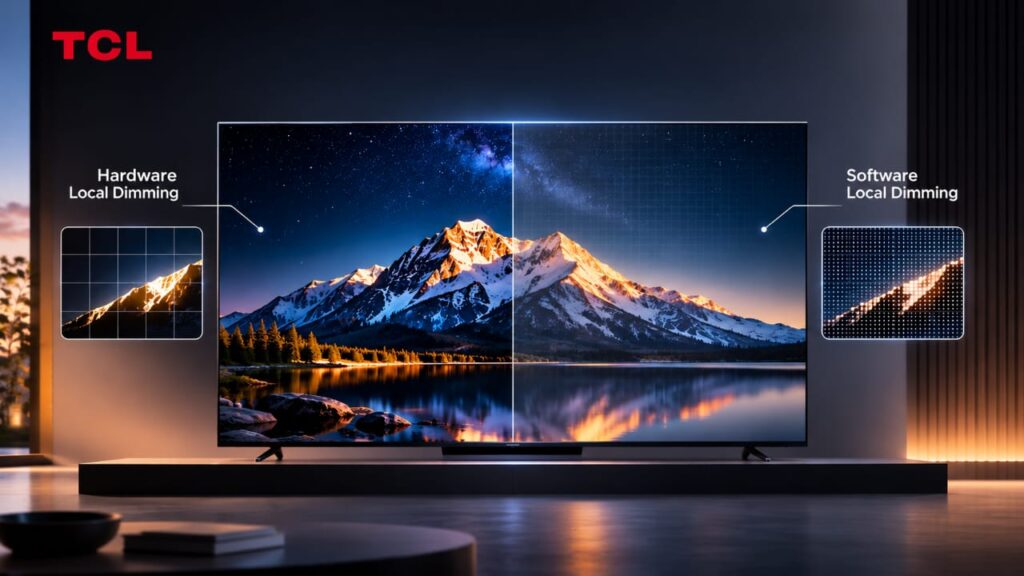
Hardware vs software local dimming: How physical backlight zones influence television picture quality.
Local dimming allows a television to adjust brightness across different areas of the screen. Instead of illuminating the entire panel uniformly, the technology controls light in selected regions.
When implemented effectively, local dimming improves contrast and picture depth. For example, stars in a night sky appear brighter against deeper blacks. Without precise light control, dark areas can look grey and bright objects may produce unwanted light around them.
However, not all local dimming technologies work in the same way.
Two Different Approaches to Local Dimming
The main difference lies in how a television manages its backlight.
Hardware-based local dimming divides an LED backlight into independently controlled zones. Each zone can adjust its brightness according to the content on screen.
As a result, darker areas can remain dark while bright highlights retain their intensity. This improves contrast and helps reduce unwanted light spill.
By comparison, software-based brightness processing relies on image analysis and digital adjustments. These algorithms can improve picture quality. However, they cannot reproduce the precision of separate physical backlight zones when a television does not have them.
OUP and The City School Celebrate Young Literary Talent Through Nationwide Poetry Competition
Consequently, contrast may appear less precise, especially when bright and dark objects appear together.
Importantly, software also plays a role in hardware-based local dimming. Processing algorithms determine how each physical zone responds to changing images. The key difference is whether software controls independently adjustable backlight zones or simply modifies the image itself.
Why the Difference Matters
The term “local dimming” on a television specification sheet does not always explain how the backlight works. Therefore, buyers should understand the underlying technology before comparing displays.
For viewers in Pakistan, this distinction matters during everyday viewing. Cricket matches in brightly lit living rooms and films watched in darker settings both benefit from effective brightness control.
The ability to manage bright and dark areas contributes to a more balanced and convincing picture.
Manufacturers such as TCL provide information about their Mini LED technology. This includes the number of dimming zones across different product ranges.
However, zone count alone does not determine picture quality. Performance also depends on zone arrangement, optical design and the algorithms that control the backlight.
What Should Buyers Ask Before Purchasing?
When comparing televisions, buyers should ask whether a display has independently controlled physical backlight zones. They should also check how many zones the television offers.
Both the number of zones and the precision of their control matter. Together, these factors help determine how effectively a television manages brightness and contrast.
Ultimately, television picture quality is not just about achieving higher brightness. It also depends on how precisely the display controls that light.