Pakistan Approves Autos Policy 2026–31 with $6 Billion Export Target
New framework sets mandatory localisation targets, vendor technology upgrades and export obligations to shift the industry from import-dependent assembly towards global competitiveness
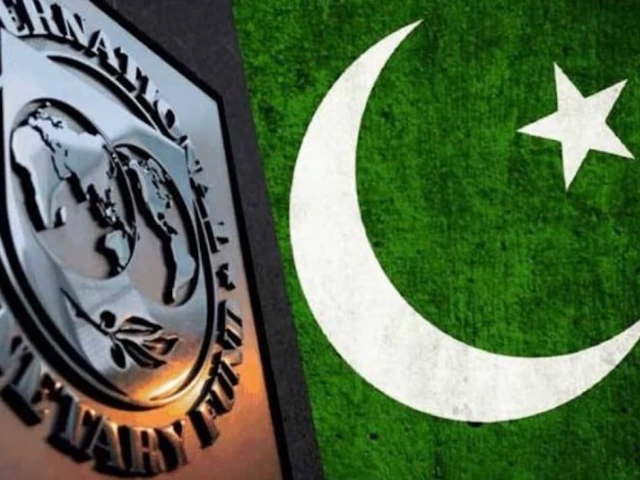
Autos Policy 2026–31 targets $6 billion in exports and stronger domestic vehicle and auto parts manufacturing.
Prime Minister Shehbaz Sharif has approved the Autos and Auto Parts Manufacturing Policy 2026–31, setting a cumulative export target of approximately $6 billion over five years.
The approval follows consultation with the International Monetary Fund (IMF). Sources told The Express Tribune that the government shared the draft policy with the Fund, which raised no objections.
The policy aims to transform Pakistan’s automotive sector from import-dependent assembly into an export-oriented manufacturing industry. It prioritises local production, higher domestic value addition, technology transfer and integration into international supply chains.
Adviser to the Prime Minister on Industries and Production Haroon Akhtar Khan described the framework as a major shift in industrial policy.
He said the initiative reflected the prime minister’s vision of an export-led and self-reliant economy. It also aims to empower local manufacturers, expand domestic parts production and create employment opportunities.
Mandatory Localisation Targets for Automakers
The policy introduces binding localisation requirements to increase domestic value addition across the automotive industry.
Pakistan currently has approximately 2,200 auto parts manufacturers, according to the adviser. Their technological capabilities and integration into international supply chains will play a key role in the sector’s competitiveness.
Oil Prices Fall More Than $1 as Middle East Tensions Ease and Supply Concerns Grow
Existing original equipment manufacturers (OEMs) must maintain their current domestic value addition for each vehicle model. Manufacturers already achieving localisation levels of 50% to 65% cannot reduce those levels simply because the policy sets lower minimum thresholds for other companies.
The framework also requires existing OEMs to increase domestic value addition by 2% annually against the previous year’s base. This represents an overall increase of 8% during the policy period.
Minimum localisation targets for 2030–31 include:
- Cars and SUVs: 40%
- Light commercial vehicles: 45%
- Tractors: 80%
- Motorcycles and rickshaws: 90%
These requirements aim to strengthen domestic manufacturing and reduce dependence on imported components.
New Energy Vehicles Face Progressive Localisation Rules
The policy also introduces increasing localisation requirements for new energy vehicles (NEVs).
By 2030–31, manufacturers must achieve minimum domestic value addition of 25% for cars and SUVs. The target for motorcycles and rickshaws will reach 30%.
Manufacturers that fail to meet applicable requirements will face an additional three percentage points of customs duty on relevant non-localised completely knocked-down (CKD) imports in the following financial year.
The additional duty will apply subject to the prescribed legal process.
Rs2.1 Billion Programme to Upgrade Local Vendors
The government will launch a Vendor Upgradation and Technology Transfer Programme (VUTTP) with an allocation of Rs2.1 billion.
The Engineering Development Board (EDB) and Small and Medium Enterprises Development Authority (SMEDA) will implement the programme.
It will support local manufacturers through:
- Technology upgrades and modern production facilities.
- Access to common manufacturing facilities.
- Technical and workforce skills development.
- International quality certification.
- Preparation for export markets.
The programme also targets investment by at least five anchor firms during the policy period.
Furthermore, OEMs must support local vendors through technology transfer, quality assurance and improvements in manufacturing capabilities.
$6 Billion Export Target and Financial Incentives
The government aims to generate approximately $6.01 billion in cumulative automotive exports between 2026 and 2031.
Auto parts manufacturers will contribute $3.29 billion, representing 55% of the target. Automobile manufacturers will account for the remaining $2.72 billion, or 45%.
The policy introduces a Drawback of Local Taxes and Levies (DLTL) scheme to support exporters.
Eligible companies can receive a 5% incentive on net free-on-board export value. An additional 10% support will apply to qualifying incremental exports.
The framework also introduces penalties for OEMs that fail to meet their export commitments. These penalties will range from 1% to 3% of annual factory-gate sales value.
Manufacturers that fail to meet their obligations for two consecutive years may face cancellation of their manufacturing certificates. The policy provides an exception for force majeure circumstances.
OEMs must also secure export opportunities through the global supply chains of their international principals.
Import Concessions Linked to Manufacturing Commitments
The policy will gradually reduce customs duties over five years. However, companies must meet domestic value addition and export obligations to qualify for the concessions.
A key incentive offers a concessional 5% customs duty on imported battery electric vehicles (BEVs) valued up to $15,000 during the initial two years.
Companies must establish domestic assembly or manufacturing facilities to qualify. Importers must also submit a surety bond and an irrevocable bank guarantee covering the customs-duty difference.
The framework requires companies to begin commercial production of the imported BEV variant by September 30, 2028.
Failure to meet this deadline will result in the encashment of the bank guarantees. Similarly, OEMs that do not sign agreements with the EDB covering localisation, exports and other performance requirements will not qualify for concessional tariffs on imported parts.
These conditions link import incentives directly to investment and domestic production.
Policy Targets Foreign Exchange Savings and Industrial Growth
The government projects approximately $17.7 billion in cumulative foreign exchange savings during 2026–31. The estimate compares domestic production with the cost of importing equivalent vehicles in completely built-up (CBU) condition.
The policy also expects export growth to generate additional foreign exchange earnings.
Meanwhile, greater adoption of new energy vehicles could help Pakistan avoid importing approximately 1.823 million tonnes of oil during the five-year period.
The framework also seeks to improve the use of existing industrial capacity. Contract manufacturing provisions will help companies utilise facilities that currently have an estimated 41% to 80% idle capacity.
Better utilisation could support production efficiency, investment and employment across the automotive supply chain.
The government plans periodic monitoring and a mid-term policy review in 2028. Authorities will introduce corrective measures where necessary to keep the industry on track.
Overall, the Autos and Auto Parts Manufacturing Policy 2026–31 places domestic parts production, localisation and export competitiveness at the centre of Pakistan’s automotive industrial strategy.