Russian Strikes Knock Out Power Across Ukraine Ahead of Abu Dhabi Peace Talks
Moscow launches hundreds of drones and dozens of missiles against energy facilities, while Kyiv reports widespread outages and warns of nuclear safety risks.
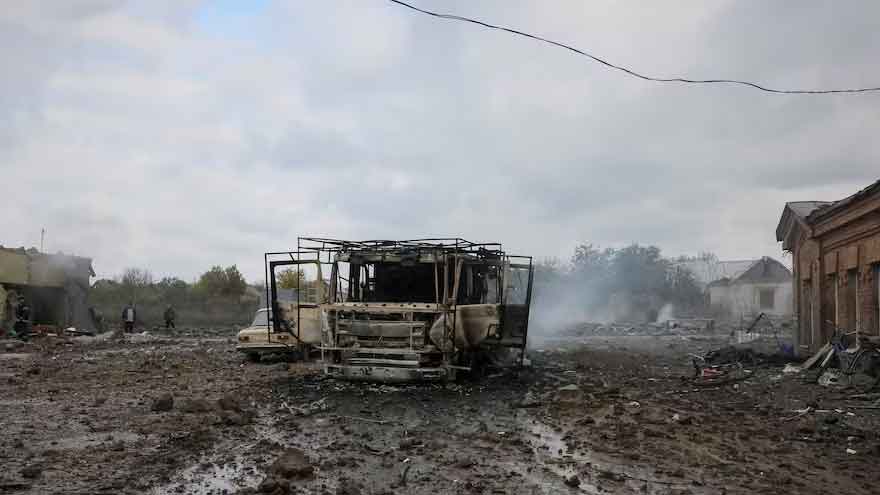
Ukraine Energy Russian missile and drone attacks damage power plants and trigger widespread electricity outages.
Russia launched a massive wave of missile and drone attacks against Ukraine’s energy infrastructure on Tuesday, disrupting electricity supplies across several regions. The assault came just days before US-brokered peace talks between Russia and Ukraine are due to resume in Abu Dhabi.
President Volodymyr Zelenskiy said Russia had launched 289 drones, 17 ballistic missiles and 59 cruise missiles overnight. The strikes hit power plants and substations from the Black Sea port of Odesa to Rivne in western Ukraine.
Ukraine’s largest private energy producer, DTEK, confirmed that three of its five thermal power plants had stopped generating electricity after the attacks. The company reported extensive damage to equipment and infrastructure.
Ukrainian officials said the strikes caused emergency power cuts in Kyiv and at least six other regions. The disruption also affected water supplies and transport in the capital.
Deadly Strike on School Used for Aid Distribution
The latest bombardment followed a deadly attack in the Zaporizhzhia region.
Zelenskiy said at least 33 people had died after Russian forces twice struck a school in Komyshuvakha on Monday. The building was being used to distribute humanitarian aid.
He added that around 50 people were still believed to be trapped beneath the rubble.
Moscow said its forces had targeted Ukrainian military units near Komyshuvakha and two other settlements in the region. Russian officials claimed that up to 25 Ukrainian servicemen had died. They also reported destroying 15 vehicles and an electronic warfare station.
Speaking alongside German Chancellor Friedrich Merz in Berlin, Zelenskiy condemned the attack. He said Russia had chosen further violence instead of building on a recent humanitarian truce in and around Oleshky.
Trump Says Iran War Contributed to Republican Losses in US Midterms
The brief truce in the Russian-controlled town had been agreed with assistance from US First Lady Melania Trump. It ended less than two days before Tuesday’s major assault.
Russian officials, meanwhile, said Ukraine had set fire to a major oil refinery in Yaroslavl overnight. The claim came amid intensified Ukrainian attacks on Russian oil infrastructure.
Abu Dhabi Peace Talks Face New Challenges
The latest strikes have raised fresh questions about prospects for the US-brokered negotiations scheduled for November 10–11 in Abu Dhabi.
Germany has emerged as Ukraine’s largest supporter since Donald Trump returned to the White House and Washington withdrew its financial support for Kyiv.
Merz described the planned talks as an important step towards ending the war. However, he insisted that European countries must take part in the process.
“It is important for Russia to finally engage in serious negotiations on a ceasefire and a subsequent peace agreement,” Merz said. “I have not seen any sign of this so far.”
Ahead of the Abu Dhabi meeting, the European Commission planned consultations with Ukraine, the United States, NATO and European allies on Wednesday.
Zelenskiy said the discussions would cover a proposed prosperity plan and security guarantees for Ukraine. NATO also planned further consultations on Thursday.
DTEK Plants Halt Generation as Winter Approaches
The latest Russian assault targeted energy facilities across the country, including power plants and electricity transmission and distribution networks.
DTEK said the attacks involved several waves of missiles and drones. All three affected thermal power plants halted electricity generation, although the company reported no casualties in its initial assessment.
Kyiv Mayor Vitali Klitschko described the capital’s electricity situation as “extremely difficult”. He said Russian attacks continued to damage Ukraine’s unified energy system, including generating capacity and transmission lines.
Emergency power cuts also affected several other regions. Authorities warned that damaged infrastructure could make electricity supplies increasingly difficult as winter approaches.
In Dnipro, regional officials reported two deaths and around 20 injuries. The attacks also damaged railway infrastructure, including a train station, passenger carriages and locomotives.
Residents fear another difficult winter after previous Russian strikes left millions of Ukrainians without electricity and heating for extended periods.
“This winter is going to be very hard,” said Olha Hyria, a 49-year-old resident of Dnipro.
“Russia is striking power plants, heating plants, and that means this winter is going to be very difficult,” she added.
Ukraine Warns of Nuclear Safety Risks
Ukraine also raised concerns about attacks near infrastructure linked to the Khmelnytskyi nuclear power plant.
Energy Minister Denys Shmyhal said Russian forces directed three drones towards a substation critical to the plant’s stable operation.
He warned that the incident threatened not only Ukraine but also nuclear safety across Europe. Ukraine said it had informed the International Atomic Energy Agency about the development.
Khmelnytskyi is one of Ukraine’s four nuclear power plants. Russian forces have controlled the Zaporizhzhia nuclear facility since the early stages of the February 2022 invasion.
Zelenskiy Calls for More Air Defence Support
Zelenskiy said the timing of the attacks was significant because they coincided with the US congressional elections.
“It is very telling that all of this is happening on the day of the US congressional elections,” he said, appealing to international partners for additional air defence systems.
He warned that Russia’s attacks on civilian infrastructure required a strong international response.
Russia’s Defence Ministry said its forces had struck electricity facilities supplying military factories and the Ukrainian armed forces.
The latest assault marks another escalation in Russia’s repeated campaign against Ukraine’s energy system. As the country prepares for winter, the damage to power generation, transmission and heating infrastructure is likely to increase pressure on civilians and complicate the prospects for peace.