Tesla-SpaceX Merger Faces Governance Hurdles as Musk Weighs AI Synergies
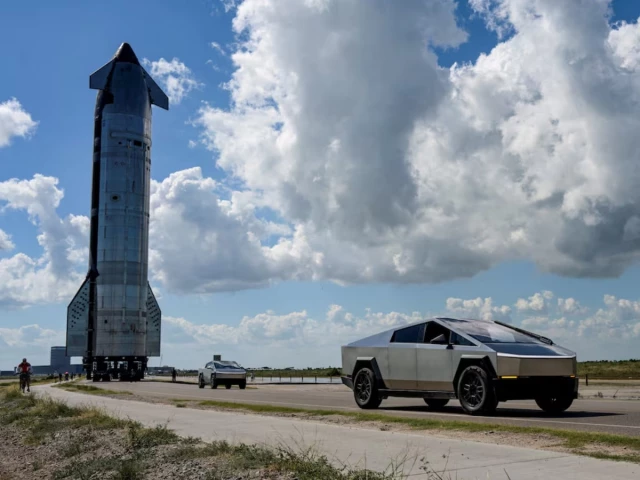
Elon Musk faces shareholder and governance hurdles over a potential Tesla-SpaceX merger.
Elon Musk sees strategic benefits in merging Tesla and SpaceX, but a potential deal faces significant governance, regulatory and shareholder approval hurdles. Two independent committees must negotiate the terms, while Tesla shareholders would need to approve the transaction under a demanding voting requirement.
Musk has described himself as a “conflicted party” and acknowledged that the committees have yet to agree on terms. Despite growing expectations on Wall Street that a deal could emerge by the end of next year, a merger remains uncertain.
Following the report, SpaceX shares rose 8.4%, while Tesla gained 1.5% in premarket trading.
AI Expansion Strengthens Merger Argument
Both companies are expanding their artificial intelligence capabilities and investing heavily in infrastructure. Tesla and SpaceX are jointly developing the Terafab chip plant, while AI has become a major source of SpaceX revenue.
The companies also face substantial spending requirements. SpaceX could spend an additional $35 billion to $40 billion in the fourth quarter to support its expansion plans, according to the supplied report.
Real Madrid Thrash RB Leipzig 4-1 to Maintain Perfect Champions League Record
Some analysts believe combining the businesses could help manage these costs. A unified company could share infrastructure, streamline services, reduce administrative expenses and potentially improve access to financing.
Justus Parmar, chief executive of Fortuna Investments and an investor in both companies, said a merger made strategic sense because both businesses were moving rapidly into AI and autonomous systems.
He also argued that a combination could reduce duplicated corporate costs and the administrative burden associated with operating two separate public and private business structures.
However, the financial benefits would depend on the final deal structure and whether shareholders believe the combined business would create more value than the companies could achieve independently.
Tesla Shareholder Approval Is a Major Hurdle
Musk’s voting power differs significantly between the two companies. He controls approximately 85% of SpaceX’s voting power through super-voting shares, while his stake at Tesla gives him roughly 20% of the voting rights.
Bill Birmingham, head of research at REX Financial, estimates that a merger could increase Musk’s voting power in the combined company to approximately 57%.
Ryan Zurrer, founder of Dialectic, estimates it could reach 58% under an illustrative exchange ratio of 0.7 SpaceX shares for each Tesla share. Barclays has discussed that ratio as a possible example, but the companies have not negotiated a final exchange ratio.
Zurrer suggested that a ratio closer to 0.6 might be necessary for Musk to retain control if he sold additional equity. He also identified the Tesla shareholder vote as a major obstacle because Musk’s interests could differ from those of other investors.
Musk has said the proposal would require approval from a majority of all Tesla shares, rather than merely a majority of votes cast. Under that requirement, uncast ballots could make approval more difficult.
Analysts have also raised concerns about shareholder participation, pointing to uncast broker votes at Tesla’s previous annual meeting as a potential risk.
Governance and Regulatory Scrutiny Expected
Any merger would face close scrutiny because Musk has leadership roles and substantial interests in both businesses. Independent committees would need to negotiate terms that protect shareholders, particularly those who do not share Musk’s financial interests.
Tesla’s 2016 acquisition of SolarCity provides a relevant precedent. A Delaware court ultimately cleared the transaction after years of litigation but criticised the absence of an independent committee during the process.
Josh Gilbert, lead analyst for APAC at eToro, said a transaction in which one person effectively controls both sides would attract difficult governance questions.
Regulatory scrutiny and the details of the merger agreement could therefore prove as important as the potential business benefits.
Investors to Assess AI Strategy and Financial Returns
Some analysts believe a combined company could benefit from closer cooperation across AI, autonomous systems, advanced manufacturing and infrastructure. Others argue Tesla might achieve similar benefits through partnerships without merging with SpaceX.
Ipek Ozkardeskaya, senior analyst at Swissquote, said investors could reject a transaction if they concluded Tesla would be better off pursuing AI opportunities with other companies.
The deal’s valuation, exchange ratio, capital requirements and governance arrangements are likely to influence investor support.
Tesla’s third-quarter results, scheduled for release after the market close according to the supplied report, could provide additional information about the company’s financial position. Investors are also watching for disclosures about merger discussions in regulatory filings ahead of the company’s December 3 annual shareholder meeting.
For now, the potential combination remains an idea rather than an agreed transaction. Its future will depend on negotiations between the independent committees, shareholder approval and whether investors believe the merger offers sufficient strategic and financial value.