Pakistan Exports Rise 11.13% to $8.445 Billion, but Sectoral Declines Persist
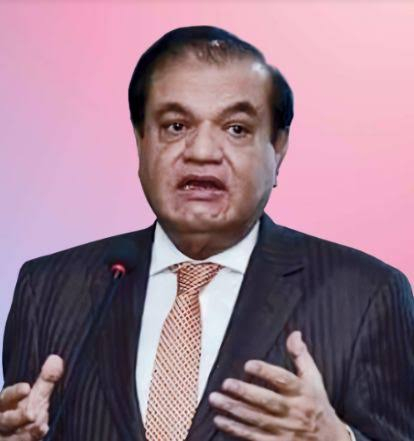
Pakistan Exports: Mian Zahid Hussain calls for targeted support and accredited testing facilities to boost export growth.
Pakistan’s exports increased by 11.13% to $8.445 billion during July–September 2026. However, several sectors continued to face declining overseas sales. Mian Zahid Hussain, President of the Pakistan Businessmen and Intellectuals Forum (PBIF), has urged the government to introduce sector-specific measures to sustain export growth.
Commenting on the Pakistan Bureau of Statistics (PBS) report for September 2026, he said the overall improvement was encouraging. However, stronger performance in a few industries could not compensate for persistent weaknesses across other sectors.
Monthly Exports Show Strong Growth
Pakistan’s exports reached $2.961 billion in September 2026. This represented an 18.48% increase compared with September 2025. Exports also rose 16.92% from August 2026.
Mian Zahid Hussain cautioned that one month of strong growth did not confirm a lasting recovery. Pharmaceutical exports illustrated this concern. Although the sector recorded a 35.69% monthly increase, its earnings remained 22.46% lower than in September 2025.
OpenAI Employee Arrested Over Alleged Hidden Recording Device in Executive Conference Room
Textile exports rose 5.26% to $5.026 billion during July–September 2026. Readymade garment exports increased 15.69%, while cotton cloth exports fell 5.34%.
Food exports grew 25.31% during the period. However, rice accounted for approximately 83% of the additional earnings in the category. Fruit exports declined 30.62%, while vegetable exports fell 20.48%.
Hussain said these contrasting results highlighted the need for policies tailored to individual industries rather than relying solely on overall export figures.
Afghanistan Trade and Pharmaceutical Exports Under Pressure
Hussain attributed the decline in trade with Afghanistan to worsening bilateral relations, security concerns, border clashes and the closure of major trade crossings.
He said bank-recorded export receipts from Afghanistan fell from $783.95 million in FY2024–25 to $243.69 million in FY2025–26. This represented a decline of 68.91%.
Pakistan’s pharmaceutical exports also weakened. According to the figures cited by Hussain, earnings fell 30.26%, from $457.46 million in FY2024–25 to $319.01 million in FY2025–26.
The decline continued in the first quarter of FY2026–27. Pharmaceutical exports dropped 25.53% to $73.30 million during July–September 2026, compared with $98.43 million a year earlier.
Hussain also referred to the State Bank of Pakistan’s February 2026 Monetary Policy Report. He said it identified the prolonged western border closure as a constraint on pharmaceutical exports to Afghanistan and Central Asian markets.
Accredited Testing Facilities Needed
Hussain urged the government to improve cold-storage infrastructure, speed up customs clearance and strengthen testing and certification services.
He acknowledged that internationally accredited laboratories already operate in Pakistan. However, he said their testing capabilities and accreditation scopes must match the requirements of destination markets.
He called for greater testing capacity for pesticide residues, contaminants and food safety. He also urged the government to work with regulators and buyers in the European Union, Gulf countries and China to improve acceptance of Pakistani test reports.
Where domestic facilities lack the necessary capabilities, Hussain proposed encouraging internationally recognised testing organisations to establish accredited laboratories or joint ventures in Pakistan.
Such partnerships could support technology transfer and train local personnel. They could also reduce overseas testing costs, repeated inspections and shipment delays, particularly for smaller exporters.
He further called for assistance to pharmaceutical companies with recognised quality testing, overseas product registration and regulatory compliance.
Tax Refunds and Lower Energy Costs
Hussain urged the government to release exporters’ pending sales tax and income tax refunds without delay. He also called for electricity and gas tariffs that allow Pakistani producers to compete internationally.
He said government support should promote value addition, higher productivity and access to new markets.
He also proposed an export-monitoring dashboard covering destinations, quantities and earnings. Such a system could help policymakers distinguish temporary increases from lasting improvements in competitiveness.
Hussain said September’s export figures offered grounds for cautious optimism. However, he stressed that sustainable growth would require stronger performance across a broader range of products, businesses and international markets.
About Mian Zahid Hussain: He is Chairman of the FPCCI Policy Advisory Board, President of PBIF and the All Karachi Industrial Alliance, Chairman of the National Business Group of FPCCI and former IT Minister of Sindh. He also chairs the All Pakistan Lubricant Manufacturers Association and previously chaired the Korangi Association of Trade & Industry.