Trump Rules Out Nuclear Weapons Against Iran, Signals Possible Further Strikes
Iran War Donald Trump rules out nuclear weapons as tensions and military concerns continue.
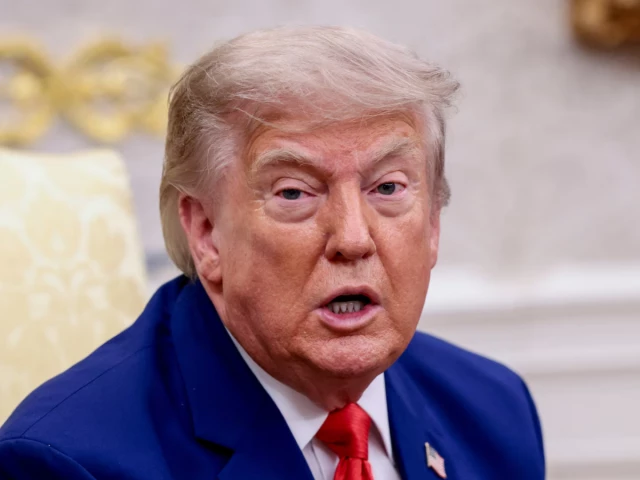
US President Donald Trump has ruled out using nuclear weapons against Iran, saying Washington does not need them. However, he left open the possibility of further strikes on Iranian nuclear facilities, including a suspected underground site known as Pickaxe Mountain.
Speaking to Newsmax on Thursday, Trump responded to reports that his administration had considered using the “Mother of All Bombs” against Iran. He stressed that the weapon is conventional, not nuclear.
“The Mother of All Bombs is not nuclear,” Trump said, describing it as an extremely large conventional bomb.
He added that the United States would not need to use nuclear weapons against Iran.
“No, I wouldn’t use nuclear. We don’t have to,” he said.
Trump Signals Possible Strikes on Iranian Nuclear Sites
Trump said Washington was examining the possibility of striking Pickaxe Mountain, a suspected underground nuclear-related site.
Saudi-Led Coalition Intercepts Drone Heading Toward Eastern Saudi Arabia
“Now, we’re looking at Pickaxe Mountain. We may have to go there,” he said, adding that the United States could target the site.
Asked whether such an operation would involve American ground troops, Trump said he did not expect that to happen.
He also warned that the United States might need further military action within a year if it withdrew without ensuring that Iran could not develop nuclear weapons.
“We want to make it so that they will never have a nuclear weapon,” he said.
Trump Predicts War Will End Soon
Trump predicted that the war with Iran would end soon and claimed that Tehran was negotiating with Washington.
“The Iran war will be over very soon. It’s going to end very soon,” he said.
He also predicted that oil and gas prices would fall sharply once the conflict ended.
Trump claimed Iranian officials had asked Washington to halt American and Israeli military operations. He said the United States was engaging with Tehran through negotiations.
Asked whether he trusted Israeli Prime Minister Benjamin Netanyahu, Trump replied that he did not trust anyone in politics.
Iran Warns Strait of Hormuz Will Remain Closed
Meanwhile, Iranian Army Commander Major General Amir Hatami said the Strait of Hormuz would remain closed until Iran’s rights were respected, according to the state news agency IRNA on Friday.
Speaking at a ceremony at Imam Ali Officers’ University in Tehran on Thursday, Hatami said the opposing side had misjudged Iran’s position and underestimated the capabilities of its armed forces.
He said the Iranian Army and the Islamic Revolutionary Guard Corps (IRGC) had responded with force from the beginning of what he described as an imposed war.
The Strait of Hormuz is a key route for global oil and gas shipments, making its status a major concern for energy markets.
Report Warns of US Missile Defence Stockpile Pressure
Separately, CBS News reported that former US Army Chief of Staff General Randy George had warned months before the US-Israeli war against Iran that American missile defence stockpiles were critically low and could take until 2030 to recover.
According to US officials cited by the report, George raised the concern in late December, around two months before the conflict began. Defence Secretary Pete Hegseth removed him from his post in April while the war was underway.
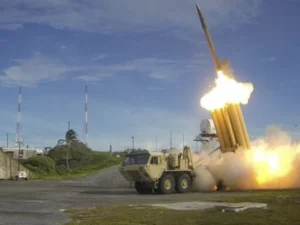
The assessment, reportedly included in the Pentagon’s fiscal 2027 force allocation planning, identified shortages of Terminal High Altitude Area Defence (THAAD) interceptors and Patriot missiles.
Officials reportedly attributed the shortages to weapons transfers to Ukraine, military support for Israel and limited production capacity in the defence industry.
Iran War Adds Pressure on Missile Supplies
A report cited estimates from the Centre for Strategic and International Studies (CSIS) that the United States entered 2026 with approximately 2,300 Patriot interceptors. US forces reportedly used between 1,050 and 1,430 during the conflict.
The estimates also placed the prewar THAAD inventory at around 355 interceptors, with between 190 and 290 reportedly used.
Mark Cancian, a retired Marine colonel and senior adviser at CSIS, told CBS News that missile defence supplies would be critical in any potential conflict with China.
The report said replenishing the stockpiles could take years. New THAAD interceptor contracts reportedly take more than four years to fulfil, while Patriot PAC-3 orders average around three and a half years.
The Pentagon rejected claims that the United States faced a munitions shortage. Chief spokesman Sean Parnell.
He added that Washington retained everything required to conduct strikes at the time and place chosen by the president.
The conflicting assessments highlight the military, diplomatic and economic stakes surrounding the Iran conflict, including the potential for further strikes, the future of the Strait of Hormuz and the pressure on US air defence supplies.