
Iran Rejects 60-Day Deadline Under US Deal as Tensions Escalate
Tehran says the Islamabad MoU contained a window for negotiations, not a fixed deadline, while disputes over missing pilots and Gulf pollution add to regional tensions
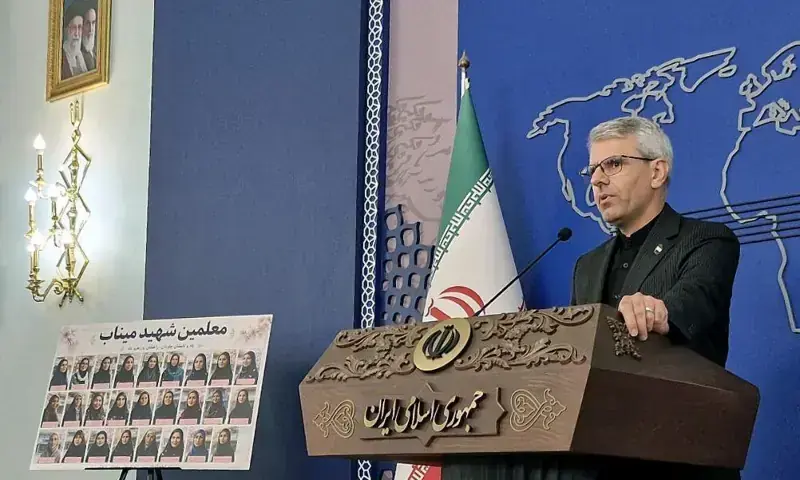
Iran rejects a 60-day deadline under its MoU with the United States as regional tensions continue to rise
ISLAMABAD: Iran has rejected claims that it faced a 60-day deadline under an understanding with the United States, saying the agreement only provided a window for negotiations on sanctions relief and the nuclear issue.
Iranian Foreign Ministry spokesperson Esmaeil Baqaei made the remarks on Monday as the 60-day period linked to the agreement expired.
Baqaei said the Iran-US MoU did not contain a mandatory deadline and stressed that Tehran would not make decisions under pressure, ultimatums or externally imposed time limits.
“There is no such thing as a 60-day deadline in the text of the MoU,” he said, according to Iran’s semi-official ISNA news agency.
Baqaei explained that the agreement had envisaged a 60-day period for talks on two main issues: sanctions relief and Iran’s nuclear programme. He said the period could have been extended if the negotiations failed to produce an outcome.
However, Tehran says negotiations never began because Washington violated the understanding shortly after the agreement was signed.
“The issue of the 60-day period completely lost its relevance,” Baqaei said, referring to what Iran described as US violations of the June 18 agreement.
The original understanding followed weeks of diplomacy and was intended to help reopen the Strait of Hormuz and bring an end to the wider Middle East conflict.
The agreement was signed electronically on June 18. It envisaged a further period of negotiations following the reopening of the strategically important waterway.
However, relations deteriorated sharply after renewed hostilities erupted on July 7.
Iran subsequently attacked commercial shipping in the Strait of Hormuz, including a Qatari liquefied natural gas tanker. Tehran accused Washington of violating the understanding, while the United States responded with several waves of strikes against Iranian military targets.
The conflict later expanded beyond Iran and the Gulf, with Houthi forces in Yemen imposing a naval blockade affecting another major regional shipping route.
Baqaei said Iran’s immediate focus was now on managing the situation while its armed forces continued to monitor developments closely.
Iran Says Missing Pilots Will Be Treated as Prisoners
The Iranian official also addressed the fate of three pilots whom Tehran says disappeared during an operation against the US Al Udeid Air Base in Qatar.
Baqaei said Iran would consider the missing pilots prisoners in Qatar until their situation was clarified.
Tehran previously said one pilot had been killed and three others had disappeared after the March 2 operation. Iranian authorities later alleged that the missing personnel had been captured in Qatar.
“It is imperative to obtain clarification on their situation,” Baqaei said.
He added that Iran would continue efforts to establish what happened to the pilots.
Qatar has denied holding them.
Doha has said it invited Iranian officials to receive information about search and rescue operations conducted in April, but claimed Iran had not responded to the invitation.
The disagreement adds another layer to tensions between Tehran and regional states involved in the wider conflict.
Android 17 Adds App Lock Feature to Protect Apps on Pixel Phones
Iran Blames US for Gulf Pollution
Baqaei also accused the United States of contributing to environmental damage in Gulf waters through its military operations.
Several oil spills have been reported in the region, prompting concern over damage to marine ecosystems and coastal areas.
Baqaei argued that pollution in the Persian Gulf and Gulf of Oman could not be separated from decades of military activity in the region.
He called for the United States to be held responsible and estimated the overall environmental damage at trillions of dollars.
Iran recently demanded compensation after an oil slick reached Qeshm Island, affecting beaches and a sensitive mangrove forest.
Iranian officials initially said preliminary evidence pointed to a foreign bulk carrier as the source of the spill. Authorities later said the affected area had been cleaned.
Omani state media also reported that oil from a tanker that ran aground off the country’s coast had reached nearby shores.
The environmental disputes come as military tensions continue to affect shipping routes across the Gulf and surrounding waters.
For Tehran, the expiry of the 60-day period does not mark the end of its position on negotiations. Baqaei’s comments instead suggest that Iran considers the original timeframe irrelevant because the talks it was intended to facilitate never took place.
The dispute leaves the future of US-Iran diplomacy uncertain as military tensions, shipping disruptions and wider regional instability continue.