Tesla: Global Sales Jump 25% as Europe Drives EV Recovery
Strong demand across Europe helped Tesla exceed market expectations, signalling renewed momentum despite growing competition from Chinese electric vehicle manufacturers.
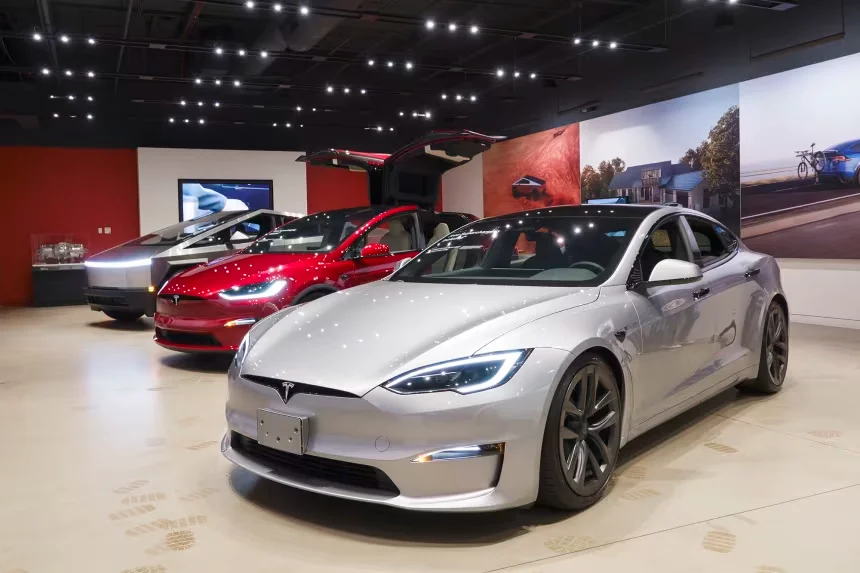
Tesla vehicles displayed at a dealership as global sales rebound.
Tesla reported a strong recovery in global deliveries during the second quarter, with sales rising 25% year-on-year as robust demand in Europe helped the electric vehicle maker outperform analysts’ expectations.
The company delivered more than 480,000 vehicles between April and June, compared with just over 384,000 during the same period in 2025. Vehicle deliveries are widely regarded as an indicator of Tesla’s sales performance.
Although Tesla does not publish regional delivery figures, industry data suggests Europe was the company’s strongest market. Figures from the European Automobile Manufacturers’ Association (ACEA) show Tesla’s European sales increased by 77% during the first five months of the year.
Broccoli Salad: Classic Midwestern Recipe Becomes a Family Picnic Favorite
The rebound follows a difficult 2025, when Tesla’s European sales fell 38% amid criticism of Chief Executive Elon Musk’s political activities and public support for several far-right political figures. Analysts say the recovery has been supported by higher fuel prices, government incentives for electric vehicles, and easing consumer concerns surrounding Musk’s political profile.
Dan Ives, Global Head of Technology Research at Wedbush Securities, said Europe has entered “bounce-back mode” after a year of weaker demand linked to negative public sentiment toward Musk.
The latest results also suggest Tesla may be reversing two consecutive years of annual sales declines, despite the removal of electric vehicle tax credits in the United States that reduced incentives for American buyers.
Before the results were released, analysts at Deutsche Bank had forecast quarterly deliveries of 416,000 vehicles, expecting international markets—particularly Europe—to drive overall growth. Tesla comfortably exceeded those projections.
Morningstar analyst Seth Goldstein said Tesla has strengthened its market position in Europe, where falling electric vehicle prices and continued investment in fast-charging infrastructure are encouraging wider adoption.
Despite the improvement, Tesla continues to face intense competition from Chinese manufacturers. Chinese automaker BYD overtook Tesla as the world’s largest electric vehicle producer last year and has continued expanding rapidly in Europe. ACEA data shows BYD’s European sales rose 159% during the first five months of the year, placing it ahead of Tesla in the regional market.
Beyond electric vehicles, Tesla is investing heavily in artificial intelligence and autonomous driving technology. The company has begun expanding its robotaxi service, which uses vehicles equipped with its Full Self-Driving system, although the rollout has progressed more slowly than initially expected.
Tesla is also developing humanoid robots as part of its long-term technology strategy. To support future production, the company has discontinued manufacturing its premium Model S and Model X vehicles, freeing factory capacity for upcoming projects.
The latest sales figures indicate Tesla has regained momentum in key international markets, but maintaining that growth will depend on its ability to compete with rapidly expanding rivals while delivering on its ambitious technology plans.