AJK Remarks: Bilawal Questions Minister’s Position After Khawaja Asif’s Rawalakot Comments
PPP criticises defence minister’s remarks on Rawalakot residents, while Bilawal Bhutto-Zardari urges political engagement to resolve tensions in Azad Jammu and Kashmir.
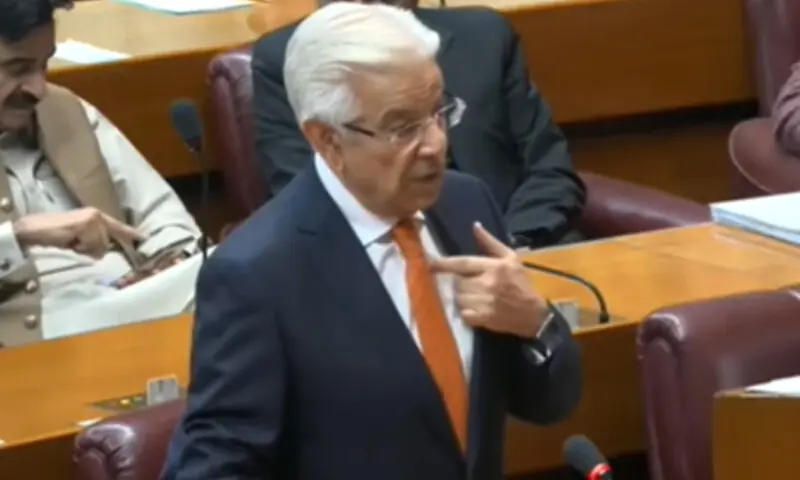
National Assembly debate intensifies over controversial remarks regarding Rawalakot and Kashmiris.
AJK Remarks sparked a heated debate in the National Assembly after the Pakistan Peoples Party (PPP) strongly criticised Defence Minister Khawaja Asif’s comments regarding the people of Rawalakot in Azad Jammu and Kashmir (AJK).
The controversy began after Khawaja Asif stated during a television interview that Rawalakot was “not Kashmir” and that he did not consider its residents to be Kashmiris. The remarks triggered criticism from political leaders and drew concern over their potential impact on the sensitive situation in the region.
Donald Trump Avenue: Hyderabad Road Renaming Sparks Political Row in India
Following the backlash, Asif issued a clarification on social media, arguing that Kashmiri identity was defined by decades of sacrifices and struggle rather than by birthplace or official documents.
Addressing the National Assembly, former prime minister Raja Pervaiz Ashraf described the statement as inappropriate and said such remarks should not come from a senior government official. He warned that the comments had hurt public sentiments and could further complicate matters in a sensitive region.
Ashraf stressed that efforts should focus on easing tensions and addressing the concerns of the Kashmiri people through dialogue. He also apologised to the people of Rawalakot on behalf of the defence minister.
PPP Chairman Bilawal Bhutto-Zardari later joined the debate, expressing support for Prime Minister Shehbaz Sharif’s efforts to build political consensus but accusing some ministers of creating unnecessary challenges for the government.
Bilawal praised the prime minister’s approach of engaging coalition partners and opposition parties but argued that certain cabinet members were undermining those efforts through controversial statements.
World Cup Scams: Kaspersky Detects Hundreds of Fake Websites Targeting Football Fans
Referring to the Rawalakot remarks, Bilawal questioned how a federal minister could remain in office after making comments that many Kashmiris considered offensive. He said the remarks risked inflaming an already delicate situation instead of helping to resolve existing grievances.
The PPP chairman also called for greater political engagement to address unrest in AJK and urged all stakeholders to support dialogue initiatives aimed at finding a lasting solution. He welcomed efforts by religious and political leaders, including Maulana Fazlur Rehman, to help reduce tensions and facilitate negotiations.
Bilawal emphasised that both the federal and AJK governments should engage with protesters and work towards a political resolution that addresses public concerns without allowing tensions to escalate further.
Meanwhile, Adviser to the Prime Minister on Political Affairs Rana Sanaullah addressed the House and linked recent protests by the Joint Awami Action Committee (JAAC) to the upcoming AJK elections. He argued that constitutional and electoral matters should be resolved through democratic institutions rather than street demonstrations.
Sanaullah stated that only the AJK Legislative Assembly had the authority to decide issues related to refugee seats and noted that an all-parties conference and the AJK Supreme Court had previously endorsed that position.
He also criticised some of the demands raised by protesters and called for dialogue between political leaders and demonstrators to prevent further instability.
In a separate address, Khawaja Asif turned his attention to the opposition, urging political parties to learn from past conflicts and consider signing a new Charter of Democracy. He argued that Pakistan’s major political parties had previously overcome differences through dialogue and institutional reforms.
The defence minister also criticised the Pakistan Tehreek-e-Insaf (PTI), accusing its leadership of damaging parliamentary traditions and democratic norms during its time in government.
The debate highlighted growing political tensions over developments in AJK while also exposing divisions within the ruling coalition over how sensitive national issues should be handled.