US Midterm Elections Enter Crucial Final Phase as Battle for Congress Intensifies
US Midterm Elections Enter Crucial Final Phase as Battle for Congress Intensifies
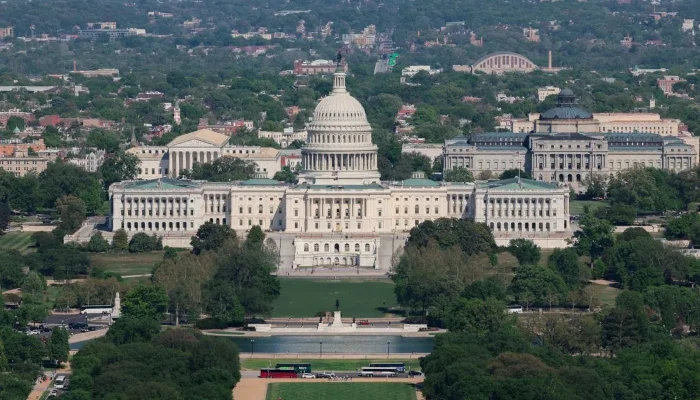
WASHINGTON: The race for control of the United States Congress has entered its decisive final phase, with just six months remaining before the midterm elections that could significantly reshape the political landscape and the trajectory of President Donald Trump’s administration.
Kingsmen Eye Historic Title as Zalmi Chase Second Crown in PSL 11 Final
The midterms, scheduled for November, are widely viewed as a referendum on the president’s performance. The outcome will determine whether Republicans retain control of Congress or whether Democrats succeed in regaining power in one or both chambers.
At stake are all 435 seats in the House of Representatives, approximately one-third of the 100-member Senate, and several governorships across the country. A shift in control could dramatically influence legislative priorities, with a Democratic-led Congress capable of launching investigations, blocking presidential nominations, and challenging key policy initiatives.
Recent polling data suggests a challenging environment for Republicans. President Trump’s approval rating has hovered around 40 percent, while economic concerns—particularly inflation and the financial impact of the ongoing conflict involving Iran—have weighed heavily on voter sentiment. Surveys indicate Democrats currently hold a slight advantage on the generic congressional ballot, with some polls showing greater public trust in their handling of economic issues.
Political analysts note that historically, the party in power often faces setbacks during midterm elections. According to experts, a presidential approval rating at or below 40 percent can translate into significant electoral losses, even in traditionally strong districts.
Despite these challenges, Republicans are relying on structural advantages, including a favorable Senate map and financial resources, to maintain their hold. Many of the Senate seats up for election are in states previously won by Trump, offering the party a potential edge.
However, the electoral landscape remains fluid. Ongoing redistricting efforts in key states such as Texas, California, Florida, and North Carolina have introduced new uncertainties. Additionally, a recent Supreme Court ruling limiting race-based redistricting could further influence outcomes in competitive districts.
Democrats, meanwhile, are focusing their campaign on economic concerns, particularly rising living costs, while also framing the election as a defense of democratic institutions. Senate Democratic leader Chuck Schumer has accused Republicans of attempting to undermine voting rights through stricter election measures and immigration policies.
Republicans, on the other hand, are emphasizing national security and immigration issues, arguing that their policies are essential for stabilizing the country. Party leaders also highlight legislative achievements, urging voters to support continuity in governance.
The campaign has also been shaped by foreign policy developments, especially the administration’s focus on tensions with Iran. Some analysts suggest that this emphasis may divert attention from domestic economic issues, which traditionally dominate midterm elections.
As the countdown to November continues, both parties acknowledge that voter turnout will be critical. While Democrats aim to capitalize on economic dissatisfaction, Republicans remain confident that shifting dynamics and voter concerns could still work in their favor.
With control of Congress hanging in the balance, the 2026 midterm elections are poised to play a pivotal role in determining the direction of US policy for the remainder of President Trump’s term.