Pakistan Navy Commander Highlights Transformative Role of Emerging Technologies in Modern Warfare
Web Desk May 1, 2026Karachi — Vice Admiral M. Faisal Abbasi underscored the rapidly evolving role of emerging technologies in reshaping modern warfare during his closing remarks at the “Emerging Technologies & The Future of Warfare” conference.
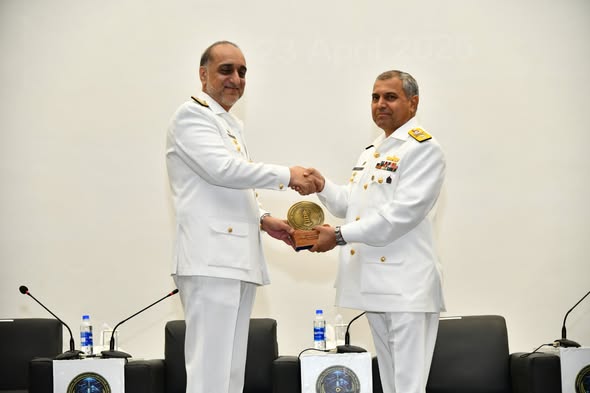
Karachi — Vice Admiral M. Faisal Abbasi underscored the rapidly evolving role of emerging technologies in reshaping modern warfare during his closing remarks at the “Emerging Technologies & The Future of Warfare” conference.
CBD PUNJAB HONORS LABOUR FORCE ON LABOUR DAY, LAUNCHES DOCUMENTARY “QUAM KAY MAMMAR – HUMARA WAQAAR
Addressing participants on Day 1 of the event, the Commander Karachi stated that technology is no longer merely a component of the security environment but has become the primary force shaping the future character of conflict and strategic competition.
Referring to ongoing conflicts in the Middle East and South Asia, he observed that rapid technological diffusion is transforming operational art and military strategy across land, air, cyber, and maritime domains.
Vice Admiral Abbasi particularly highlighted developments within the Indian Ocean Region, where the spread of niche naval technologies is reducing barriers to disruption while simultaneously increasing strategic and economic risks.
He noted that from the Arctic region to critical maritime chokepoints such as the Strait of Hormuz and Bab el-Mandab, the use of unmanned systems and long-range precision strike capabilities has demonstrated how relatively low-cost technologies can create disproportionately large strategic impacts.
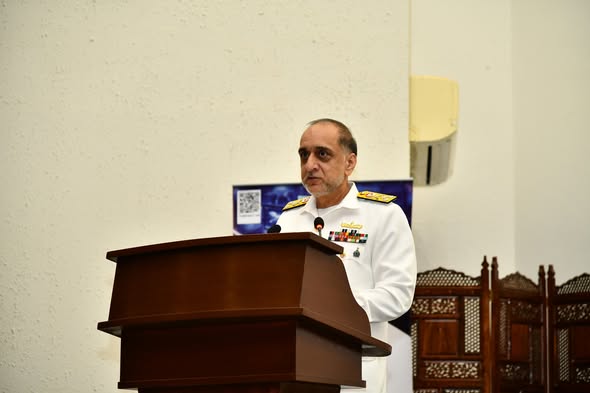
According to the naval commander, modern conflict increasingly favors states and forces capable of rapidly adapting to technological innovation rather than relying solely on conventional military strength.
He emphasized that the future battlespace would be defined by speed of adaptation, integration of advanced technologies, and the ability to respond effectively to hybrid and asymmetric threats affecting global maritime trade and regional security.
The conference focused on the implications of artificial intelligence, unmanned systems, precision warfare, cyber capabilities, and emerging defense technologies for future military operations and strategic stability.