Trump Warns of Escalation as Fragile Truce Tested by Israel Strikes and Oil Surge
Trump Warns of Escalation as Fragile Truce Tested by Israel Strikes and Oil Surge
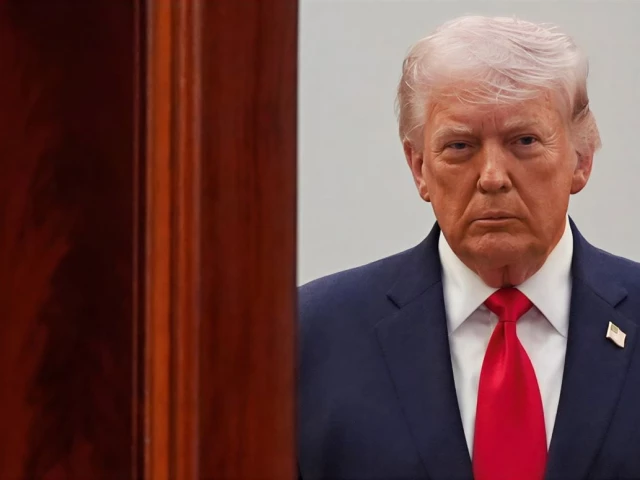
Donald Trump has vowed to maintain a strong US military presence in the Middle East until a peace agreement with Iran is secured, warning of a major escalation if negotiations fail.
PM Shehbaz Hopes US-Iran Ceasefire Turns Permanent, Govt Considers ‘Youm-i-Tashakur
In a strongly worded statement, Trump said US ships, aircraft, and personnel — backed by additional weapons and ammunition — would remain deployed, ready to act against what he described as a “substantially degraded enemy.” He expressed confidence in a deal but cautioned that failure could trigger unprecedented military action.
The remarks came amid rising oil prices and growing concerns over supply disruptions linked to tensions in the Strait of Hormuz, a key global energy route.
Despite Trump’s claims that Iran had agreed to avoid pursuing nuclear weapons and reopen the waterway, Tehran’s Supreme National Security Council made no reference to such commitments in its recently announced peace framework.
While both Washington and Tehran have declared victory after five weeks of conflict, core disputes remain unresolved. Analysts warn that Iran, though militarily weakened, retains strategic leverage, including influence over regional waterways and nuclear capabilities.
Escalation in Lebanon
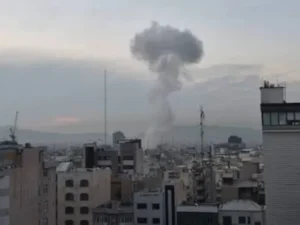
Tensions further intensified after Israel claimed it had killed Naim Qassem, the head of Hezbollah, in a strike on Beirut. If confirmed, the killing would mark a significant blow to the Iran-backed group and Tehran’s regional influence.
Hezbollah, formed in 1982 with backing from Iran, has been a central player in the conflict. The group entered the war following Israeli strikes and has since exchanged heavy attacks with Israeli forces.
The killing follows earlier high-profile assassinations, including that of Hassan Nasrallah in 2024, further weakening the group’s leadership structure.
Ceasefire Under Strain
The US-Iran ceasefire, brokered with Pakistan’s mediation, is showing signs of strain as Israel continues operations in Lebanon, which Washington maintains is not part of the agreement. However, Iran insists that halting hostilities in Lebanon is essential for any lasting deal.
Iranian President Masoud Pezeshkian has emphasized that regional stability — including Lebanon — must be part of negotiations.
Meanwhile, Iran’s parliament speaker Mohammad Bagher Ghalibaf warned that ongoing Israeli strikes could render talks “unreasonable.”
Global Reactions and Diplomacy
European leaders have stressed the urgency of stabilizing the region. Italian Prime Minister Giorgia Meloni called the reopening of the Strait of Hormuz vital for global trade, while France pushed for Lebanon to be included in ceasefire arrangements.
Spain also announced plans to reopen its embassy in Tehran, signaling renewed diplomatic engagement.
Pakistan, which is hosting upcoming talks, condemned Israeli operations, warning they could undermine peace efforts.
Economic Impact
Oil markets reacted sharply to the uncertainty. Brent crude rose above $96 per barrel, while US West Texas Intermediate also surged, reflecting fears over supply disruptions.
Global financial markets showed mixed responses, with Asian and European indices fluctuating amid uncertainty over the ceasefire’s durability.
Human Toll
The conflict has inflicted a heavy humanitarian cost. Thousands have been killed across Iran and Lebanon, with civilian casualties mounting due to ongoing airstrikes.
Rights groups have warned of worsening conditions, particularly in Lebanon, where recent attacks have intensified fears despite ceasefire announcements.
As diplomatic efforts continue, the situation remains volatile, with competing agendas and continued military actions threatening to derail hopes for a lasting peace.