Pakistan, Türkiye and Egypt Reaffirm Cooperation Ahead of Key Quadrilateral Talks
In separate high-level meetings in Islamabad, Deputy Prime Minister Ishaq Dar held talks with Hakan Fidan of Türkiye and Badr Abdelatty of Egypt, with all sides reaffirming their commitment to deepen cooperation across multiple sectors.
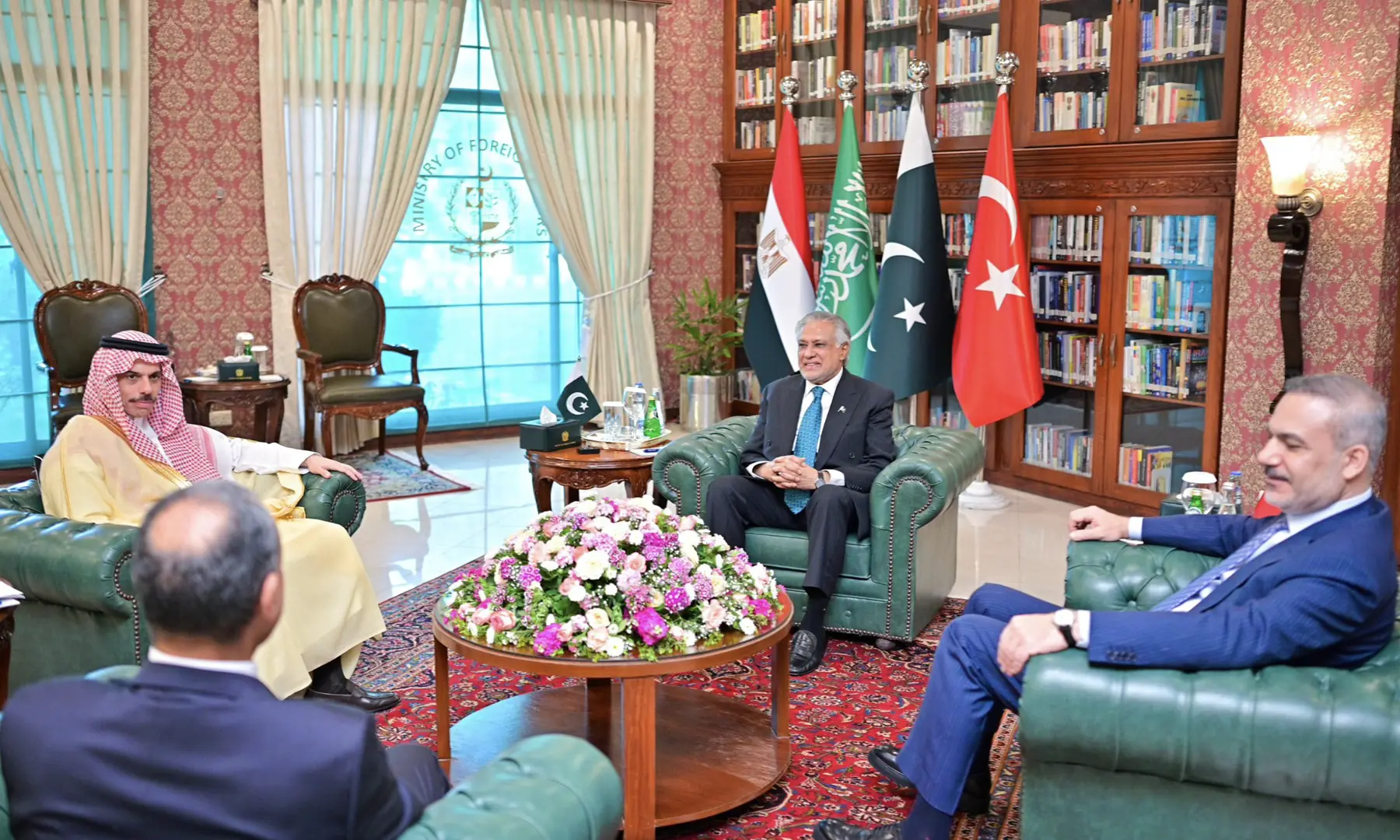
In separate high-level meetings in Islamabad, Deputy Prime Minister Ishaq Dar held talks with Hakan Fidan of Türkiye and Badr Abdelatty of Egypt, with all sides reaffirming their commitment to deepen cooperation across multiple sectors.
PM Shehbaz Assures Adequate Fuel Supply, Announces Relief and Conservation Measures
The meetings, held at the Ministry of Foreign Affairs, come ahead of a crucial quadrilateral dialogue involving Pakistan, Saudi Arabia, Türkiye and Egypt, aimed at supporting regional de-escalation efforts amid the ongoing Middle East crisis.
During his meeting with Hakan Fidan, Dar highlighted the historic and fraternal ties between Pakistan and Türkiye, stressing the importance of expanding cooperation across all areas of mutual interest. Both sides reviewed the full spectrum of bilateral relations and agreed to maintain close coordination on regional developments, particularly the evolving situation in Iran.
In a separate meeting with Egyptian Foreign Minister Badr Abdelatty, the two leaders expressed satisfaction over the positive trajectory of bilateral relations, especially in defence, security, and economic cooperation. They agreed to enhance trade, investment, and institutional collaboration, including activating the Joint Ministerial Commission and strengthening business-to-business linkages.
Dar also appreciated Egypt’s continued support in Pakistan’s health sector, particularly efforts to combat Hepatitis-C, and acknowledged Cairo’s role in facilitating humanitarian assistance to Gaza. Both sides reiterated their support for the Palestinian cause and called for restraint and diplomatic solutions to ongoing conflicts.
The quadrilateral meeting, to be chaired by Ishaq Dar, is being seen as an important diplomatic platform to align regional positions, support de-escalation, and potentially pave the way for broader negotiations, including possible indirect engagement between the United States and Iran.
Pakistan has intensified its diplomatic outreach in recent weeks, engaging global and regional stakeholders to help reduce tensions and promote dialogue as the conflict continues to impact regional stability and global energy markets.