
Iran War – Day 12: Actions Speak Louder Than Words
Introduction
The ongoing Iran War that erupted after the U.S.–Israel joint strikes on Iran on 28 February 2026 has transformed the strategic landscape of the Middle East. The conflict has quickly evolved into a regional confrontation involving Iran, Israel, the United States, and several Gulf states.
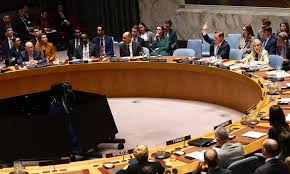
At the diplomatic level, Russia introduced a ceasefire resolution at the United Nations Security Council calling for an immediate halt to hostilities. However, the United States vetoed the initiative, signaling a decisive strategic posture by President Donald J. Trump, the current President of the United States, whose administration has articulated two clear conditions for ending the war:
1 Complete surrender of Iran’s current regime.
2 Fundamental regime change eliminating Iran’s military and nuclear threat.
The veto demonstrates Washington’s determination not to allow premature diplomatic arrangements that might leave Iran’s military capabilities intact.
1. The UN Ceasefire Proposal and the U.S. Veto
Russia circulated a draft resolution at the United Nations Security Council demanding an immediate ceasefire and negotiations to halt the expanding Middle East war. The proposal emphasized protecting civilians and de-escalating military operations. However, Washington opposed the resolution, arguing that a ceasefire without addressing Iran’s military infrastructure would merely allow Tehran to regroup and continue destabilizing the region.¹
The veto, therefore, reflects the strategic doctrine that wars aimed at dismantling military threats cannot end with partial settlements.
From Washington’s perspective, the objective is not merely a pause in fighting but a structural transformation of Iran’s military capabilities and governing system.
2. Casualties and Human Cost of the War
Although precise figures continue to evolve due to the fog of war, credible reports indicate significant casualties across multiple theaters.
Iranian casualties
• Over 200–400 deaths reported during the early phases of strikes across Iranian cities and military installations.²
• Several senior Revolutionary Guard commanders and nuclear scientists were killed in targeted operations.³
• Hundreds of additional injuries across Tehran, Isfahan, and other strategic centers.
Israeli casualties
• Iranian missile attacks on Israeli cities have killed at least 14 civilians and injured hundreds in urban strikes.²
U.S. military casualties
• Reports indicate 7 U.S. soldiers killed and about 140 wounded during regional operations supporting the campaign.?
Regional casualties
Iranian retaliation across the Gulf states has caused additional casualties:
• United Arab Emirates: 6 killed and 122 injured from missile and drone strikes.?
• Saudi Arabia: 2 civilians killed and 12 injured.?
• Bahrain: 3 civilians killed and dozens injured in missile attacks targeting U.S. naval facilities.?
These numbers underscore that the war has already expanded beyond the Iran-Israel battlefield into a broader regional confrontation.
3. Destruction of Oil Infrastructure and Economic Warfare
Energy infrastructure has emerged as a central strategic target in the war.
Iranian missile and drone strikes have targeted:
• Ras Tanura oil refinery in Saudi Arabia
• Energy installations in the UAE
• Fuel tanks and ports in Oman
Several facilities sustained damage, disrupting regional energy flows.??
Simultaneously, Israeli and U.S. airstrikes have targeted Iranian energy assets, including:
• Oil depots
• Refinery infrastructure
• Military logistics facilities tied to fuel distribution
The destruction of such facilities represents economic warfare, designed to cripple a nation’s ability to sustain prolonged conflict.
4. The Strait of Hormuz Crisis
Perhaps the most significant global consequence of the war has been the disruption of the Strait of Hormuz, the world’s most critical oil transit route.
Key developments include:
• Shipping traffic through the strait has collapsed by up to 70%, with many tankers halted outside the region. ?
• Over 150 vessels are stranded due to Iranian threats and naval mine deployments. ?
• Approximately 20% of the global oil supply normally passes through this narrow waterway. ?
The disruption has already driven global oil prices above $100 per barrel, highlighting the war’s global economic implications. ?
Control of the Strait of Hormuz, therefore, represents one of Iran’s most powerful strategic levers.
5. Iran’s Firepower and Retaliatory Strategy
Iran has relied heavily on its missile and drone arsenal to project power across the region.
According to military assessments:
• Iran has launched around 300 ballistic missiles toward Israel since the conflict began.¹?
• Hundreds of drones have targeted Gulf states, including 941 drones and 189 missiles toward the UAE alone in the early phases of the conflict. ?
• Hezbollah has fired more than 850 rockets from Lebanon toward Israeli targets.¹?
This strategy reflects Iran’s doctrine of asymmetric warfare, compensating for conventional military inferiority through large missile inventories and proxy networks.
6. Strategic Interpretation: Trump’s War Doctrine
The United States veto of the Russian ceasefire resolution demonstrates that Washington views the conflict through a strategic rather than humanitarian lens.
The Trump administration’s doctrine appears to be built on three principles:
1 No premature ceasefire that preserves Iran’s military threat.
2 Maximum pressure until Iran’s command structure collapses.
3 Creation of a post-conflict regional security order.
This approach mirrors historical precedents in which wars concluded only after decisive military outcomes, rather than through negotiated stalemates.
Conclusion
The U.S. veto of the Russian ceasefire resolution reveals a crucial strategic message: Washington is not seeking a temporary pause but a decisive end to the Iranian military threat.
The war has already produced:
• Hundreds of casualties across multiple countries
• Damage to critical oil infrastructure
• Near-closure of the Strait of Hormuz
• Massive missile and drone exchanges across the region
As the conflict continues, the decisive factor will likely be whether Iran’s military capabilities can sustain prolonged confrontation against the combined pressure of U.S., Israeli, and regional forces.
The coming weeks will therefore determine whether the war ends through negotiated compromise or decisive strategic defeat.
References
1 Russia draft UN Security Council resolution calling for ceasefire – diplomatic sources.
2 Reports on missile exchanges and civilian casualties in Israel and Iran.
3 Israeli strikes killing senior Iranian commanders and nuclear scientists.
4 U.S. military casualties reported in the ongoing conflict.
5 Iranian missile and drone strikes on the United Arab Emirates.
6 Iranian strikes damaging Saudi oil infrastructure.
7 Iranian missile attacks on Bahrain and U.S. naval facilities.
8 Strait of Hormuz shipping disruptions and global oil impact.
9 Tanker traffic disruption and naval mine threats in the strait.
10 Missile barrages and rocket attacks by Iran and Hezbollah.
Author
Dr. Gholam Mujtaba, MS, MD, Ed.D.
Chairman, Pakistan Policy Institute USA (PPI-USA).
A Pakistani American scholar, policy analyst, and Republican leader engaged in U.S.–Pakistan parliamentary diplomacy and international strategic affairs.
https://medium.com/@greetmujtaba/day-12-of-the-iran-war-escalation-without-surrender-3543a2541d6c (https://medium.com/@greetmujtaba/day-12-of-the-iran-war-escalation-without-surrender-3543a2541d6c)