US federal judge blocks Trump administration's H-1B visa fee rule. Photo File
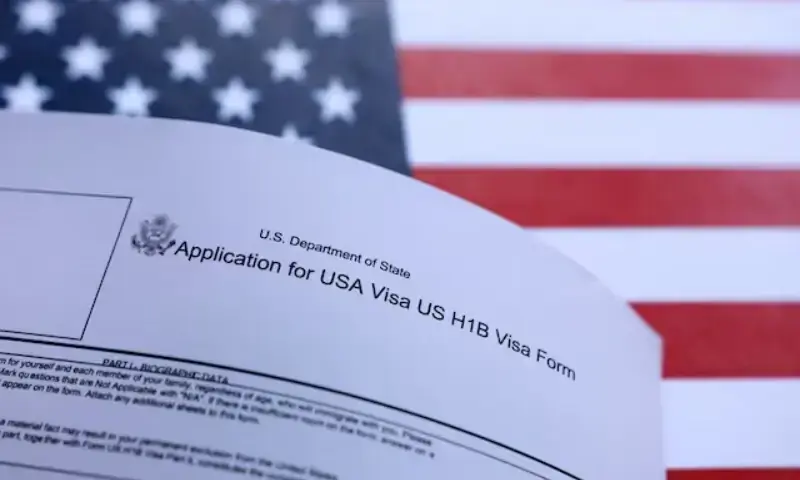
The H-1B Visa program remains a key pathway for skilled foreign professionals seeking employment in the United States. However, a federal court ruling has halted a controversial Trump administration policy that would have imposed a $100,000 fee on new visa applications.
The decision has attracted significant attention because the proposed charge would have dramatically increased hiring costs for employers. As a result, universities, hospitals, and technology firms may avoid immediate financial burdens while the legal debate continues.
Trump H-1B Visa Policy Faces Court Challenge
A United States federal judge blocked a Trump administration rule that required employers to pay $100,000 for each new H-1B Visa application.
US President Donald Trump had directed the annual fee to be added to H-1B applications in September 2025. The administration reportedly argued that the measure was part of broader immigration enforcement efforts and a strategy to limit certain categories of foreign entry into the country.
However, the court rejected that position and questioned the administration’s legal authority to impose such a charge.
Judge Leo Sorokin Rejects H-1B Visa Fee
Judge Leo Sorokin ruled that the proposed charge functioned as a tax rather than a standard administrative fee.
According to the ruling, only the US Congress has the constitutional authority to create new taxes. Therefore, the administration could not lawfully implement the measure without congressional approval.
Judge Sorokin stated that the government could not simply relabel a tax as a fee or penalty to bypass legislative authority. Consequently, the court determined that the policy exceeded executive power.
Democratic Attorneys General Challenge Trump Rule
The legal challenge was filed by 20 Democratic state attorneys general.
They argued that the fee would make it significantly harder for public institutions to recruit qualified international professionals. Furthermore, universities, schools, and hospitals warned that the policy could reduce access to specialized talent.
According to court filings, the unusually high charge created concerns across multiple sectors that rely on foreign expertise.
H-1B Visa Program Supports Skilled Workers
The H-1B Visa system allows US employers to sponsor foreign professionals in specialized occupations, including science, engineering, healthcare, and information technology.
Currently, the program permits up to 65,000 new visas annually. In addition, 20,000 extra visas are available for applicants holding advanced academic degrees.
Typically, employers pay several thousand dollars in processing and administrative costs. By contrast, the proposed $100,000 fee represented a dramatic increase and was widely viewed as a major obstacle to hiring international talent.
Employers Avoid Major H-1B Visa Costs
Court records showed that only about 85 employers had paid the fee before legal action effectively halted its implementation.
As the case progressed, many organizations delayed compliance while awaiting judicial review. Therefore, the ruling offers temporary relief to employers that depend on highly skilled foreign workers.
Meanwhile, immigration experts continue to monitor whether the administration will appeal the decision or pursue alternative policy measures. The outcome could influence future debates surrounding employment-based immigration and executive authority.
The ruling marks a significant development in the ongoing discussion over immigration policy, workforce needs, and the legal limits of presidential power in the United States.