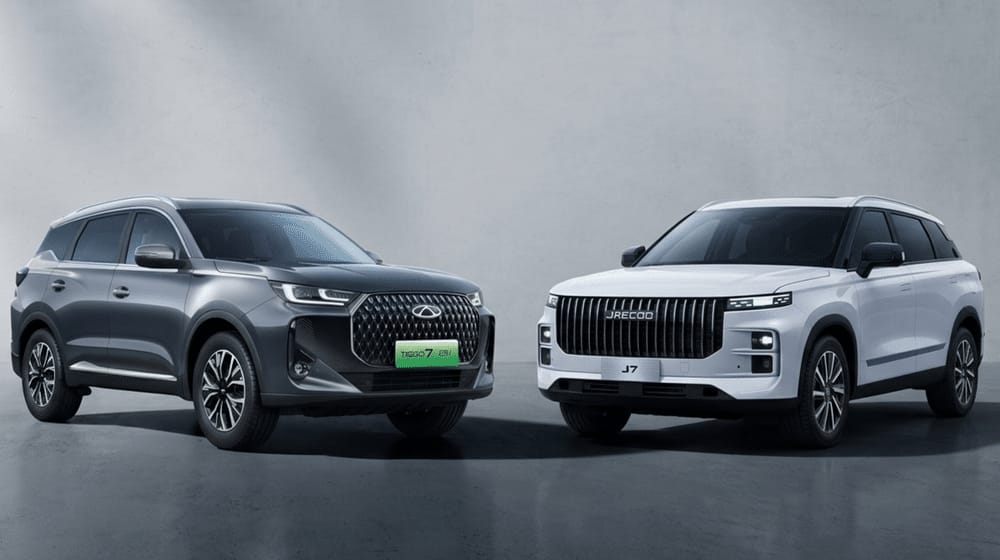
Karachi: Pakistan’s rapidly evolving SUV market is witnessing a new kind of competition — not just between rival brands, but within the same automotive groups. A key example is the growing comparison between the Chery-backed Tiggo 7 PHEV and Jaecoo J7, two SUVs sharing similar engineering foundations but positioned differently in price and branding.
Trump Claims New Iran Deal ‘Far Better’ as Tehran Voices Deep Distrust
At first glance, both vehicles cater to modern SUV buyers seeking electrification, performance, and advanced technology. However, deeper analysis reveals a more complex picture. Despite being built on closely related platforms and offering near-identical hybrid capabilities, the two models carry a price difference of nearly Rs1 million in Pakistan.
The Tiggo 7 PHEV stands out as a C-segment plug-in hybrid based on Chery’s Super Hybrid architecture. It pairs a 1.5TGDI engine with an 18.3 kWh battery and a dedicated hybrid transmission, delivering up to 90 km of pure electric range and a combined range of approximately 1,200 km — placing it among the most capable electrified SUVs in the local market.
In contrast, the Jaecoo J7 reflects Chery’s sub-brand strategy focused on design and lifestyle appeal. With a more rugged and off-road-inspired exterior, it targets buyers prioritizing aesthetics and brand differentiation, even though its core engineering remains closely aligned with Chery’s hybrid systems.
Such “badge engineering” is common globally, but in Pakistan’s price-sensitive market, value comparisons are becoming increasingly important. The Tiggo 7 PHEV’s lower price point positions it as a strong value proposition, offering similar performance and technology at a more accessible cost.
With fuel prices remaining high and unpredictable, plug-in hybrids provide a practical solution for consumers — enabling daily electric driving while maintaining long-distance flexibility. As a result, buyers are now focusing more on underlying technology and ownership economics rather than just design or brand perception.
As more automakers introduce overlapping models under different sub-brands, such comparisons are expected to grow. In this shifting landscape, the real question for consumers is no longer about appearance — but about which vehicle delivers better value for money.