Senior Police Officers Transferred to ‘Hard Areas’ Spark Policy Controversy
Senior Police Officers Transferred to ‘Hard Areas’ Spark Policy Controversy
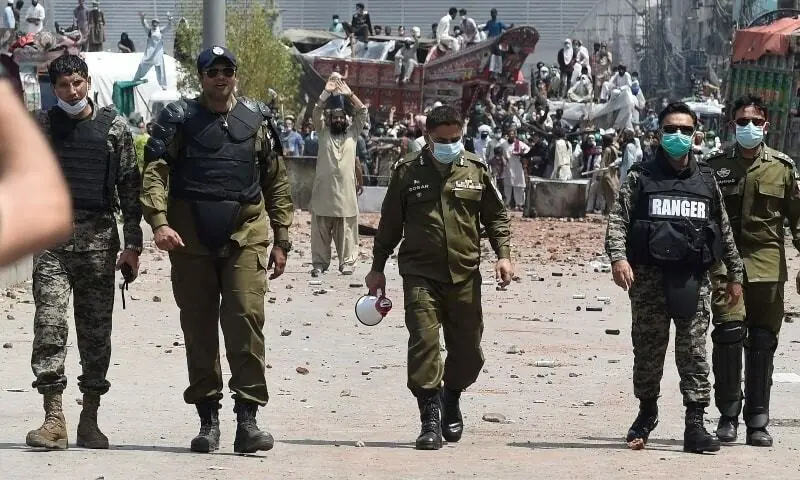
LAHORE: A recent decision by the Establishment Division of Pakistan to transfer 10 police officers from Punjab to “hard areas” in Khyber Pakhtunkhwa and Balochistan has triggered concern within the police force, with officials questioning the move’s alignment with existing rotation policies.
Peshawar Zalmi Clinch PSL 11 Title After Beating Hyderabad Kingsmen by 5 Wickets in Lahore Final
The transferred officers — many of whom were recently encadred into the Police Service of Pakistan (PSP) — are reportedly close to retirement and, in some cases, facing health challenges. Under the 2020 rotation policy, such postings were expected to be assigned to younger officers from newer civil service batches to prepare them for field challenges.
A senior police official, speaking on condition of anonymity, said that officers from the 48th Common had already completed their mandatory one-year tenure in difficult postings. According to the policy framework, the next round should have involved officers from the 49th Common batch. However, the latest nominations include BS-18 officers with only three to five years of service remaining.
The term “hard areas” refers to regions marked by security concerns, limited infrastructure, and challenging terrain. Officers deployed in these areas typically receive additional allowances as compensation for the demanding conditions.
Among those named for transfer are officers assigned to both provinces, including Imran Razaq, Tahir Mustafa, Imtiaz Ahmad Khan, and others for Balochistan, while Arshad Zahid, Khalid Mehmood Afzal, and several colleagues have been designated for Khyber Pakhtunkhwa.
Adding to the complexity, at least four officers listed for transfer are currently enrolled in a mid-career training course scheduled to conclude in early June, raising questions about administrative coordination.
Inspector General of Punjab Police Rao Abdul Kareem confirmed that the department had received the transfer orders and acknowledged internal concerns raised by affected officers.
“The matter is being taken up with the Establishment Division in light of the rotation policy and concerns expressed by the officers,” he said.
Officers have argued that the 2020 policy explicitly applies to those inducted through the Central Superior Services (CSS) examination from that year onward, suggesting that recently encadred officers should not fall under its scope.
However, Establishment Division Secretary Nabeel Awan rejected these claims, stating that the rotation policy had been suspended at the request of provincial governments.
“Once inducted into the PSP, these officers become federal employees and can be posted anywhere as per government policy,” he said, describing the transfers as a temporary “stopgap arrangement” for one year.
Despite official assurances, the move has created unease within the police ranks, particularly among senior officers who view the decision as inconsistent with earlier commitments to deploy younger personnel in demanding field assignments.