PIDE Roundtable Urges Pakistan to Make Trade Agreements More Export-Oriented
Experts call for stronger market access, better coordination and performance reviews to turn trade agreements into export growth
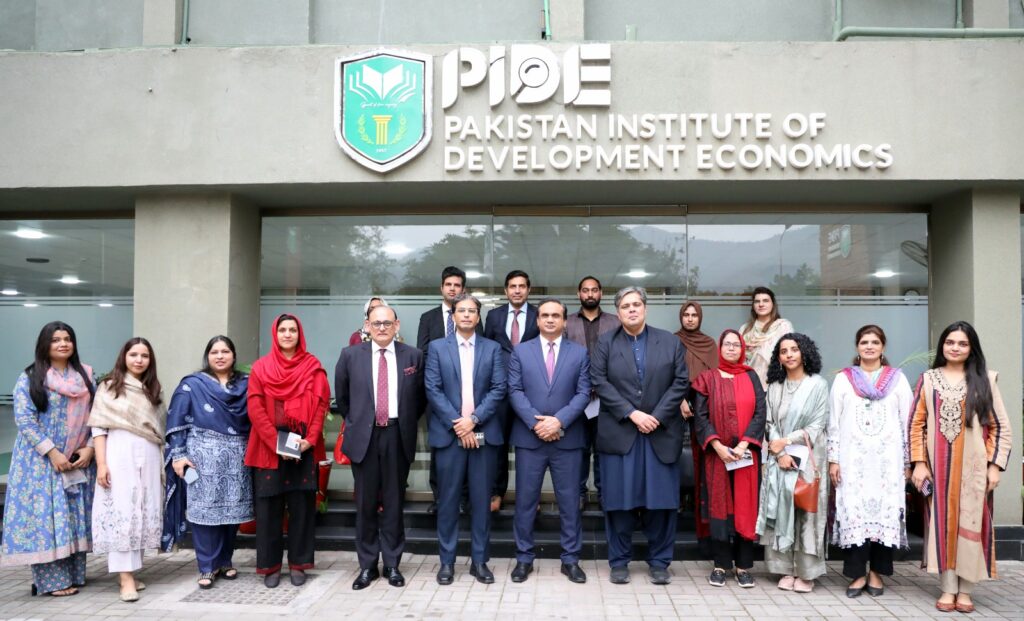
PIDE hosts a roundtable on making Pakistan’s trade agreements more export-oriented.
The Pakistan Institute of Development Economics (PIDE) has called for a more export-oriented approach to Pakistan’s trade agreements. Experts at a recent roundtable stressed the need to turn preferential market access into stronger export performance.
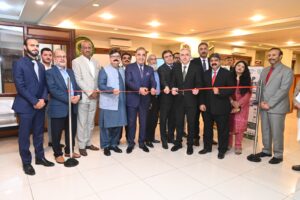
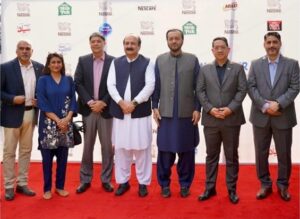
PIDE hosted the discussion under the title “From Signing to Exporting: Exploring the Export-Promoting Role of Trade Agreements.” The session brought together policymakers, trade experts, academics and private-sector representatives.
The discussion drew on PIDE’s forthcoming report, “Trade Agreements of Pakistan: A Critical Review of RTAs’ Export Performance.” Dr Amjad Masood and Ms Aneela Zubair authored the report through PIDE’s Centre for Trade, Logistics and Infrastructure (CTLI).
Participants included representatives from the World Trade Organization (WTO), Economic Advisory Group (EAG), Pakistan Business Council, APTMA, EXIM Bank of Pakistan, Pakistan Single Window, IBA and SPRC, among others. Dr Uzma Zia, Senior Research Economist at PIDE, moderated the session.
PIDE Report Highlights Export Performance Gap
Dr Amjad Masood, Chief of Research and Director of CTLI, presented the report’s key findings. He noted that imports from Pakistan’s regional trade agreement (RTA) partners have grown much faster than exports since 2000.
As a result, Pakistan now earns only about 20 cents in exports for every dollar it imports from these partners.
To address this imbalance, the report proposes an Export-Oriented RTA Framework. It recommends export-focused negotiations, alignment with industrial policy and demand-based selection of trade partners.
The framework also calls for better access through sanitary and phytosanitary (SPS) measures alongside tariff reductions. Furthermore, it proposes deeper agreements and performance reviews based on key performance indicators (KPIs) at the Ministry of Commerce.
The report also assesses Pakistan’s existing agreements against this framework. It identifies provisions already in place, highlights major gaps and outlines the clauses and actions needed to address them.
Experts Call for Stronger Negotiations and Implementation
Opening the discussion, Dr Manzoor Ahmad, former Ambassador of Pakistan to the WTO and Chair of the WTO Trade Dispute Arbitration Panel, welcomed the study as timely.
He observed that Pakistan’s latest agreement with Türkiye covers only about 2% of its trade. He added that, apart from the agreement with China, Pakistan’s other RTAs had not delivered meaningful results.
Diabetic Cardiomyopathy The Silent Heart Complication of Long-Standing Diabetes
Dr Ahmad linked this performance partly to high domestic protection. He explained that business interests had consequently pushed for weaker agreements. He stressed that effective negotiation and implementation matter as much as the concessions exchanged.
Dr Vaqar Ahmed, Member of the Economic Advisory Group and Team Lead at Oxford Policy Unit, said zero tariffs alone would not sustain long-term growth. Instead, he argued, more frequent trade would deliver greater benefits.
He proposed treating free trade agreement (FTA) offers as steps towards unilateral liberalisation, even while negotiations continue. He also called for opening trade with neighbouring countries, strengthening regional connectivity and involving all provinces in the process.
Industry Representatives Highlight Market Access Gaps
Dr Hassan Butt, Senior Advisor at CEEC, emphasised economic diplomacy and coordination among government ministries. He noted that many memorandums of understanding signed through Pakistani embassies never reach the implementation stage.
Ms Sarrah Javad of APTMA said Pakistan often secures market access on tariff lines that do not match exporters’ needs.
She pointed to Phase II of the China–Pakistan Free Trade Agreement, which added access to 313 tariff lines. However, she noted that many covered products were not part of Pakistan’s existing exports.
Mr Javed Kureishi, CEO of the Pakistan Business Council, called for clearly designated leads to oversee review processes. He also stressed the need for a structured follow-up mechanism.
Export Finance and Global Value Chains
Mr Sarmad Pretu of the EXIM Bank of Pakistan identified collateral requirements as a major barrier preventing small and medium-sized enterprises (SMEs) from accessing export finance. He also outlined how the Bank’s support for exporters has evolved.
Dr Zafar Mahmood, Professor at NUST, argued that Pakistan does not need more trade agreements alone. Instead, it must convert preferential market access into greater export competitiveness. He also called for more active economic diplomacy.
Dr Adil Nakhoda, Chairperson of the EAG, urged Pakistan to pursue deeper trade agreements and reduce its most-favoured-nation (MFN) tariffs. Such measures, he argued, would help the country integrate into global value chains.
PIDE to Incorporate Recommendations in Final Report
Participants appreciated PIDE’s initiative to bring government, industry and academia together for a timely discussion on trade policy.
The views shared during the roundtable will inform the final version of the forthcoming report. The discussion highlighted the need for Pakistan to move beyond signing trade agreements and focus on effective implementation, relevant market access and measurable export growth.