
Pakistan Needs a More Realistic Conversation About Cigarette Smoke
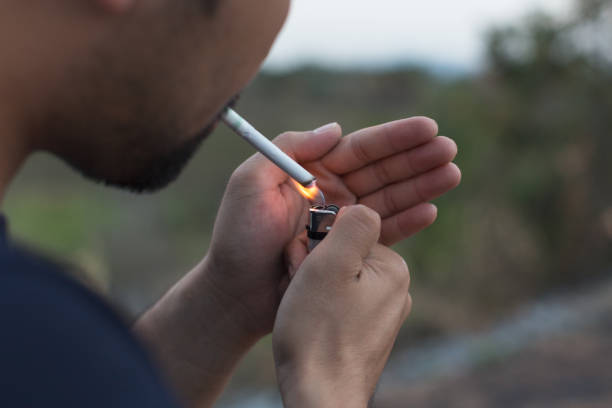
Cigarette smoke remains a public-health concern in Pakistan, with exposure affecting smokers and people around them.
By Syed Afnan Ali
Step onto any busy street in Karachi during rush hour and the scene feels familiar. Cars move slowly, tea stalls remain crowded and cigarette smoke blends quietly into the air. It is visible, yet rarely questioned.
That quiet normalisation is where Pakistan’s conversation about smoking begins to miss the point.
For years, smoking has largely been framed as a matter of personal choice or individual habit. However, the public-health challenge goes beyond the act itself. It also concerns what happens when a cigarette is lit.
Combustion releases a complex mixture of toxic substances. The resulting smoke affects both smokers and people nearby. Yet public discussion often gives less attention to this wider exposure.
The scale of Pakistan’s smoking problem
The scale of the issue demands greater clarity. Pakistan has more than 17 million adult smokers, according to the figures cited in this discussion. Tobacco use also contributes significantly to the country’s overall disease burden.
Governor Sindh Praises Security Forces After North Waziristan Operation
The Global Burden of Disease 2024 estimates an annual smoking-related death rate of 91.1 per 100,000 people. The figure is higher than regional and global averages.
These figures represent more than individual behaviour. They point to a wider public-health challenge.
The impact also extends beyond people who smoke. Nearly one in five tobacco-related deaths in Pakistan is attributed to secondhand smoke exposure, according to the figures cited above.
That means people who never smoke can still face serious health consequences.
Exposure can occur inside homes, workplaces and public spaces. As a result, the risks associated with smoking can become a shared burden.
Why smoke-free environments matter
This is why smoke-free environments remain an important public-health measure.
Such policies do not need to moralise personal behaviour. Instead, they can focus on limiting exposure to tobacco smoke.
The distinction matters because quitting remains the most effective way for smokers to eliminate the health risks associated with smoking. However, quitting is rarely an immediate process.
Many smokers make several attempts before they successfully stop. Public-health discussions should recognise that reality.
A practical approach should therefore combine prevention, cessation support and strong protection from secondhand smoke.
The debate needs more nuance
Globally, discussions about tobacco harm have become more complex. Researchers and policymakers continue to examine how different forms of tobacco use create different risks.
One area of discussion concerns the role of combustion in producing many harmful substances found in cigarette smoke.
However, recognising the role of combustion should not obscure another important point. Tobacco and nicotine products are not risk-free, and reducing exposure to cigarette smoke is not the same as eliminating health risks.
For Pakistan, the priority should remain clear. People who do not smoke should be protected from secondhand smoke. Smokers should have access to effective support to quit.
At the same time, public-health policy should remain grounded in reliable evidence rather than broad labels or assumptions.
Pakistan needs an informed conversation
Pakistan does not need a softer conversation about smoking. It needs a more informed one.
That conversation should recognise where the greatest risks arise. It should also acknowledge how those risks extend beyond individual smokers.
Most importantly, policy should focus on practical measures that can reduce exposure and encourage people to quit.
The challenge is not simply whether a person chooses to smoke. It is also what happens when smoke enters shared spaces and affects others.
Until Pakistan’s conversation gives greater attention to smoke exposure, cessation and the health effects of combustion, it risks overlooking an important part of the problem.
A realistic public-health response should therefore protect non-smokers, support smokers who want to quit and keep policy focused on evidence.
Because the most effective conversation is not one that simply assigns blame. It is one that identifies the source of harm and looks for practical ways to reduce it.