
Pakistan Faces Growing ROP Threat as Thousands of Premature Babies Risk Blindness
Doctors urge nationwide ROP screening to protect premature babies from preventable blindness.
Pakistan faces a growing ROP epidemic as thousands of premature babies remain at risk of preventable blindness, doctors at Al-Shifa Trust Eye Hospital have warned.
Specialists from the Department of Pediatric Ophthalmology and Strabismus urged the government to introduce mandatory nationwide screening for premature babies.
Doctors said better neonatal survival rates have increased the number of infants vulnerable to retinopathy of prematurity (ROP). The eye disease can cause permanent vision loss when doctors do not detect and treat it within the critical treatment window.
Nearly One Million Premature Births Each Year
According to doctors at Al-Shifa Trust Eye Hospital, nearly one million babies are born prematurely in Pakistan every year.
They estimate that around 300,000 of these babies develop varying degrees of ROP. Thousands may require specialised treatment or sight-saving surgery.
Premature babies face the greatest risk because their retinal blood vessels have not fully developed.
SABS University Jamshoro Approves Major Curriculum Reforms, New Associate Degree Programmes
The vessels normally develop during pregnancy and complete their growth around full-term birth. Premature delivery can interrupt this process.
As a result, abnormal blood vessels may develop inside the retina. These vessels can damage the retina and cause irreversible blindness if doctors do not treat the condition promptly.
Babies weighing less than 1.5 kilograms at birth face particularly high risks.
Doctors Call for Mandatory Screening
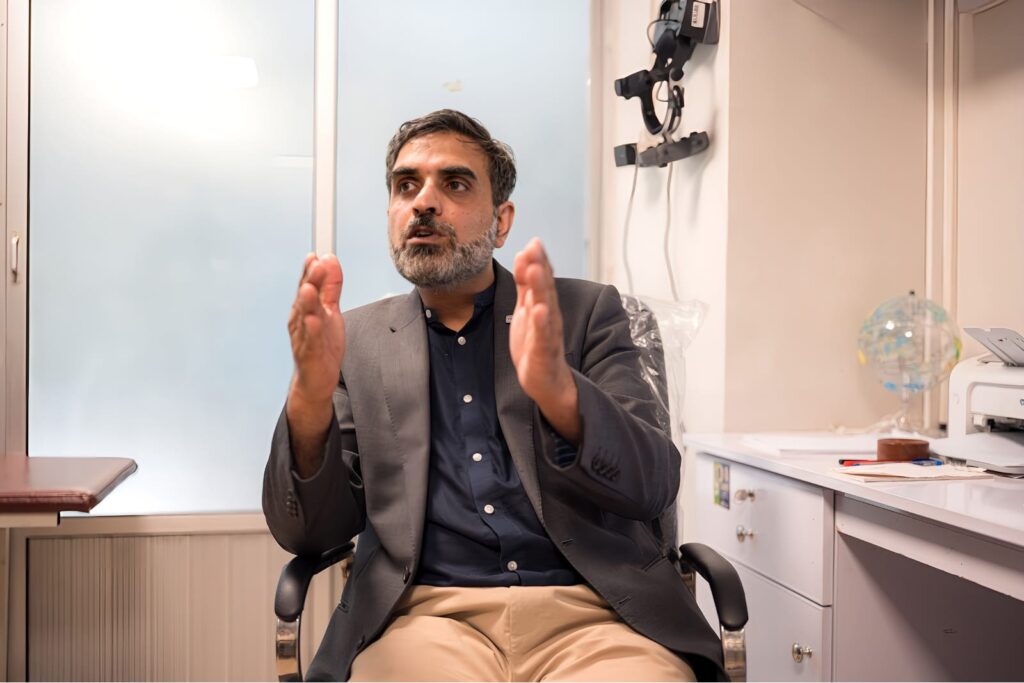
Dr. Amjad, a pediatric ophthalmologist and ROP specialist at Al-Shifa Trust, said Pakistan lacks a nationwide ROP screening programme.
He warned that the growing number of premature births makes early detection increasingly important.
Doctors said neighbouring India has reduced ROP-related blindness after introducing mandatory eye examinations for premature infants.
The examinations take place before high-risk babies leave neonatal intensive care units.
Pakistan could also strengthen early detection by introducing a similar nationwide screening system, specialists said.
Treatment Requires Specialist Care
ROP treatment requires highly trained pediatric ophthalmologists and specialised medical teams.
Doctors also need advanced surgical facilities and specialist anaesthesia support to treat severe cases.
Al-Shifa Trust Eye Hospital currently performs highly delicate ROP surgeries and provides treatment to children who need urgent intervention.
During the past year, the hospital carried out around 560 ROP surgeries free of cost.
However, doctors said this number represents only a small proportion of babies estimated to require treatment across Pakistan.
Rural Babies Face Greater Risk
Premature infants in rural and underserved areas face an even greater threat.
Many hospitals in these areas do not offer ROP screening. Others lack specialists who can provide timely treatment.
This creates a serious challenge because ROP has a narrow window for detection and treatment.
When doctors miss that window, the disease can progress and cause permanent blindness.
Therefore, expanding screening services beyond major cities remains essential, specialists said.
Government Urged to Expand ROP Services
Doctors have called for mandatory ROP screening in neonatal intensive care units across Pakistan.
They also urged the government to expand specialist services and invest in modern screening and treatment facilities.
Funding could help train more pediatric ophthalmologists and establish ROP services in underserved regions.
Doctors said early screening could prevent many children from losing their sight.
They warned that without urgent action, the growing number of premature births could turn ROP into a major public health challenge.
The specialists stressed that timely screening, early diagnosis and access to treatment can protect thousands of Pakistani children from avoidable blindness.