Pakistan Horticulture Development & Export Company (PHDEC) Organizes Technical Webinar on Emerging Export Opportunities in a Shifting Global Trade Landscape

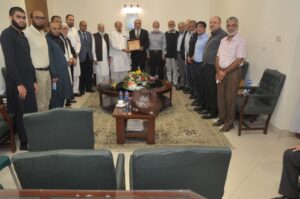
Karachi, April 07, 2026 – The Pakistan Horticulture Development & Export Company (PHDEC) today organized a high-level technical webinar titled “Emerging Export Opportunities for Pakistan’s Horticulture Sector in a Changing Global Trade Landscape.” The session brought together exporters, growers, processors, policymakers, and industry stakeholders to provide strategic direction amid evolving global dynamics and recent geopolitical disruptions.
The webinar was held at a critical juncture when regional instability, including disruptions in traditional trade routes and challenges to maritime access, has significantly impacted Pakistan’s horticulture exports to key markets such as the GCC countries and Central Asian Republics. PHDEC convened the session to explore alternative trade pathways, immediate export opportunities, and effective post-crisis positioning strategies, with a strong emphasis on aligning Pakistan’s produce with international market requirements in terms of quality, consistency, and compliance.
Discussions highlighted that the current geopolitical situation has created a time-bound strategic window of 6 to 12 months, particularly in GCC markets, where supply chains of competing countries have been disrupted. Pakistan, benefiting from preferential transit access and established trade relationships, is well positioned to fill this supply gap provided immediate and coordinated actions are taken.
In his keynote presentation, Dr. Zafar Mehmood, Consultant (Food Systems, Safety & Trade), provided a comprehensive analysis of global horticulture trade. He noted that the sector is valued at approximately USD 2.2 trillion and is projected to reach USD 3.5 trillion by 2033, driven by population growth, rising incomes, and increasing demand for healthy diets. Despite Pakistan’s strong production capacity and favorable agro-climatic advantages, the country continues to underperform in exports, with a large share of production consumed domestically and less than 10 percent entering international markets.
Dr. Zafar Mehmoodidentified five key opportunity areas: immediate filling of the GCC supply gap due to geopolitical disruptions, expansion into premium EU markets particularly for mangoes and high-quality vegetables, scaling of value-addition models such as mango bagging which delivers up to a 70 percent price premium, recovery and expansion in Russia and regional markets, and long-term potential in China through enhanced CPEC connectivity.
Mr. Athar Hussain, CEO PHDEC, emphasized the significant untapped potential in GCC markets. Despite being a long-standing trading partner, Pakistan’s market share remains far below its actual potential. He noted that Pakistan’s horticulture exports are still largely dominated by low-value commodity shipments and stressed that targeted interventions, improved supply consistency, a shift toward high-value products, and market-driven strategies could substantially increase both volumes and returns, especially in markets where current penetration is minimal relative to demand. He called for moving beyond volume-driven commodity exports by focusing on quality enhancement, regulatory compliance, and value addition to remain competitive.
Participants emphasized that unlocking these opportunities requires addressing three critical structural gaps: strengthening Sanitary and Phytosanitary (SPS) compliance and Maximum Residue Level (MRL) management to access premium markets, development of an integrated cold chain infrastructure to reduce 15–20 percent post-harvest losses, and building strong Pakistan-origin branding for flagship products such as Chaunsa mango and Kinnow citrus.
The webinar also highlighted major constraints including sharply rising freight costs (up to 130 percent increase), fragmented farm structures, weak compliance systems, and growing competition from countries such as Turkey, Morocco, and Sudan. To convert opportunities into gains, the session recommended immediate actions such as organizing targeted trade missions to engage GCC buyers within the next 30 days, rapidly scaling value-addition interventions before the upcoming mango season, fast-tracking resolution of phytosanitary barriers, implementing cluster-based certification and aggregation models through modern pack houses, and accelerating cold chain and processing infrastructure development via public-private partnerships.
The session concluded with a strong consensus that Pakistan stands at a critical yet temporary opportunity window. Timely action, with a strategic focus on quality, compliance, value addition, market diversification, and institutional coordination, will be essential to transform the country from a commodity supplier into a competitive global player in horticulture exports.