

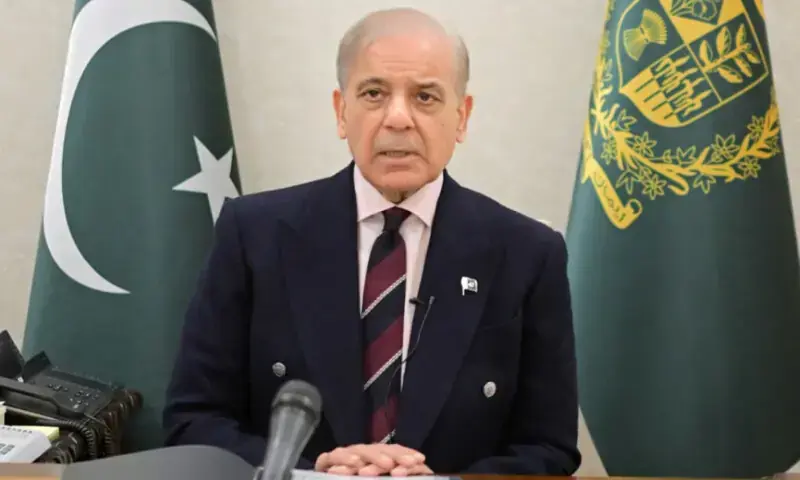
ISLAMABAD: Prime Minister Shehbaz Sharif on Friday announced a significant reduction in petroleum prices, lowering high-speed diesel (HSD) by Rs135 per litre and petrol by Rs12 per litre for the week ending April 17, following a decline in global oil prices after a ceasefire between the United States and Iran.
US Vice President JD Vance Arrives in Pakistan for Historic Talks with Iran
According to the official notification, the ex-depot price of HSD has been reduced from Rs520.35 to Rs385.54 per litre — a drop of around 26 per cent. Petrol prices were cut by Rs11.83, bringing the new rate down to Rs366.58 per litre from Rs378.41.
Kerosene oil prices also saw a decrease of Rs17.33 per litre to Rs450.15, while light diesel oil (LDO) was reduced by Rs25.31 to Rs369.72 per litre.
Officials said the sharp decline in diesel prices was not solely due to falling international oil rates, but also a correction in the domestic pricing mechanism, which had previously allowed higher margins for local refineries due to price parity with imported fuel.
Diesel, widely used in freight transport and agriculture, is considered a key driver of inflation. The government said the price cut would provide relief to farmers during the ongoing wheat harvesting season and help ease broader inflationary pressures.
Despite the reductions, tax rates on petroleum products remain unchanged. The government currently charges around Rs39 per litre on diesel and approximately Rs107 per litre on petrol, including petroleum levy, customs duties, and climate-related taxes.
In a televised address ahead of the upcoming US-Iran talks, the prime minister said he rejected a proposal to retain part of the price relief to recover Rs129 billion spent on fuel subsidies in recent weeks.
“I rejected the proposal without hesitation,” he said, adding that it was his responsibility to pass on the full benefit of lower global prices to the public.
Sharif reiterated that targeted subsidies for two-wheelers, public transport, and agriculture sectors would continue, aiming to protect citizens from inflation and support economic stability.
Fuel prices had surged sharply following the February 28 conflict involving the US and Israel against Iran, which disrupted global energy markets and drove domestic prices to record highs.