


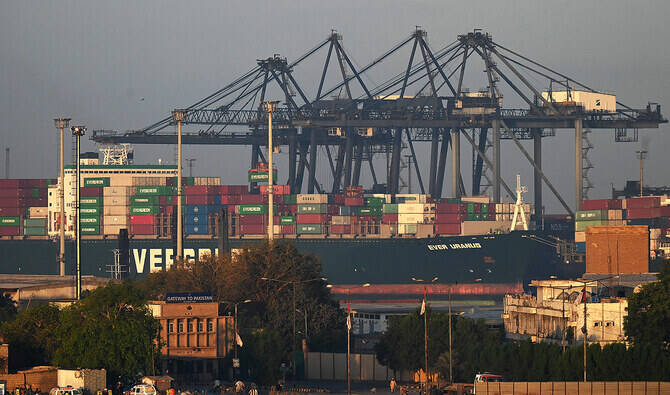
Karachi : The maritime and logistics sector sincerely appreciates the Chairman of Karachi Port Trust (KPT) for enabling uninterrupted port operations and gate activities during the Eid holidays. This timely and facilitative decision reflects proactive leadership and a strong commitment to supporting trade and ensuring supply chain continuity during a critical period.
Such initiatives reinforce confidence among shipping lines and the broader trading community, while also contributing to ongoing efforts to position Karachi Port as a reliable and competitive hub for both gateway and transshipment cargo.
At the same time, stakeholders from the shipping industry have shared observations regarding the recent amendments introduced through SRO 517(I)/2025 by the Federal Board of Revenue (FBR), as outlined in the referenced communication.
The industry fully acknowledges the importance of regulatory oversight and Customs compliance in safeguarding national interests. In this context, shipping lines have sought further clarity on certain provisions, particularly those relating to the assignment of responsibility for duties, taxes, or other liabilities.
It has been highlighted that shipping lines submit cargo manifests based on information received from the port of loading. Following discharge at port terminals or transfer to off-dock facilities, custody of the cargo is handled by terminal operators and off-dock entities in line with established operational practices. As such, shipping lines have limited visibility over the subsequent handling and inland movement of containers. Furthermore, the movement of containers to off-dock facilities is arranged through bonded transporters under Customs approval and supervision; therefore, shipping lines should not be held accountable for any discrepancies arising thereafter.
Shipping lines have also observed that the requirement for comprehensive scanning of containers moving between terminals and off-dock facilities may create operational constraints and lead to delays. Additionally, the associated scanning charges would impose an extra financial burden on shipping lines, as transshipment cargo typically does not involve a local shipper or consignee, leaving such costs to be borne by the carriers. This may impact the competitiveness of Karachi Port when compared with regional ports such as Nava Sheva and Mundra in India, Colombo in Sri Lanka, and Sohar in Oman, where authorities are offering various incentives and facilitation measures to attract shipping lines. In this regard, the industry has expressed interest in exploring practical mechanisms that ensure compliance while maintaining efficiency and minimizing delays.
The shipping community remains encouraged by the Government’s focus on strengthening trade systems and appreciates the continued support extended by KPT. In line with this, stakeholders have expressed their willingness to engage constructively with relevant authorities to further refine the regulatory framework, keeping in view international best practices and Pakistan’s objective of enhancing its position as a regional transshipment hub.
A collaborative and consultative approach, it is believed, will help achieve a balanced outcome that supports both regulatory objectives and trade facilitation.


ADVERTISEMENT