


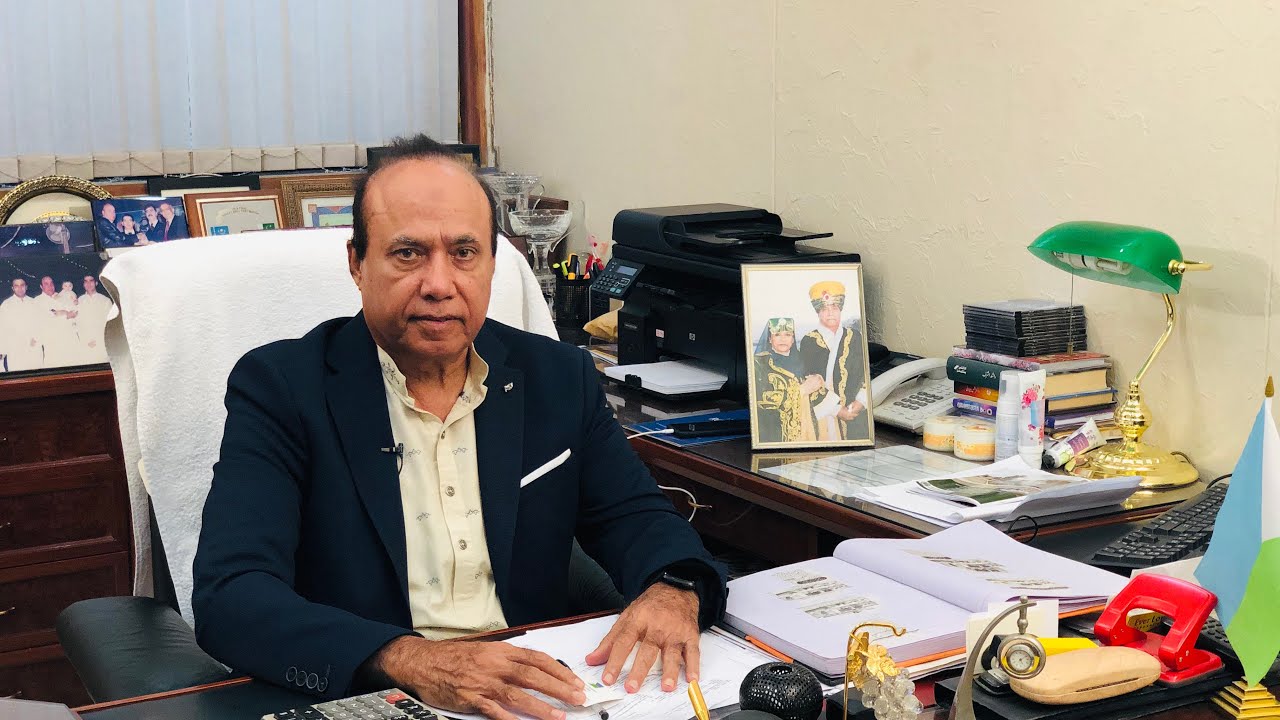
By: Khalil Ahmed Nanitalwala.
There is no two opinions among the readers that today the world, apart from climatic changes, is also facing challenges such as terrorism, the war frenzy and expansionist ambitions of India and Israel, and the increasing threats to human survival caused by the Russia-Ukraine war. The unfortunate situation in this regard is that the representative international institution — the United Nations — has become hostage to some of its powerful member countries and, as a result, has failed to play any effective role through its platform in resolving regional and global disputes according to the UN Charter. Consequently, the old philosophy of “might is right” seems to be prevailing once again. Undoubtedly, the countries that hold expansionist ambitions and seek to increase their arms sales have the greatest influence in fueling war hysteria among rival nations. They deliberately create such conditions that the sword of a potential world war continues to hang over humanity. Almost these very same countries are responsible for creating the factors that cause climate change, due to which developing and backward nations like Pakistan are facing the devastating effects of torrential rains, cloudbursts, and the resulting frequent floods, leading to enormous losses. Because of climate change, the duration and intensity of earthquakes are also increasing, and it is the countries with limited resources that have to bear most of the damage.
Similarly, the expansionist ambitions of America, India, and Israel are also being faced by those very countries affected by climate change, which are compelled to strengthen their defense systems for their protection and security. The resources that should have been utilized for the prosperity of their people and the eradication of poverty and deprivation are instead being spent on fortifying defense barriers. The irony, however, is that the very nations whose expansionist policies and actions are bringing destruction to underdeveloped countries are not even willing to provide the necessary funds to help revive their economies. The repeated appeals and efforts by the UN Secretary-General in this regard have also gone in vain — which itself proves the ineffectiveness of this global institution.
In such circumstances, the 80th Annual Session of the United Nations General Assembly held great importance. India, by violating Pakistan’s sovereignty, carried out aerial attacks with the intent to harm it — though it had to face humiliation at the hands of Pakistan’s brave and determined armed forces. Yet, its war hysteria has permanently endangered the peace of Pakistan and the entire region. In this context, hopes were tied to the UN General Assembly that serious efforts would be made to find a concrete and practical solution to the ongoing Kashmir dispute between Pakistan and India so that regional and global peace could be secured.
Likewise, Israel, for more than two years now, has continued a campaign of brutality and barbarism against Palestinians in Gaza and, at the same time, has extended its war frenzy and expansionist ambitions toward other Muslim countries. This situation has rung the alarm bell for a potential global nuclear war. Therefore, it was expected that the 80th Annual Session of the General Assembly would also devise a durable solution to this grave issue, along with a line of action to address climate change.
In these challenging circumstances, Pakistan’s civil and military leadership has taken the responsibility of eliminating terrorism within the country, combating the impacts of climate change, and meeting the defense requirements against India’s war hysteria — in which they have succeeded, as evidenced by India’s humiliation. Consequently, global attention has now shifted toward Pakistan for ensuring regional and international peace.
In this very context, during their recent foreign visits, Prime Minister Shehbaz Sharif and Field Marshal Syed Asim Munir received a warm and high-level reception in China, Saudi Arabia, Qatar, the United Kingdom, and the United States. In his address at the Annual Session of the General Assembly, Prime Minister Shehbaz Sharif comprehensively covered all major global issues and highlighted Pakistan’s effective role for regional and international peace, presenting the country’s stance on all these matters with logic and clarity, reflecting his vision and understanding. He also openly exposed India’s war hysteria and expansionist ambitions.
It is expected that this General Assembly session will not only make the United Nations more effective but will also serve as a guarantee for establishing lasting regional and global peace. The Prime Minister also expressed gratitude to China, Türkiye, Saudi Arabia, Qatar, Azerbaijan, Iran, the United Arab Emirates, and the UN Secretary-General, along with all of Pakistan’s friends and partners, who extended diplomatic support to Pakistan during difficult times. He stated that Pakistan desires peace across the world and is ready for comprehensive and result-oriented negotiations with India on all outstanding issues.
Meanwhile, Russia, China, Pakistan, and Iran have jointly urged the Afghan government to eliminate terrorist groups. The foreign ministers of these countries held their fourth quadrilateral meeting on Afghanistan in New York at the invitation of the Russian Federation. In a joint statement, all four countries reiterated their resolve to see Afghanistan as a free, united, and stable nation — free from terrorism, war, and narcotics.
Pakistan has repeatedly raised this issue and made efforts to resolve it, but the Taliban government does not seem willing to cooperate — undoubtedly due to India’s backing. The present Taliban regime, along with the outlawed TTP members who fled from Pakistan to Afghanistan, has now become India’s proxy. Pakistan has presented this matter before other nations, urging them to persuade Afghanistan to return to the right path. If this issue is not addressed, then the path of imposing international sanctions should be adopted.
Advertisements