

Recent legislative developments in the United States Congress concerning Pakistan should be understood not merely as isolated parliamentary initiatives but as signals reflecting how Pakistan’s internal and external policies are increasingly interpreted within Washington’s strategic discourse.
Two congressional measures have drawn particular attention.
The first is H.R. 5271 — Pakistan Freedom and Accountability Act, introduced in the U.S. House of Representatives. The bill calls for identifying certain Pakistani government, military, and security officials who could face sanctions under mechanisms similar to the Global Magnitsky Act if they are determined to be involved in activities undermining democratic governance or human rights.
The second is H.R. 901 — Expressing Support for Democracy and Human Rights in Pakistan, a congressional resolution emphasizing U.S. support for democratic institutions, electoral integrity, and the rule of law in Pakistan.
While such measures do not automatically translate into punitive action, they shape the policy environment in Washington, influencing how Pakistan is perceived among legislators, policy institutions, and strategic partners.
Strategic Narratives in Washington
In this context, international commentators and policy analysts have increasingly discussed regional geopolitical forecasts related to the Iran conflict.
A recent example was a panel discussion on “Daryl M. Brooks’ On Fire Show,” featuring Oz Sultan, Richard Panzer, and Dr. Murray Sabrin, in which analysts referenced Dr. Gholam Mujtaba’s strategic projection of the trajectory of the Iran war and its regional implications.
My analysis of geopolitical dynamics involving Pakistan, Iran, Afghanistan, and the broader Middle East has been acknowledged by colleagues and observers as part of the broader strategic conversation about evolving United States policy in the region. The perspectives and commentary on regional affairs have been referenced and discussed in major international newspapers and policy discussions.
Parliamentary Diplomacy and the Rayburn Engagement
At a time when congressional initiatives concerning Pakistan are being debated in Washington, direct engagement between Pakistani lawmakers and members of the United States Congress becomes critically important.
On my request and through diplomatic coordination, a parliamentary delegation from Pakistan visited Washington and held engagements at the Rayburn House Office Building, where discussions with congressional offices focused on regional stability, parliamentary diplomacy, and the importance of constructive U.S.–Pakistan relations.
However, a larger delegation under the formal leadership of the Deputy Chairman of the Senate could not materialize, due to internal opposition from a select group within Pakistan. Such internal obstacles prevented what could have been a broader parliamentary dialogue at a crucial moment when congressional perceptions about Pakistan were actively forming.
Domestic Signals and International Perception
Equally important is the narrative emerging from within Pakistan.
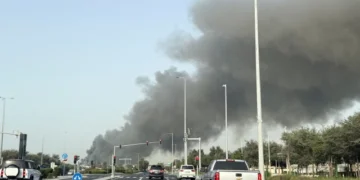
Recent incidents, such as the attack on the United States Consulate in Karachi, raise difficult questions about security management and diplomatic responsibility. The international community inevitably asks how protestors were able to breach a sensitive diplomatic mission and what mechanisms were in place to prevent such an incident, especially under the protections afforded to diplomatic missions under international conventions.
At the same time, observers have noted contrasting symbolic gestures in diplomatic practice — for example, expressions of condolence at certain foreign diplomatic missions while domestic security incidents received comparatively limited reflection in public discourse.
In international diplomacy, symbolism and messaging matter. Statements delivered by political leaders abroad or speeches made within Pakistan’s parliament on matters of foreign policy are carefully monitored by policymakers in Washington and other capitals.
Competing Narratives and Strategic Opportunity
At a time when regional alignments are evolving — including shifts in the Middle East, recalibrations in relations between Iran and its neighbors, and new security considerations involving the United States and the Gulf Cooperation Council (GCC) — Pakistan faces an important strategic moment.
Some voices appear inclined toward narratives that risk creating unnecessary friction between Pakistan and its long-standing partners in Washington and the Gulf. Others emphasize the need for pragmatic diplomacy and stable engagement with major international stakeholders.
The direction Pakistan chooses will influence whether the country emerges as a constructive regional partner in a changing geopolitical environment or becomes entangled in avoidable diplomatic tensions.
Strategic Conclusion
In this evolving international landscape, the most effective course for Pakistan is not rhetorical confrontation but measured engagement with global partners, particularly the United States and the Gulf states, whose economic and strategic relationships remain central to Pakistan’s long-term stability.
Constructive parliamentary diplomacy, transparent communication, and responsible public discourse can help ensure that Pakistan’s strategic interests are represented clearly and effectively in the international arena.
Author
Dr. Gholam Mujtaba, MS, MD, Ed.D.
Chairman, Pakistan Policy Institute USA
Dr. Mujtaba is a policy analyst and commentator on U.S.–Pakistan relations and Middle Eastern geopolitics. He has been engaged in parliamentary diplomacy initiatives and policy dialogues with lawmakers, policy institutions, and international stakeholders focused on regional stability.
https://medium.com/@greetmujtaba/congressional-signals-strategic-narratives-and-pakistans-diplomatic-moment-013d71343811 (https://medium.com/@greetmujtaba/congressional-signals-strategic-narratives-and-pakistans-diplomatic-moment-013d71343811)