Asim Munir Holds Key Talks in Tehran as Pakistan Pushes for Breakthrough on Iran Nuclear Deal
Web Desk April 16, 2026Tehran/Islamabad, April 16, 2026 — Chief of Defence Forces and Chief of Army Staff Field Marshal Asim Munir held high-level meetings in Tehran on Thursday with senior Iranian leadership, as Pakistan continues efforts to facilitate a diplomatic breakthrough between Iran and the United States.
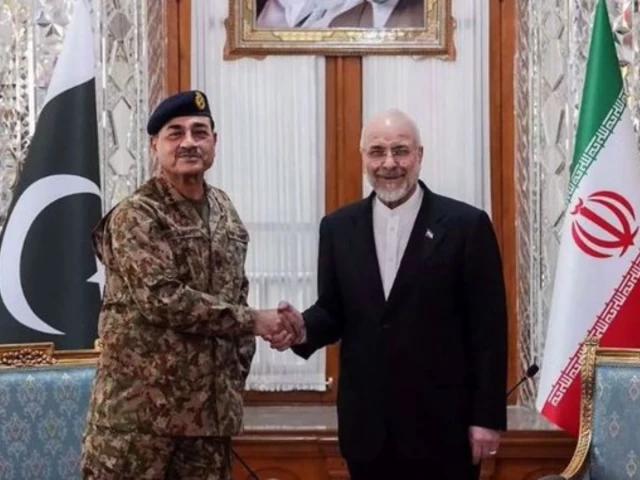
Tehran/Islamabad, April 16, 2026 — Chief of Defence Forces and Chief of Army Staff Field Marshal Asim Munir held high-level meetings in Tehran on Thursday with senior Iranian leadership, as Pakistan continues efforts to facilitate a diplomatic breakthrough between Iran and the United States.
Trump Announces 10-Day Lebanon–Israel Ceasefire as Fighting Continues in South Lebanon
According to Iranian media reports, Field Marshal Munir met with Iranian Parliament Speaker Mohammad Bagher Ghalibaf and later held discussions with Khatam Al-Anbiya Central Headquarters Commander Major General Ali Abdollahi. Iranian state media IRNA reported that he briefed officials on ongoing mediation efforts aimed at ending the conflict and stressed the continuation of diplomatic engagement.
Government sources cited by Anadolu said Pakistan is working toward a potential breakthrough on Iran’s nuclear programme within days, with Munir playing a central role in discussions between Tehran and Washington. The sources said Islamabad is seeking to build a broader consensus ahead of a possible new round of US-Iran talks.
The sources further claimed that Iran has agreed in principle to a proposal for third-party monitoring of its nuclear programme involving four countries in coordination with the International Atomic Energy Agency (IAEA). However, there has been no official confirmation from Tehran or Washington regarding the framework.
According to the reports, discussions remain focused on bridging gaps over uranium enrichment, with the United States seeking a long-term suspension of Iran’s nuclear activities in exchange for sanctions relief, while Iran has proposed a shorter moratorium.
There were also unverified reports suggesting that Field Marshal Munir may visit Washington for further talks with US leadership, though no official confirmation has been issued.
Iranian Foreign Minister Abbas Araghchi welcomed the Pakistani delegation, expressing appreciation for Islamabad’s role in facilitating dialogue and reaffirming Tehran’s commitment to regional peace and stability.
Pakistan has been acting as a key intermediary, with Iranian officials confirming continued exchange of messages with Washington through Pakistani channels since recent negotiations hosted in Islamabad ended without agreement.
The latest round of diplomacy follows extended US-Iran talks held in Pakistan last weekend, which failed to produce a deal despite marathon negotiations. Both sides have since expressed willingness to continue discussions, though major differences remain over nuclear enrichment and sanctions relief.
The conflict between the United States, Israel, and Iran has further complicated regional stability, with hostilities expanding across multiple fronts and disrupting global energy routes.