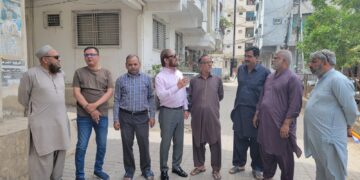


Rawalpindi (Oct 09, 2025) Due to consistent and coordinated efforts by public and private stakeholders, including Al-Shifa Trust (AST), the prevalence of blindness in Pakistan has decreased significantly, from 1.78 percent in 1990 to 0.5 percent currently. However, experts warn that urgent policy attention is needed to address new challenges, mainly genetic and lifestyle-related causes of vision loss. This should concern us all and motivate us to act.
Talking to the media men at the World Sight Day, prominent ophthalmologist Prof. Tayyab Afghani highlighted that genetic diseases are increasingly becoming a significant cause of blindness in Pakistan. To address this, AST has established the country’s first ophthalmic genetics centre, focused on early detection through community health education, qualified genetic counselling, and gene analysis.
Prof. Afghani also cautioned that apart from diabetes, myopia has reached epidemic levels in Pakistan and worldwide. He emphasised the importance of lifestyle changes and limiting screen time for children, which is supported by school vision screening programmes. To date, Al-Shifa has screened over 3 million children for vision-related issues nationwide.
He said the trust continues to expand its reach through six hospitals in Rawalpindi, Muzaffarabad, Chakwal, Kohat, Sukkur, and Gilgit. The trust plans to open its Lahore branch by 2027, a sign of hope for the future. The network holds over 150 free eye camps annually, treating more than 900,000 patients and performing 73,000 surgeries each year, including cataract removals. Nearly 80 percent of patients receive free treatment, a testament to the trust’s commitment to serving the community.
Dr Afghani urged greater government investment in preventive eye care and infrastructure expansion to rural areas, warning that the rising disease burden could overwhelm public hospitals. The lack of trained specialists and unequal distribution of services continue to push low-income households toward expensive private treatment, leading to long-term economic and social impacts such as increased poverty and reduced productivity.