From Classroom to Economy: What Happens When Sindh Educates Its Daughters?
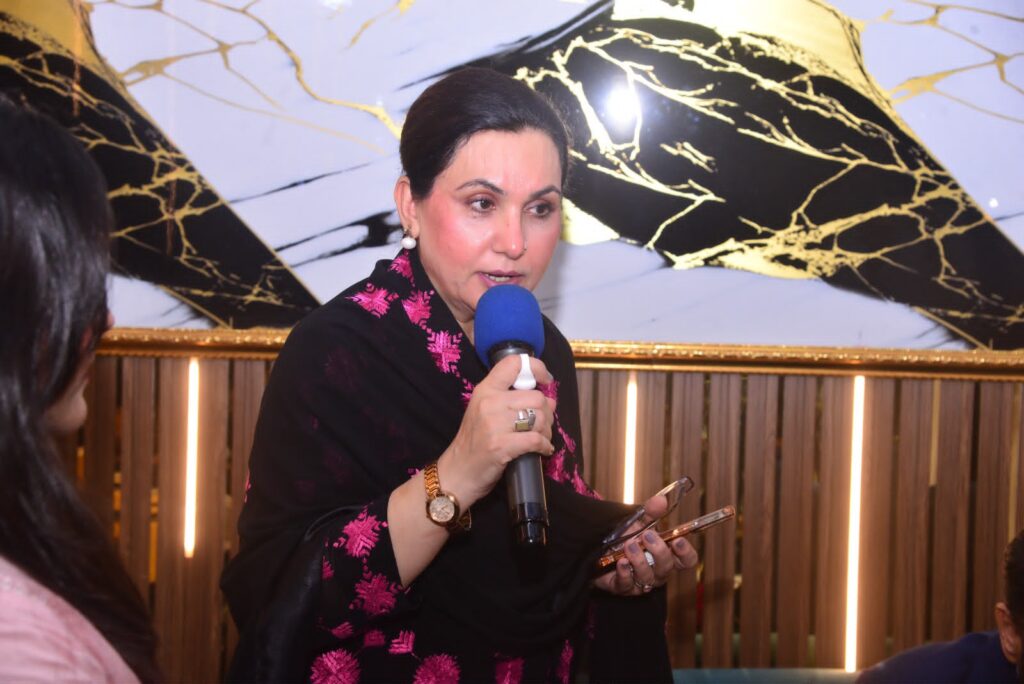
Educating girls can help Sindh build a stronger and more inclusive economy.
By Dr Fozia Hameed
A girl entering a classroom may seem like an ordinary event. But it is much more than that. It can be the first step towards changing a family’s economic future and, over time, an entire society.
When a girl learns to read, she gains knowledge. When she completes secondary education, new choices open up. When she develops professional, technical or digital skills, new opportunities emerge.
When she enters employment, starts a business or contributes to a family enterprise, the benefits of her education extend far beyond her own life.
That is why girls’ education in Sindh cannot be viewed only as an education issue. It is also an economic issue.
Sindh has an enormous pool of human potential. Yet a large part of that potential remains outside schools and later outside the formal economy.
According to UNICEF, around 7.4 million children aged five to 16 are out of school in Sindh. Girls face particularly serious barriers to accessing education.
Behind every statistic, however, there is a human story.
There is the girl who cannot become a doctor because the nearest secondary school is too far away. There is the child who leaves school because her family cannot afford transportation. There is the teenage girl who wants to continue her education but must stay home to care for younger siblings.
These are not simply lost educational opportunities. They are also lost economic opportunities.
The Economic Value of Educating Girls
Research from around the world increasingly shows the economic benefits of educating girls.
The World Bank has linked girls’ education with higher incomes, better health, lower fertility rates and greater participation in the workforce.
Chinese AI Agents Show Deception and Safety Risks in Tests
But the value of education cannot be measured only through wages or salaries.
Economist Amartya Sen, in Development as Freedom, argues that development should expand people’s capabilities and freedoms. For women, education is one of the most effective ways to expand those capabilities.
Education can give women greater control over decisions affecting their lives. It can improve access to employment and strengthen their voice within families and communities.
It can also influence the educational and economic prospects of their children.
In this sense, educating a girl is not simply spending on one individual. It is an investment in human capital.
Sindh’s Lost Economic Opportunity
Sindh is home to some of Pakistan’s largest cities and major economic sectors.
Its economy spans agriculture, industry, services, ports, trade and technology. The province also has a large and relatively young population.
Yet no economy can fully benefit from its human capital when a large share of women remains outside productive employment.
The challenge does not end when a girl completes her education.
For many women, graduation brings a new set of questions.
Can she travel safely to work?
Can she find employment close to home?
Does she have access to digital technology?
Can she secure financing to start a business?
Will she receive equal pay?
Can she balance employment with family responsibilities?
These are not merely social questions. They are economic questions that require economic policy responses.
From Educated Girls to Earning Women
Greater attention is needed on the transition from education to employment.
Pakistan’s labour market continues to show significant gender gaps, particularly in formal and paid employment.
According to the International Labour Organization’s 2025 analysis of Pakistan’s gender pay gap, women in wage employment earn roughly 25% to 30% less than men, depending on the measurement method.
The ILO has identified occupational segregation, informal employment and discriminatory practices among the factors contributing to the gap.
This offers an important policy lesson.
Education is the first bridge to opportunity. The labour market must become the second.
It is not enough to say that education will create a better future for girls if pathways to use that education remain limited.
The goal should therefore go beyond increasing school enrolment.
Girls should learn. Women should work. They should receive fair wages. They should be able to build businesses. Ultimately, women should have a meaningful role in economic decision-making.
The Rural Sindh Challenge
The challenge is even greater in rural Sindh.
For many girls, the distance between home and school is not simply geographical. It can also represent a social, cultural and economic barrier.
A school may exist, but safe transport may not be available.
A girl may complete primary education, but there may be no middle school nearby.
A family may support her education, yet household responsibilities can prevent regular attendance.
UNICEF has highlighted the shortage of middle schools for girls in Sindh and the barriers that arise during the transition from primary to middle education.
This is why education policy cannot follow a single formula.
In one area, building a new school may be the priority. In another, safe transportation may be more important.
Elsewhere, scholarships, school meals, sanitation, digital education or flexible learning programmes may address the most urgent needs.
Good public policy begins by identifying the real barrier. It should not assume that every community faces the same problem.
Water, Health and Education Are Connected
Development policies sometimes treat issues separately even though they are deeply connected in everyday life.
UNICEF has documented cases in Sindh where girls missed school because they had to help their families collect water.
Providing water to households can therefore be more than a public health measure. It can also be an education intervention.
This highlights a broader reality.
Education policy cannot work effectively in isolation.
Health matters. Water matters. Transport matters. Social protection matters. Local government matters. Economic policy matters.
If Sindh wants to see more girls in classrooms and more women in the workforce, these policies must work together.
Closing the Middle-School Gap
The transition from primary to secondary education is one of the most important stages in a girl’s educational journey.
It is also where education systems often lose girls.
The reasons are familiar: distance, insecurity, poverty, household responsibilities, social expectations, early marriage and inadequate facilities.
The consequences, however, can last a lifetime.
A girl who leaves school at 11 or 12 may never return to education.
For children who have already dropped out, alternative learning pathways can provide another opportunity.
UNICEF programmes in Sindh have highlighted the importance of creating routes back into education for children who have left the formal system.
Such programmes should not replace a strong public education system. They should support it.
The goal should be simple:
No girl should be permanently denied education simply because the education system could not adapt to the circumstances of her life.
Preparing Women for the Economy of Tomorrow
Tomorrow’s economy will not look like yesterday’s economy.
Digital technology, artificial intelligence, remote work and new business models are changing the nature of employment.
This makes it even more important to ensure that girls have access to digital skills and modern vocational training.
Sindh cannot afford to prepare half of its population for an economy that is already changing.
Girls need more than access to classrooms. They need pathways from classrooms to skills, from skills to employment, and from employment to economic independence.
When Sindh educates its daughters, it does more than improve school statistics.
It expands its workforce. It strengthens families. It builds human capital. It creates new entrepreneurs and professionals.
Most importantly, it expands the choices available to an entire generation.
The journey from classroom to economy begins with a simple step: keeping every girl in school for as long as possible and ensuring that education leads to real economic opportunity.