US Supreme Court Allows Trump Administration to Resume Third-Country Deportations
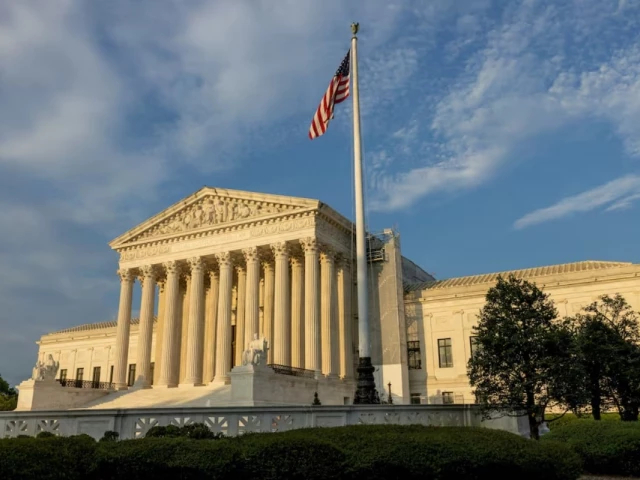
US Supreme Court allows Trump administration to resume third-country deportations.
The US Supreme Court on Tuesday allowed President Donald Trump’s administration to resume deporting migrants to countries other than their own.
The decision allows the government to carry out such deportations without first giving migrants a chance to explain potential harm.
The court granted the Justice Department’s emergency request. The move puts on hold a ruling by Boston-based US District Judge Brian Murphy.
Murphy had ruled against the Department of Homeland Security’s policy on third-country deportations.
The Supreme Court will hear arguments in the case in December. A final ruling on the policy is expected after those arguments.
Justices Split Over Deportation Policy
The Supreme Court has a 6-3 conservative majority. Its three liberal justices opposed the decision.
The case began with a class-action lawsuit filed by immigrant rights groups. The groups represent migrants facing removal to third countries.
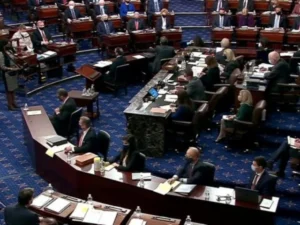
US Senate Blocks Resolution Seeking Report on West Bank Violence
They argued that migrants should receive notice before removal. They also said migrants should have a chance to explain any risk of persecution or torture.
Human rights groups estimate that more than 25,000 migrants have been deported to 29 countries under the policy.
Most of those migrants were sent to Mexico.
Third-Country Deportations Expand
The policy forms part of Trump’s broader immigration crackdown. His administration has made mass deportations a major policy priority.
US authorities have sent migrants to several third countries. These include South Sudan, Uganda, Equatorial Guinea, Liberia and the Central African Republic.
The US State Department advises Americans against travelling to South Sudan. It cites risks including crime, kidnapping and armed conflict.
Department of Homeland Security General Counsel James Percival welcomed the Supreme Court decision.
He described the ruling as a setback for immigration rights advocates in a social media post.
Rights Groups Raise Concerns
Trina Realmuto represents the plaintiffs at the National Immigration Litigation Alliance.
She said the ruling allows the administration to send migrants to countries where they could face persecution or torture.
Realmuto also warned that some migrants could be removed before receiving notice. They could also lose the opportunity to raise a fear claim.
Judge Murphy ruled in February that the policy violated immigration procedures.
He also found concerns under the Fifth Amendment’s due process protections.
Due process generally requires notice and an opportunity for a hearing before certain government actions.
Supreme Court Previously Intervened
The Supreme Court has previously intervened in the dispute.
In June 2025, it suspended an earlier order from Murphy that had temporarily halted the removals.
The court later lifted restrictions involving a group of migrants who faced deportation to South Sudan.
The latest case began in 2025. At the time, the Department of Homeland Security sought to increase deportations of migrants who could not be returned to countries listed in their deportation orders.
Policy Allows Swift Removal
Under the policy, some migrants can be quickly removed to third countries.
This applies when those countries provide diplomatic assurances against persecution or torture.
For countries without such assurances, migrants are notified of their destination. US officials then assess the risk if the migrant raises a fear of persecution or torture.
The Justice Department described third-country deportations as an important removal tool.
Critics have raised concerns about migrants who previously received protection from removal to their home countries.
Plaintiffs also alleged that some deportees were later sent back to their home countries. They said some migrants were beaten, sexually assaulted or detained.
Other deportees have reportedly disappeared, according to court filings by the plaintiffs.
Legal Challenge Continues
The 1st US Circuit Court of Appeals upheld most of Murphy’s ruling on September 18.
The case remains under litigation. Murphy has also found that the administration repeatedly violated or attempted to violate his orders.
The Supreme Court’s decision allows the deportations to resume while the justices prepare to hear arguments in December.