
Governance Reform Takes Centre Stage at KCFR Debate in Karachi
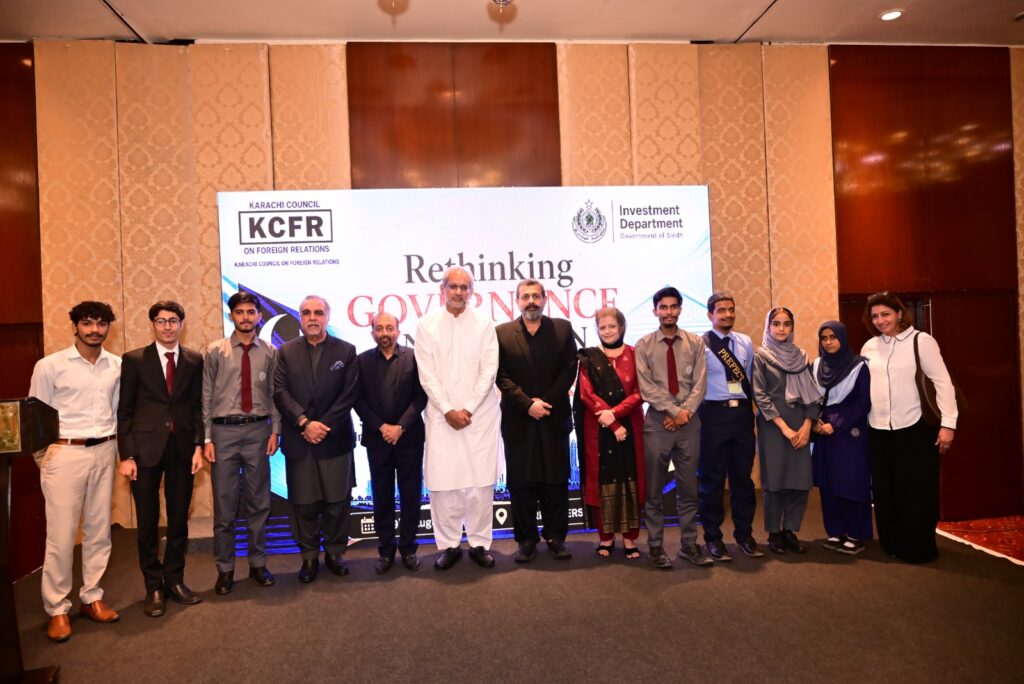
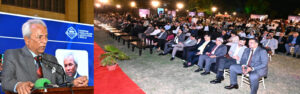
Political leaders and experts attend the KCFR debate on governance reform in Karachi.
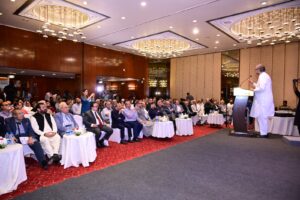
Pakistan’s governance challenges and the need for institutional reform came under discussion at a high-level public debate organised by the Karachi Council on Foreign Relations (KCFR).
The event, titled “Rethinking Governance in Pakistan,” brought together political leaders, parliamentarians, policymakers, academics and analysts.
Speakers examined institutional, political and administrative challenges affecting governance in Pakistan. They also discussed ways to strengthen institutions and improve public service delivery.
The participants called for better coordination between federal and provincial governments. They also highlighted the need for greater accountability, transparency and citizen-focused policymaking.
Nadira Panjwani calls for accountability
KCFR Chair Nadira Panjwani stressed the need for stronger institutional accountability and sustainable development.
She said governance should focus on people and their needs. According to Panjwani, governance represents more than an administrative responsibility.
Meezan Bank, ABAD Discuss Housing Finance as Pakistan Faces 14m Home Shortfall
She described it as a moral commitment to the well-being and dignity of every citizen.
Panjwani called for policies that place human development at the centre of decision-making.
Dr Nasir Baig focuses on trust and transformation
Analyst and Global Sach host Dr Nasir Baig discussed structural trust, digital transformation and the empowerment of ordinary citizens.
He said Pakistan’s citizens remain the country’s greatest strength because of their resilience and hard work.
Baig said meaningful governance reform requires genuine intentions and long-term commitment. He cautioned against short-term decisions that ignore Pakistan’s changing needs.
He also called for reforms that strengthen public confidence and improve the relationship between institutions and citizens.
Political leaders highlight structural reforms
Former Sindh Governor Imran Ismail focused on structural obstacles affecting public administration.
He called for political reform and greater fiscal decentralisation. He also highlighted the limited powers of Karachi’s local government compared with major cities in other parts of the world.
Ismail called for stronger accountability among senior officials and institutions.
Dr Farooq Sattar said Pakistan had reached a stage where long-delayed structural reforms had become necessary.
He called for a more participatory democratic system and stronger public representation.
Sattar said Pakistan’s population had grown beyond the representation provided by existing elected bodies. He also pointed to Karachi’s significant economic potential.
He said the country should use the present opportunity to strengthen investor confidence and support economic growth.
Shahid Khaqan Abbasi calls for institutional change
Former Prime Minister Shahid Khaqan Abbasi discussed institutional reform, democratic governance and public service delivery.
He called for greater accountability and stronger implementation of the rule of law.
Abbasi also highlighted serious challenges in Pakistan’s public health sector. He referred to the country’s neonatal mortality rate and called for more effective institutional reforms.
He said Pakistan needed genuine changes that could improve public services and strengthen governance.
Diplomats and students attend the KCFR seminar
Political and diplomatic figures attended the seminar along with foreign delegates.
Representatives from Russia, the United States and Bangladesh were also present.
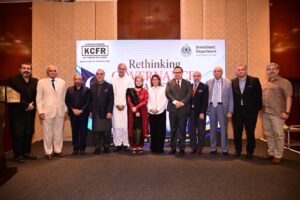
Students from the Ida Rieu Welfare Association joined the speakers for a special group photograph. The institution works with visually impaired and deaf individuals.
Members of KCFR’s Board of Governors also participated in the ceremony.
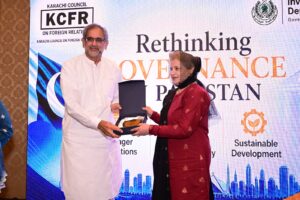
KCFR Chair Nadira Panjwani presented mementos to Dr Nasir Baig, Imran Ismail, Dr Farooq Sattar and Shahid Khaqan Abbasi.
The event concluded with a group photograph of speakers, guests and delegates after an extensive discussion on the future of governance reform in Pakistan.