Exchange Companies’ Dollar Sales to Banks Rise 30pc in August
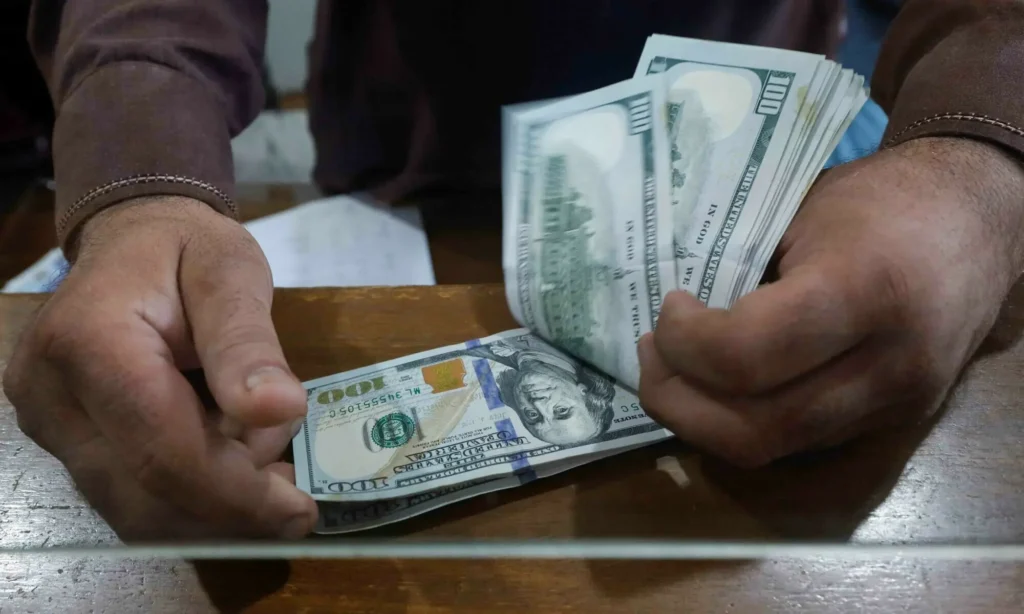
Exchange companies record higher dollar sales to Pakistani banks in August.
Exchange companies’ dollar sales to banks rose by 30 per cent year-on-year in August, pointing to stronger foreign currency inflows.
Data from the Exchange Companies Association of Pakistan (ECAP) showed that companies sold $248.7 million to banks during the month.
The figure was higher than the $174.9 million recorded in August last year.
Dollar Sales Recover in August
The increase came after a decline in July.
Exchange companies sold $230.7 million to banks in July. That compared with $290.6 million during the same month last year.
However, August brought a stronger performance.
Anuv Jain Recalls Late-Night Jam Session With Atif Aslam
ECAP Chairman Malik Bostan said inflows have also started improving in Kashmir. He added that the situation in the region is gradually returning to normal.
Kashmir Disruptions Hit Inflows
Bostan said political tensions in Kashmir affected foreign currency inflows during July and August.
“There could have been $50m more inflows during July-Aug this year had the Kashmir situation not been disrupted by political conflicts,” he said.
According to Bostan, ECAP has formally asked the State Bank of Pakistan to restore internet access across Kashmir.
Partial internet access has already been restored, he added.
Two-Month Dollar Sales Increase
Exchange companies collectively sold $479.5 million to banks during the first two months of FY27.
The figure was higher than the $465.5 million recorded during the same period of FY26.
The increase comes as Pakistan aims to strengthen foreign exchange inflows.
The government expects remittances to rise further during the current fiscal year.
Pakistan Sets $44bn Remittance Target
Pakistan has set a remittance target of $44 billion for FY27.
The country received $41.5 billion in remittances during FY26.
The government is therefore banking on stronger inflows to support the country’s external position.
However, developments in the Gulf remain a concern for the currency market.
Gulf Conflict Raises Economic Concerns
Pakistan has so far avoided a major disruption to remittances from the Gulf.
However, reports about Pakistani workers returning from Gulf countries have created concerns in the market.
Officials are also monitoring the situation closely.
Market participants fear a potential shock if the regional conflict continues for an extended period.
Pakistan is already facing pressure from elevated oil prices. Higher energy costs could further affect the country’s external account.
Gulf Economies Face New Pressure
Currency experts said the prolonged conflict has changed economic conditions across the Middle East.
Gulf economies remain heavily dependent on oil exports. Disruptions to oil trade could therefore create significant pressure.
One currency expert said the United Arab Emirates had been among the region’s strongest economies.
However, the current situation has created new challenges. The UAE is also trying to avoid large-scale displacement of expatriate workers.
The developments could have wider consequences for economies such as Dubai, which rely heavily on international workers and regional business activity.
For Pakistan, stable Gulf economies remain important. Millions of Pakistanis work across the region and send billions of dollars home each year.
Therefore, sustained stability in the Gulf will remain crucial for Pakistan’s remittance outlook in FY27.