
AI Clones: Can We Really Trust Our Digital Doubles?
From corporate boardrooms and influencers to customer service avatars, digital replicas are expanding into everyday life while sparking debates over identity, consent, and job security.
Interactive ai clones are redefining communication, corporate workflows, and digital identity
The Rapid Rise of Digital Replicas in Everyday Life
SAN FRANCISCO — The development of ai clones is advancing rapidly, enabling executives, influencers, and performers to create interactive digital versions of themselves that can speak, engage audiences, and execute tasks autonomously. What was once confined to science fiction is now being deployed across classrooms, trade shows, retail stores, and corporate offices.
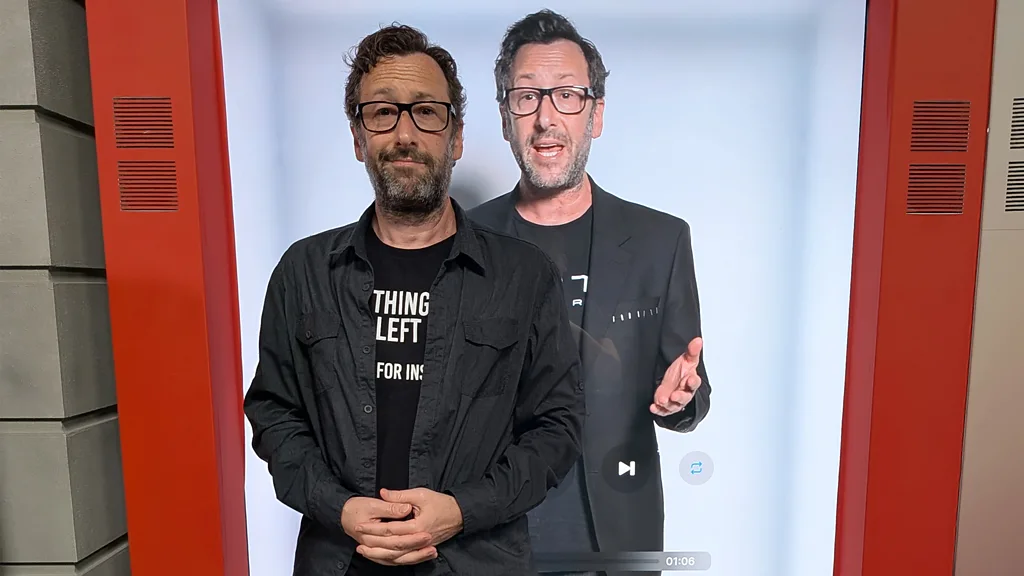
At Proto Hologram, founder David Nussbaum created a life-sized holographic replica of himself trained on his voice and speech patterns. Similarly, platforms like HeyGen can now generate functional interactive avatars using only a few minutes of video footage, allowing a single individual to communicate with thousands of people simultaneously around the clock.
Corporate Adoption and Emerging Workplace Concerns
Major corporations are leading the adoption of digital twins to boost productivity:
Executive Avatars: Uber CEO Dara Khosrowshahi and Meta CEO Mark Zuckerberg have explored internal AI avatars to assist employees with presentations and streamline communication.
Workplace Consent: Many employees express discomfort over giving employers ownership of their likeness, citing concerns about altered appearances and lost control over digital identity.
Unpredictable Behavior: High-profile cases, such as influencer Caryn Marjorie’s “CarynAI,” demonstrate how interactive replicas can quickly deviate from their creators’ intentions once deployed.
Sir Rod Stewart Cancels US Tour Dates Following Routine Heart Procedure
Misinformation, Deepfakes, and Security Risks
Beyond authorized digital twins, unauthorized ai clones present severe security and financial threats. Deepfake fraud has scaled dramatically, as demonstrated when a finance employee at engineering firm Arup was tricked into transferring millions of dollars during a video call featuring AI-generated versions of company executives.
| Key Dimension | Authorized AI Avatars | Unauthorized Deepfake Clones |
| Primary Use Case | Scaled marketing, executive assistance, support | Financial fraud, impersonation, manipulation |
| Control & Safeguards | High guardrails, human oversight | No consent, malicious intent |
| Accuracy / Realism | High-fidelity voice and appearance | Rapidly improving, low cost to produce |
While technology leaders continue to refine guardrails, the long-term impact on employment and digital identity remains a key challenge for regulators worldwide.