US-Iran Conflict: Iranian Death Toll Rises as Fighting Intensifies Across Gulf Region
Iran reports 38 deaths and more than 400 injuries as US strikes continue, while both sides exchange attacks amid growing regional tensions.
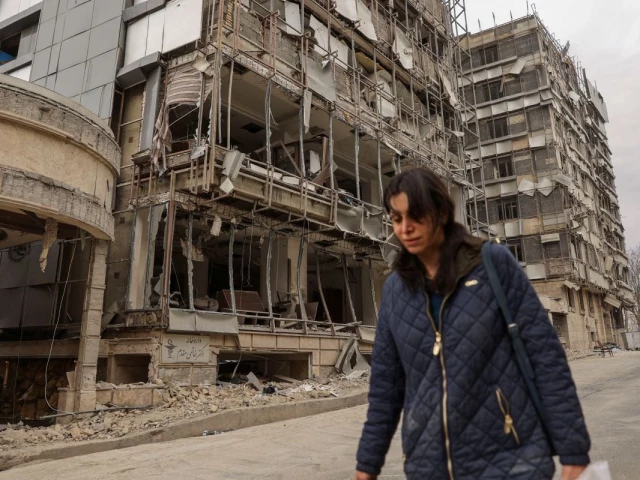
Emergency responders inspect damage following US strikes in Iran.
TEHRAN: US-Iran conflict escalated further on Friday as Iranian authorities said at least 38 people have been killed and more than 400 injured since the United States resumed military strikes earlier this month, while Washington continued its campaign against Iranian military infrastructure.
Hossein Kermanpour, Head of Public Relations at Iran’s Ministry of Health and Medical Education, said the casualties recorded up to July 17 included 22 injured women, three women killed, nine injured children and one child killed.
“Health is the first victim of war,” Kermanpour wrote on X while releasing the latest casualty figures.
Iranian state media reported that overnight US strikes targeted an airport, railway infrastructure and bridges across several provinces.
Officials said attacks on two bridges in Hormozgan Province killed three people and wounded nine others.
State broadcaster IRIB also reported explosions near Iranshahr Airport, where at least one US projectile struck the facility.
Imperial Succession: Japan Approves Royal Family Reform but Keeps Male-Only Throne Rules
In Bandar Abbas, Iranian media said a strike hit the city’s railway junction, injuring two people, while another attack wounded one person in the port city of Bushehr.
Separately, Mehr News Agency reported that a US missile struck the Chabahar maritime control tower, marking the third reported attack on the facility within a week.
Meanwhile, Iran’s Islamic Revolutionary Guard Corps (IRGC) claimed it had targeted a US special operations command centre at al-Tanf in Syria in retaliation for the deaths of Iranian personnel. The claim could not be independently verified.
The IRGC also stated that Iran retained control of the Strait of Hormuz and warned that oil and gas exports through the strategic waterway would remain suspended while US attacks continued.
In Washington, US Vice President JD Vance rejected allegations that senior White House advisers Jared Kushner and Steve Witkoff attempted to profit financially from their involvement in diplomatic contacts with Iran.
Responding on X, Vance described the accusations as “completely bogus” and praised both advisers for their efforts to promote peace in the region.
The comments followed a media report claiming Iran had raised concerns about the advisers during negotiations in Switzerland. Vance said he had never received such a message and dismissed suggestions of insider trading.
Regional tensions also spread to neighbouring Gulf states.
Qatar’s Ministry of Defence announced that its armed forces intercepted a missile targeting the country after residents in Doha reported hearing multiple explosions. The ministry confirmed that the missile did not reach its intended target.
The US Central Command (CENTCOM) confirmed it carried out a sixth consecutive night of strikes against Iranian military assets.
According to CENTCOM, the latest operation targeted coastal surveillance systems, air defence sites, military logistics infrastructure and maritime capabilities.
The command said the campaign aims to degrade Iran’s military capacity and respond to attacks on commercial shipping in the Strait of Hormuz. It added that more than 50,000 US service members remain deployed across the Middle East.
The White House said the renewed military operations followed Iran’s alleged violation of a Pakistan-mediated memorandum of understanding intended to reduce tensions in the Gulf.
White House Press Secretary Karoline Leavitt accused Iran of attacking commercial vessels despite commitments made under the agreement.
Earlier this week, Washington also reinstated a naval blockade on vessels travelling to and from Iranian ports. CENTCOM said US forces redirected several commercial ships and boarded one vessel to enforce the blockade.
Addressing the nation, President Donald Trump said the United States was “winning big in Iran” and promised that the results of the military campaign would soon become apparent.
Iran, meanwhile, accused the United States of committing war crimes by targeting civilian infrastructure and argued that the strikes violated international law and the United Nations Charter.