

Swift Observatory: NASA Rescue Mission Launches to Save Aging Space Telescope
A spacecraft built by Katalyst Space Technologies has launched to rescue NASA’s Swift Observatory before atmospheric drag forces the telescope out of orbit.
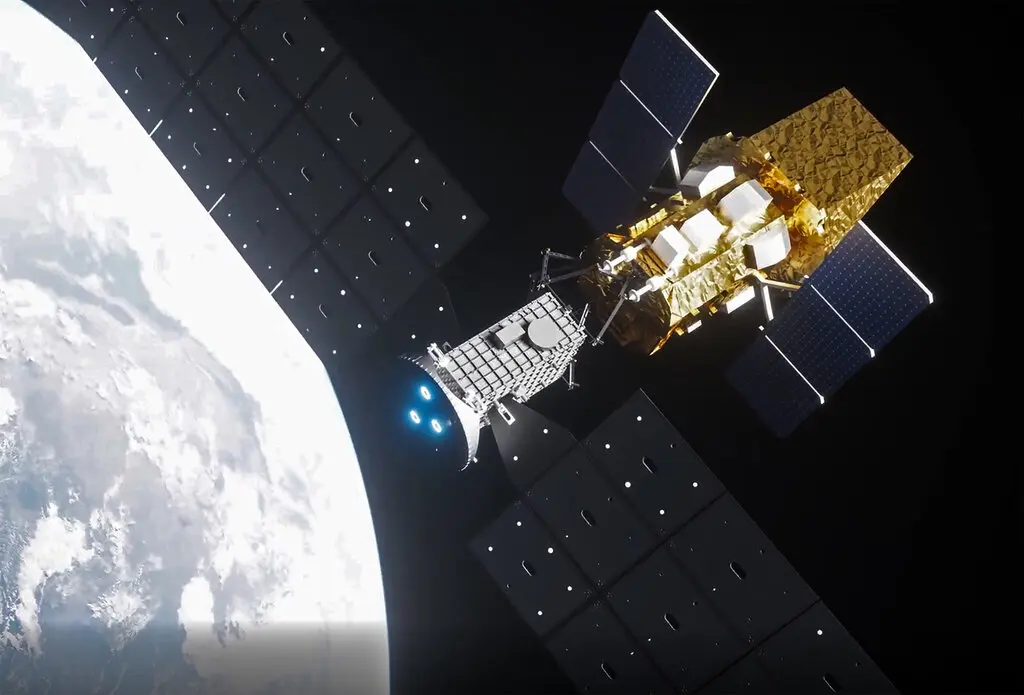
The Link spacecraft launches on a mission to rescue NASA's Swift Observatory.
Swift Observatory moved one step closer to survival after a rescue spacecraft successfully launched into orbit on Friday to extend the life of NASA’s aging space telescope.
NASA is racing against time because atmospheric drag continues to pull the 1.6-ton Neil Gehrels Swift Observatory closer to Earth. Without intervention, the spacecraft could burn up in the atmosphere within the next few months.
Katalyst Space Technologies developed the refrigerator-sized rescue spacecraft, named Link, to save the observatory. The mission aims to dock with Swift and raise its orbit, allowing the telescope to continue operating for another decade.
“We have a really good start to the mission,” said Ghonhee Lee, chief executive of Katalyst Space Technologies.
Taylor Swift Wedding Dress: Dior’s Jonathan Anderson Designs Bridal Gown
The launch followed three previous delays. Poor weather caused two postponements, while a technical issue forced the third attempt to stop before liftoff.
A modified Lockheed L-1011 aircraft carried a Pegasus XL rocket from the Marshall Islands. After reaching an altitude of 40,000 feet, the aircraft released the rocket, which successfully ignited its three stages and delivered Link into its planned orbit.
Mission controllers established contact with the spacecraft less than 30 minutes after launch. They also confirmed the successful deployment of its solar arrays and began testing onboard systems.
Engineers expect the spacecraft’s commissioning phase to last about one week. Afterward, Link will begin its approach toward the Swift Observatory.
If everything proceeds as planned, Link could capture the telescope in about six weeks. The spacecraft will then slowly raise Swift’s orbit over two months before releasing it roughly 100 miles higher than its current position.
The higher orbit would significantly reduce atmospheric drag and extend the observatory’s mission by approximately 10 years.
NASA launched the Neil Gehrels Swift Observatory in 2004 with an expected mission life of just two years. Instead, the telescope has operated for more than two decades while studying gamma-ray bursts, which are among the universe’s most powerful explosions.
However, increased solar activity during the recent peak of the Sun’s 11-year cycle heated Earth’s upper atmosphere and increased drag on satellites. As a result, Swift’s orbit began declining faster than expected in late 2024.
If the rescue mission succeeds, the observatory will continue providing valuable scientific data on gamma-ray bursts and other high-energy cosmic events for years to come.